![<p>A resident of Tetelisara village in Assam’s Nagaon district carries out his foodgrain stock as his home is flooded [image by: Diganta Talukdar/Alamy]</p>](https://dialogue.earth/content/uploads/2020/06/Assam-floods-2400x1600.jpg)

The 2020 summer monsoon has just about started but is already flooding large parts of Assam, Meghalaya, northern Bangladesh, Bhutan, Sikkim and Nepal. An estimated 50 people have been killed in these parts of South Asia, including 23 in Assam and 18 in Nepal. Around 100 more people were killed by lightning strikes in Bihar and eastern Uttar Pradesh as the monsoon reached these areas.
A flash flood caused by heavy rain in the Sikkim Himalayas washed away 19 homes last weekend and displaced 35 families of Passidang village in the northern part of the state.
Flooding has almost halted fire-control operations in Assam’s still-blazing Baghjan gas well. One bridge that reaches the well has collapsed, while another is being rigged up. Evacuated residents are surrounded by floodwater, unable to maintain mandatory distance in the middle of the Covid-19 pandemic.
A landslide caused by heavy rain partially blocked the Arun river that flows down from the Everest region in eastern Nepal. In downstream Bihar, India, the Ganga, Kosi, Mahananda and Barindi rivers are flowing above their danger levels.
Half a metre of rain fell within 24 hours in Cherrapunji – excessive even by the standards of the world’s second-wettest place – and it all flowed down the southern face of the Meghalaya plateau to Bangladesh, where the wetlands in the north of the country are overflowing.
The India Meteorological Department (IMD) forecasts more “heavy to very heavy” rainfall in these parts of the world over the next few days. At the same time, the IMD has forecast that July rainfall in the eastern half of the subcontinent will be lower than average.
Climate impacts
This fits with scientists’ forecast of the effect climate change has on the monsoon: fewer rainy days but more rainfall on those days.
Apart from the cycle of floods and droughts, this means less of the rainwater percolates underground to be available in the dry months.
And farmers dependent on rainfall find it much tougher to decide when they should sow their main crop of the year. It can rain heavily for a few days, and then stop when the plants need water.
The summer monsoon brings around 80% of South Asia’s annual rainfall.
Scientists say lightning strikes have become more common in recent years because clouds are at higher temperature and therefore carry more static electricity. This little-studied impact of climate change is at its worst during the first days of the monsoon, when relatively drier clouds precede the heavy rain-bearing clouds.
A round of recriminations has started within India’s disaster-management circles after around 100 people died of lightning strikes within 48 hours, 83 of them in Bihar. The Bihar government did send out warnings through a new app. But most of the farm workers hit by lightning did not have smartphones on which they could download it.
Early devastation
The flooding started early this year as the tail-end of the May 20 Cyclone Amphan dumped an enormous amount of rain in Assam’s Brahmaputra valley. It affected an estimated 300,000 people in nine out of Assam’s 33 districts.
Now the state is facing a second wave of floods. Some of the deaths are due to boats overturning in the floodwaters of the Dangori river in eastern Assam. This is a tributary of the transboundary Brahmaputra river, which is also flowing above the danger mark all the way from Dhemaji and Dibrugarh to downstream Dhubri on the Bangladesh border.
The Brahmaputra has already flooded the Kaziranga National Park – the world’s largest refuge of the one-horned rhino – and other protected forests. It is threatening to spill its banks next to north-east India’s largest city Guwahati. Ferry services to Majuli – the world’s largest river island – have been stopped.
Further downstream, all the rivers flowing down from Bhutan to join the Brahmaputra are in spate. Engineers from India’s Central Water Commission who control Bhutan’s Kurichu dam have been forced to open some of the gates. Downstream, India’s Manas National Park is among the many areas flooded as a result.
In Assam, the India-wide lockdown that started on March 25 due to the Covid-19 pandemic has affected the repair of embankments meant for flood control, just as it has in Bihar.
The floodwaters are flowing into Bangladesh, both from the Brahmaputra and from its tributaries on both banks. There is serious worry that the highly productive farms of northern Bangladesh may be flooded out this season.
![The Dainthlen waterfall at Cherrapunji carrying a far larger cascade than usual after heavy rain in late June 2020 [image by: Banrapkumar Nongbri]](https://dialogue.earth/content/uploads/2020/06/Cherra_waterfall_June29_2020.jpg)
In Nepal, 18 people have been killed in landslides in the past two weeks, the second-highest death toll since 2013, when 52 people were killed in the first two weeks of the monsoon. On June 20, eastern Nepal’s Arun river was partially blocked by a landslide in Sankhuwasabha district’s Makalu village for about 30 minutes, before the rush of water cleared the obstruction. There were no casualties, but a week before nine people were killed in a landslide in western Nepal’s Parbat district.
The landslides were caused by heavy rain, within weeks of people suffering from serious water shortages.
See: Video: Climate migrants in the shadow of Everest
In Nepal landslides are equally or even more serious a problem than floods but monsoon disaster planning focuses mainly on floods. “But this year we have identified landslides, floods and water-borne diseases as priorities,” said Anil Pokhrel, chief executive of the country’s National Disaster Risk Reduction and Management Authority.
The officials expect disaster events to peak in late July this year. The government has released a monsoon preparedness and response plan 2020. It will open a 24/7 National Emergency Operation Centre which will provide early warnings and daily updates on disasters.
Several medium-level flood alerts have already been issued across the country in the past two weeks.
Almost all the rivers of Nepal flow down to India so coordination in flood control is a must. But that has been badly hit by tensions between the two countries over a border region in the high Himalayas claimed by both.
With more than 12,000 Covid-19 cases in Nepal, thousands are now in quarantine centres that are poorly equipped to deal with heavy rainfall, especially when it comes to water-borne diseases common during the monsoon months of June to September.
Unprepared in Pakistan
The 2020 monsoon has almost reached its furthest points in Pakistan, well ahead of schedule. There is a forecast that rainfall will be 20% higher than average in Sindh, the southernmost province.
While this is good news for farmers, it has caught city planners unprepared.
Wasim Akhtar, mayor of Karachi – Sindh’s capital and Pakistan’s largest city – has been urging the provincial government to start clearing stormwater drains. But little has been done. The drains are filled with garbage and many have been encroached upon.
Akhtar said Karachi Municipal Corporation did not have the money needed for this purpose. He has asked the Sindh chief minister for PKR 500 million (almost USD 3 million), but is yet to receive it.


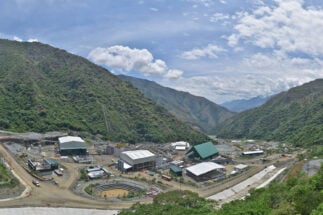

![The Indus at the site of the proposed Diamer-Basha dam [image by: Water and Power Development Authority, Pakistan]](https://dialogue.earth/content/uploads/2020/07/Indus_Diamer_Basha_Dam_Site_Image_WAPDA-300x169.jpg)