The large contribution made by vehicles to global greenhouse gas emissions must not be overlooked. Road transport accounts for about 12% of emissions. But as vehicles become powered by cleaner sources of energy, the emission hotspot in their lifecycles is shifting from the driving to the manufacturing stage.
It is estimated that by 2040 up to 85% of vehicle emissions will arise from producing the raw materials needed to make them. If the industry is to go green, it will not be enough to phase out internal combustion engine (ICE) vehicles. Emissions must be cut throughout the value chain, including in raw materials production.
At the Institute of Public and Environmental Affairs (IPE), a non-profit environmental research organisation based in Beijing, we have surveyed the efforts of 51 Chinese and foreign carmakers to reduce emissions in their steel and aluminium supply chains.
Emissions arising from raw material production were a high proportion of total emissions in the production process for both ICE and all-electric vehicles. And most of the work to cut those emissions remains at a trial stage. Interestingly, makers of electric vehicles (EVs) are actually lagging behind their traditional competitors when it comes to transparency on supply chain emissions.
So, as the automotive industry becomes greener globally, what challenges does it face in China? And what opportunities?
Cutting emissions from steel and aluminium
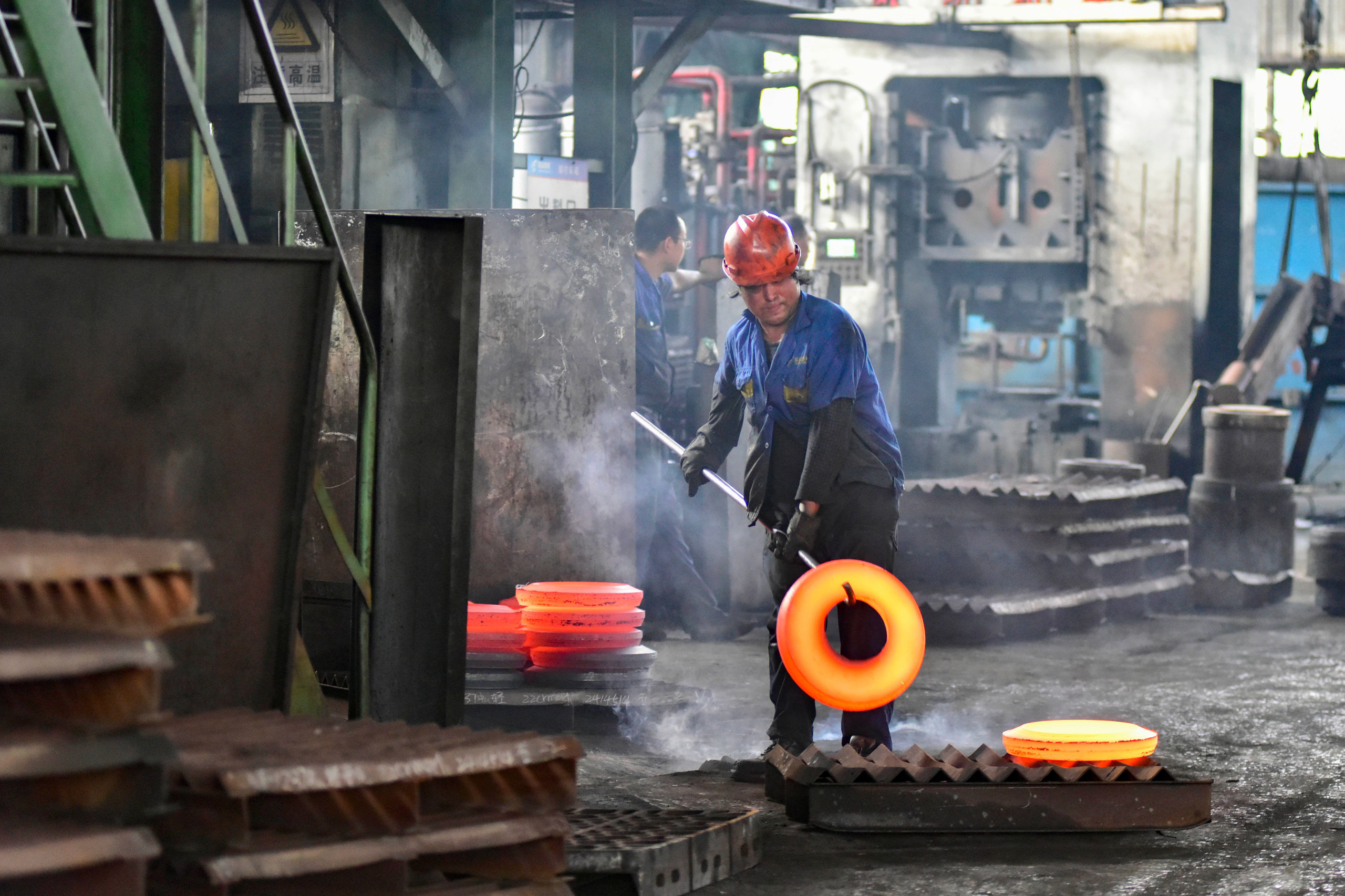
When making the body of a vehicle, steel and aluminium account for a large share of the emissions incurred – 45-65% for an ICE car and 25-40% for an EV.
We found the proportion of steel and aluminium emissions in overall emissions increases with the size of a car, driving up the overall carbon footprint. As the industry shifts towards electrification, it needs to focus on scope 3 emissions and particularly emissions from its raw material supply chains. Stronger cooperation with steel and aluminium suppliers will help cut lifetime emissions.
Scope 1 refers to direct emissions from an organisation’s operations. Scope 2 indicates indirect emissions from energy use.
Scope 3 covers indirect emissions that occur along the value chain of an organisation. They are not owned or controlled by the organisation. A car company’s scope 3 emissions would include the manufacture and transportation of the materials it uses to build its cars, and the international shipping of the finished vehicles.
Scope 3 usually represents the largest share of an organisation’s emissions.
We calculate that all-electric vehicles made by EV manufacturers have higher emissions from steel and aluminium than all-electrics made by traditional manufacturers.
Different types of manufacturers try to cut emissions from raw materials in different ways. Traditional manufacturers that make both EVs and ICEs tend to implement measures on both steel and aluminium. But because the power system of an EV – that is, the electric motor, battery and control system – is heavy, EV makers are keen to save weight elsewhere in the car body. They use an aluminium-magnesium alloy, a mix of steel and aluminium, or an all-aluminium body. They therefore focus more on cutting emissions from aluminium, and could do more on steel.
Vehicle supply chain emissions: Not enough info, not enough action
Last year, we evaluated the 51 companies that sell the most cars in China and are worth most on stock markets, both in China and abroad. Nineteen of these were foreign manufacturers.
Fifty had made commitments to mitigate climate change, and disclosed their actions on scope 1 and 2 emissions. However, action on supply chain emissions remains inadequate. Only 20 companies (39%) had published supply chain emissions data, and only 13 (25%) had published scope 3 emissions targets. Twenty-six published actions taken on steel and aluminium emissions, but most of those were trials and of limited scope. It remains to be seen if those projects will be sustainable and they are not yet enough to encourage suppliers to speed up decarbonisation.
Moreover, carmakers’ disclosures tend to be qualitative or given in percentage terms. This makes it hard to quantify actual contributions to emissions reductions.
Too early to call electric vehicles green
It is true that EVs avoid considerable emissions during usage and have, in usual circumstances, smaller carbon footprints than ICE vehicles. However, our survey found that 10 firms making EVs primarily were actually doing less on supply chain emissions than traditional manufacturers.
We found less than half of EV manufacturers calculate and publish supply chain emissions and collect actual data from suppliers. Only two EV makers have set targets for cutting emissions in their steel and aluminium supply chains, and neither has said how much progress has been made. EV makers also lagged slightly behind conventional vehicle makers when it came to disclosing action to cut emissions from battery manufacturing.
Vehicle supply chain emissions: Challenges and opportunities
Manufacturers face various challenges as they try to cut emissions from steel and aluminium supply chains. First, it is hard to obtain actual emissions data from suppliers and “emission factors” are sometimes inaccurate, which hampers the measuring of emissions and progress on reductions.
An emission factor characterises the emissions potential of a polluting activity. It is expressed as the weight of an emitted gas divided by the unit weight, volume, distance or duration of the polluting activity that gave rise to it. For example, kilograms of methane emitted per tonne of coal burned. High values are associated with high emissions.
Further, the companies lack expertise on how to cut emissions in their supply chain, particularly for steel and aluminium, and do not have targets or assessment mechanisms. Also, producing low-carbon or recycled steel or aluminium incurs too high a price premium.
These internal issues arise from external barriers. First, the main international raters of ESG (environmental, social and governance) performance are not yet able to effectively assess progress in carmaking supply chains. This reduces motivation. Second, supply chain stakeholders have not yet reached agreement on defining “low carbon” or “green” steel and aluminium, making procurement decisions harder. In China, steel and aluminium recycling systems are not yet fully developed and recycled aluminium alloys are low-grade, with little supply of recycled material. And again, consumers are unwilling to pay a premium for green or low carbon products.
Nevertheless, the Chinese government has issued a number of policies extending emissions targets throughout the automobile value chain. For example, its Plan for Peak Carbon in the Industrial Sector proposes to:
“support leading carmakers to play a leading role in supply chain integration and low carbon innovation efforts, building low carbon principles into the entire process of product design, raw materials procurement, production, transportation, storage, use and recycling, and to accelerate the construction of a unified green-product certification and labelling system to promote the green and low carbon development of the entire supply chain”.
Various government bodies have issued policies encouraging steel and aluminium makers to take energy-saving and emissions-reduction measures. This year, the Ministry of Ecology and Environment has expanded China’s national carbon market to cover steel and aluminium makers. This provides low-carbon transition routes and targets for the automobile supply chain, as well as policy support for action by the suppliers. For example, the inclusion of steel and aluminium makers on carbon markets makes their specific responsibilities clear. Carbon pricing mechanisms will push them to cut emissions, thus reducing those supply chain emissions.
Meanwhile, China is also working on carbon accounting and disclosure standards, as well as speeding up work on methods for calculating product carbon footprints and building a lifecycle assessment factor database. This will boost carbon-accounting capability at vehicle makers and their metals suppliers. For example, as of May 2025, an automobile industry carbon disclosure platform had collected emissions data for 8,000 passenger vehicle models, while a steel industry platform was making 200 environmental product declarations available. China’s expansion of renewable energy will also help the car industry to decarbonise.
As the country builds more cars than any other, China needs to be on top of low carbon trends in the industry, then use its influence over the value chain to put quantified green procurement requirements in place to promote emissions cuts. EV makers in particular should focus on shifting from manufacturing green vehicles – reducing emissions of greenhouse gases and pollutants during usage of their product – to a dual focus that includes “green manufacturing”. This will help to promote global climate action.
And as the world’s largest car market, China’s consumers could pay attention to lifecycle emissions of their cars and choose those with the lowest footprint. This would encourage manufacturers to make the transition and spur deeper decarbonisation in upstream suppliers.