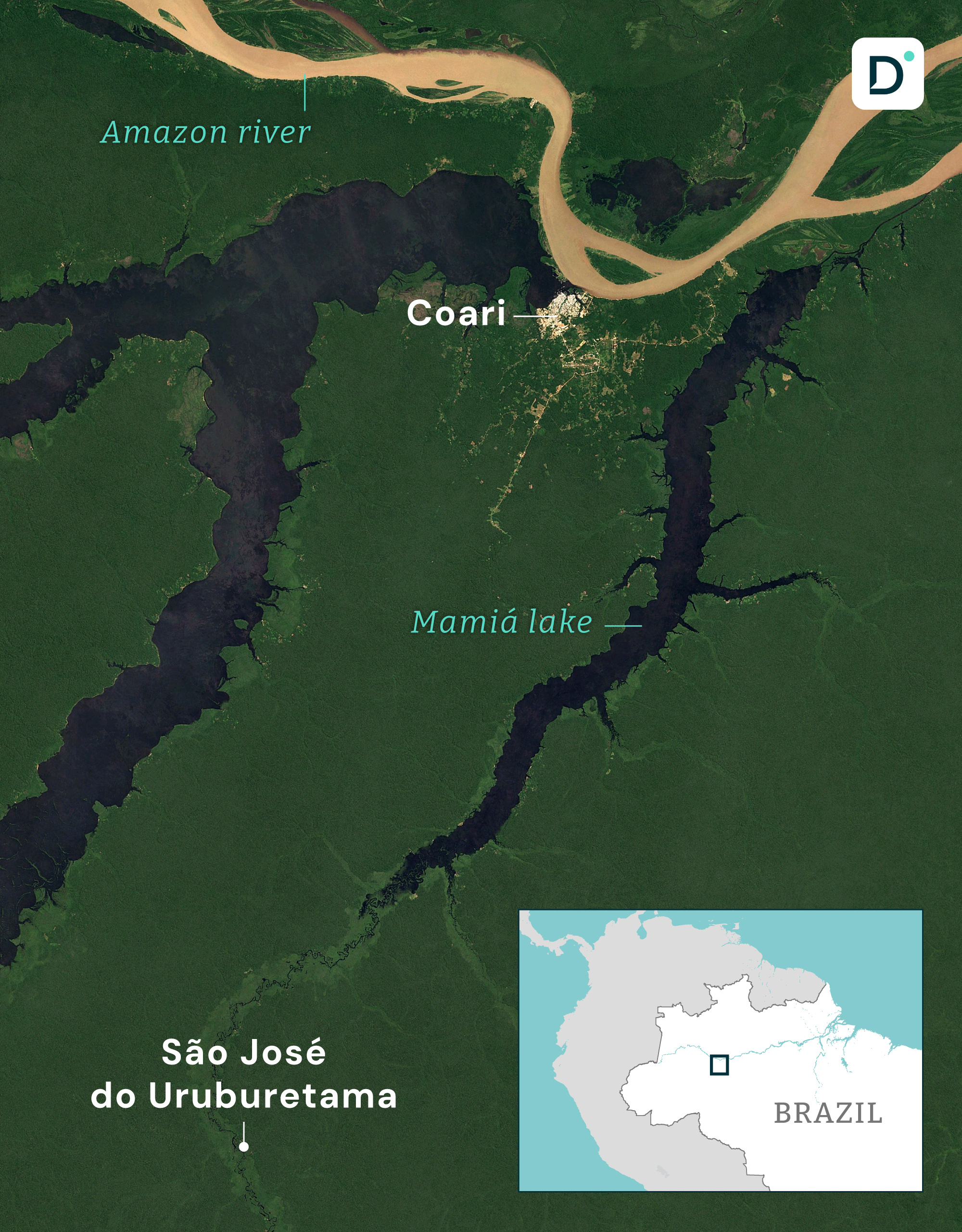
Of the 22 Indigenous Kokama families in São José do Uruburetama, a rural village in the city of Coari, Amazonas, only three stayed during the historic drought of 2024. The rest were forced to move to the city in search of healthcare, food and safety.
Editor’s note:
This article is part of Dialogue Earth’s Indigenous Voices fellowship. The eight fellows are Indigenous journalists and storytellers from across the Global South. The fellowship aims to foreground not just Indigenous issues, but also the storytelling, reporting and insights of Indigenous journalists themselves.
The extreme droughts of 2023 and 2024 disrupted the routine of the village. Its location on the banks of the Mamiá River, an Amazon tributary, means that if the river dries up, people cannot travel. It imposed a new way of life on them, divided between the forest and the outskirts of the city.
As part of Dialogue Earth’s Indigenous Voices project, I set out to document how one community has been impacted by these extreme weather events.
I travelled the 100 kilometres from Coari’s city centre to São José do Uruburetama by speedboat. My five-hour journey can take up to three days in the dry season. Lake Mamiá bathes the village but with much of it reduced to stretches of mud, coming and going is compromised – and with it, the daily life of the community.
Periods of drought are part of the Amazon region’s natural cycle. Known as the “Amazon summer”, the dry season occurs between July and November and is marked by a gradual reduction in river levels. The riverside and Indigenous communities are used to dealing with these variations. They adjust fishing, navigation and planting according to the rhythm of the waters.
However, what happened in 2023 and 2024 went beyond this pattern: exceptional, longer, more intense and unpredictable droughts, aggravated by climatic phenomena such as El Niño (which warms the waters of the Pacific and alters rainfall patterns in various regions) and the advance of climate change. I spoke to Philip Fearnside, a climate change researcher at the National Institute for Amazonian Research (Inpa). He says “climate models are clear in predicting ‘unprecedented’ droughts.”
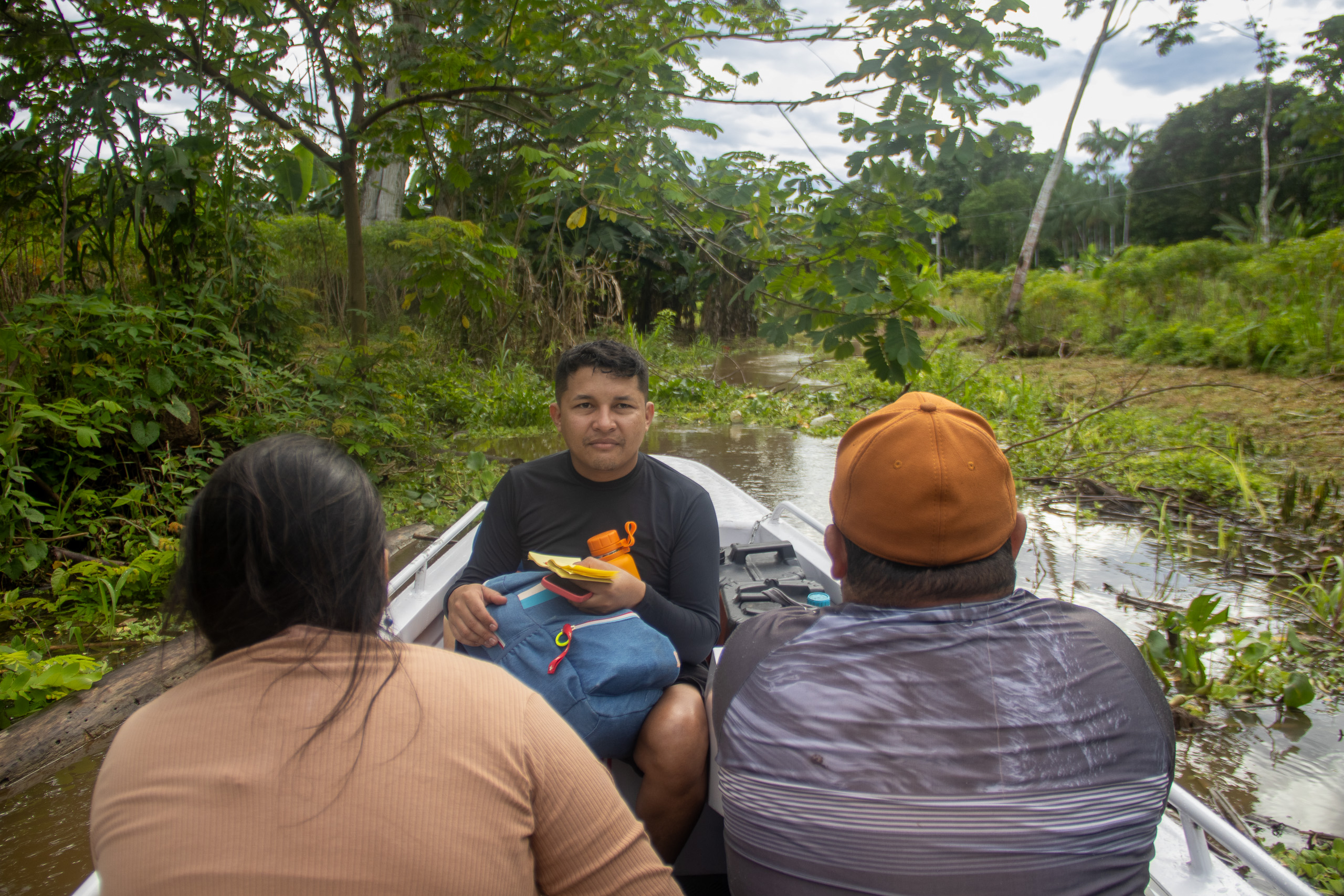
According to Fearnside, the recent worsening of droughts has multiple causes: both El Niño and the Atlantic Dipole (a phenomenon that unbalances temperatures between the north and south of the ocean) are more frequent and severe with the advance of global warming.
Fearnside also points out that as deforestation in the Amazon progresses, there are fewer trees releasing water vapour into the atmosphere. This reduces cloud formation and makes it harder for rain to fall on the forest again. As a result, he sees a trend towards more consecutive intense droughts, such as those that occurred in 2023 and 2024. This year, the drought that is beginning is expected to be moderate.
In São José do Uruburetama, the only source of drinking water is the Mamiá River itself. According to the locals, when the level dropped like never before in 2023 and 2024, the water became cloudy. It smelled and tasted of mud. Even so, the water was used for drinking, cooking, washing and bathing. It is only treated with chlorine, supplied by the town hall.
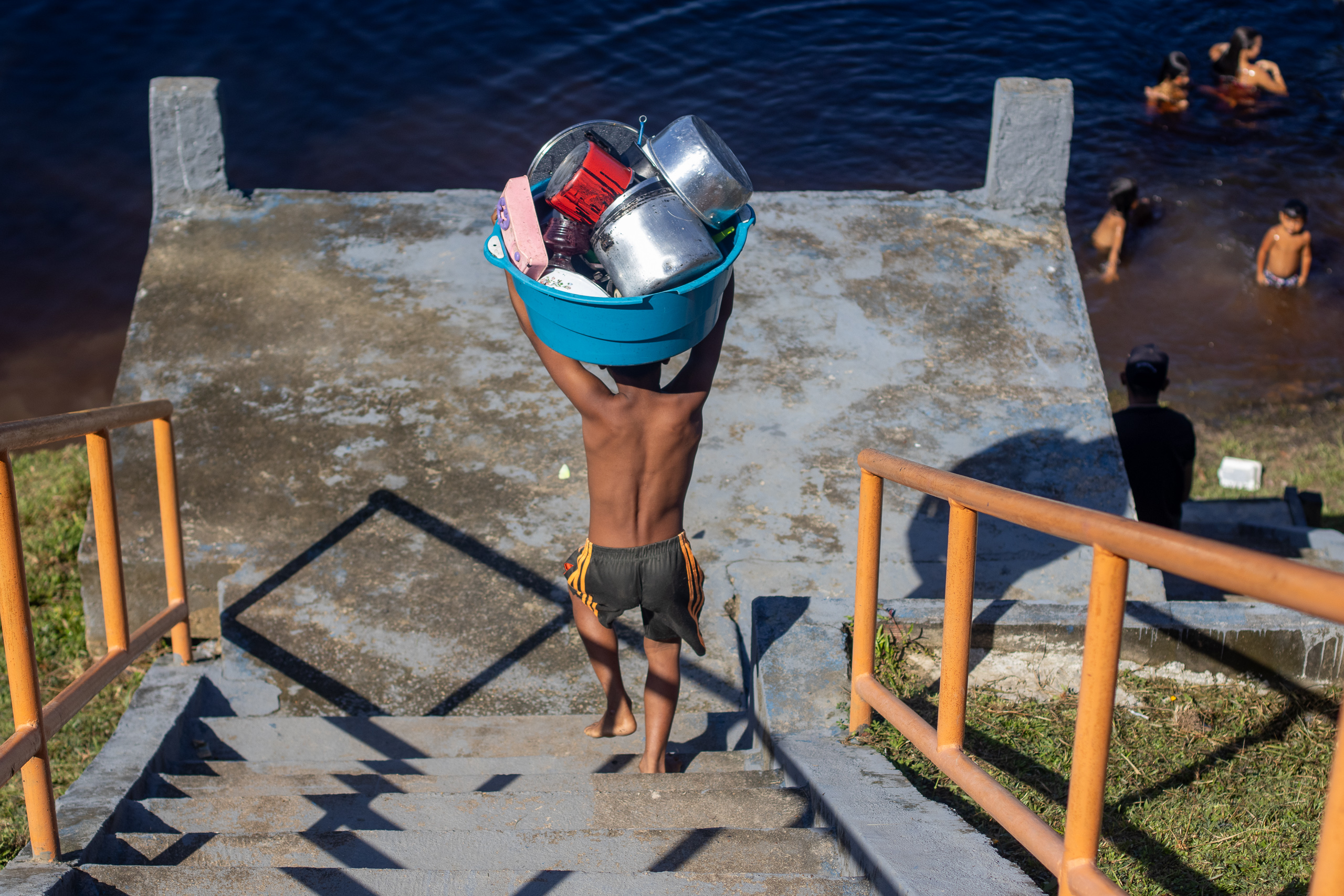
According to Valcineto Moreira, a community health worker, cases of diarrhoea and stomach pains multiplied during these two droughts – especially among children and the elderly. “The water gets very dirty, it looks like mud. We treat it with chlorine, but [people] still get sick,” he says. No figures for these cases were found in public databases.
Water, a source of life and sustenance, is now a risk.
Challenges of city life
Tandara Nunes, an Indigenous Kokama woman, left the community during the drought of 2023 when her youngest daughter fell ill. “She came down with malaria, but she didn’t get well. Her immunity was already low. A week went by, two, and nothing,” she says. The family had to travel for two days to get treatment in the centre of Coari. “There were no more boats. We had to go by canoe and push her through the mud,” recalls Nunes.
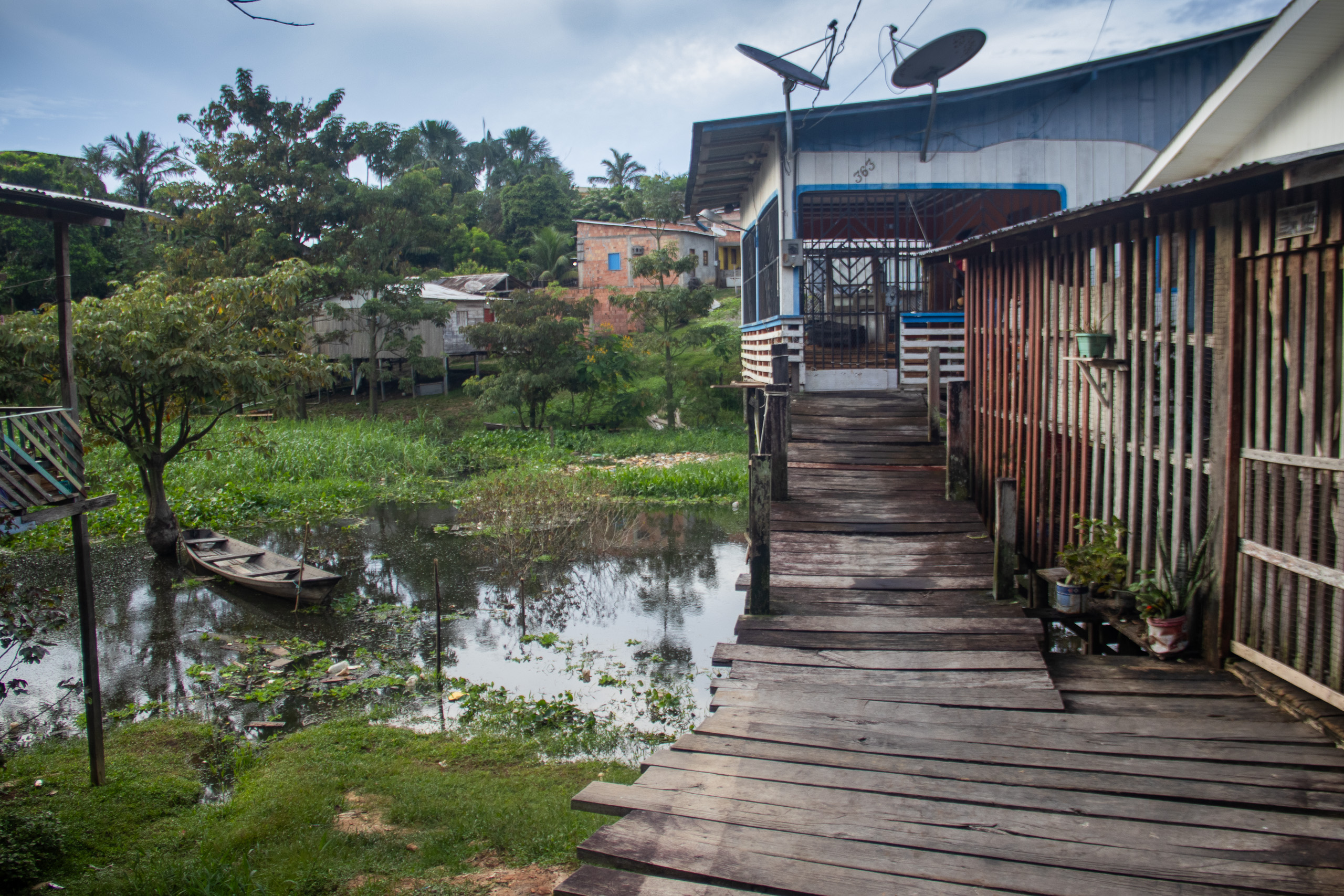
In 2024, afraid of reliving the drama, Nunes moved to the city with her family before anyone got sick: “My middle son has asthma. We were already suffering with him, too. So, we all went.”
During the most critical periods of drought, Indigenous residents in the urban centre of Coari can offer shelter – but not comfort. For many families from São José do Uruburetama, living in the city means cramming into relatives’ houses, sometimes with three or four families in one room. Nunes’s family took shelter in a room at an aunt’s home on the outskirts of the city.
In the city, everything costs money: transport, food, medicine, fuel. “There, if you don’t have money, you don’t eat. Not here [in the village]. We go after it,” summarises Nunes. In the village, even with difficulty, there are fish from the river, açaí fruit, locally produced flour and bartering between neighbours. In the city, without a stable income, the risk of starvation is real.
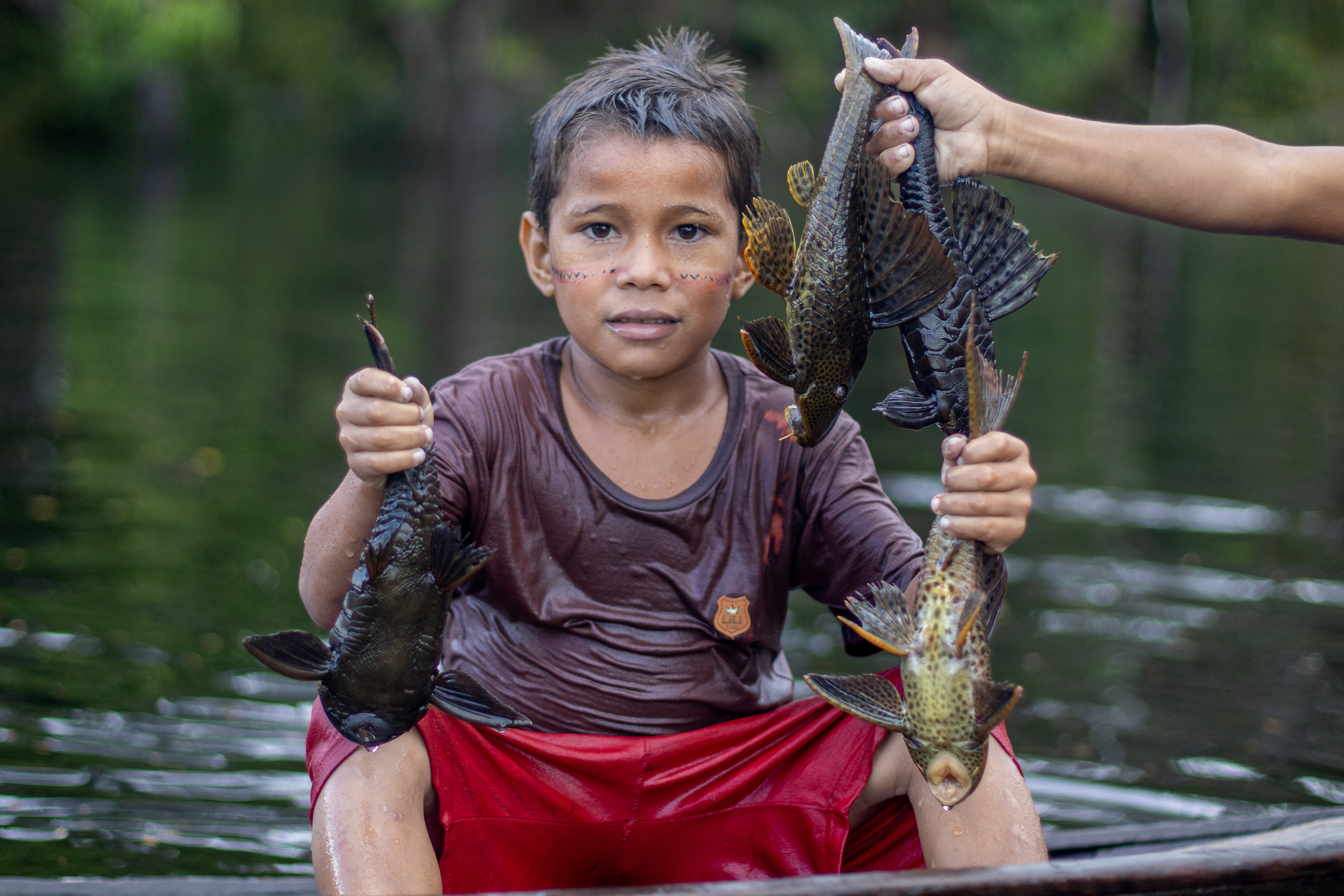
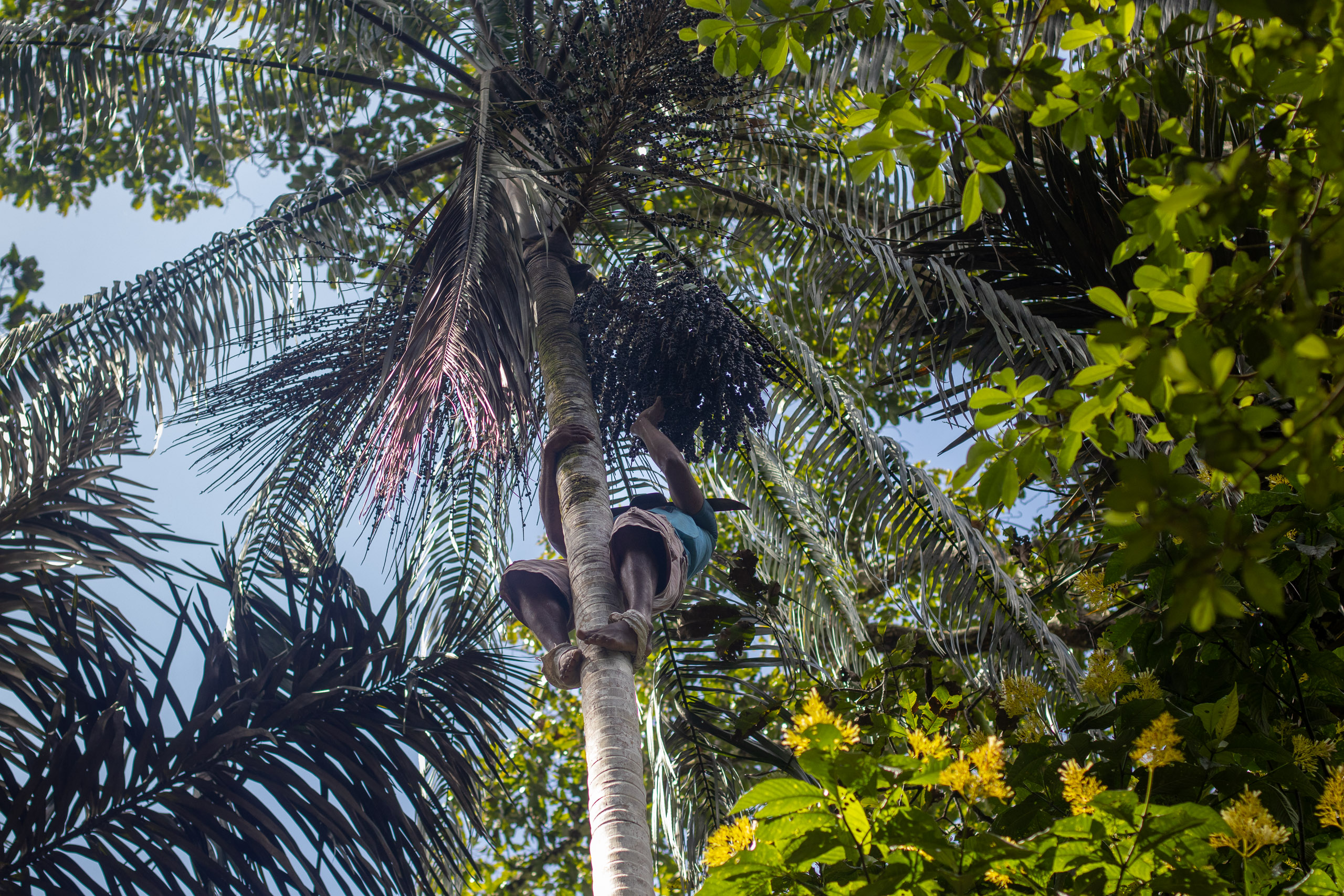
To cope with the high costs of urban life, Indigenous families who move temporarily to the city organise themselves collectively. They pool what little they have to buy basic food baskets, share food and help each other in any way they can. Most survive with the support of the federal government’s social assistance programme, Bolsa Família, which becomes their main source of income during this period. The average amount received by families through the programme is BRL 688 (USD 126), which is less than half the country’s minimum wage.
Despite the difficulties, the families I interviewed made it clear that going to the city is temporary. The forest – and all its challenges – remains their home.
Constant threat of malaria
Malaria is one of the main health threats in São José do Uruburetama, especially during periods of drought, when conditions become ideal for the proliferation of the mosquito that transmits it. When the river is low, puddles and stretches of still, shallow water appear – the perfect environment for the insect to breed.
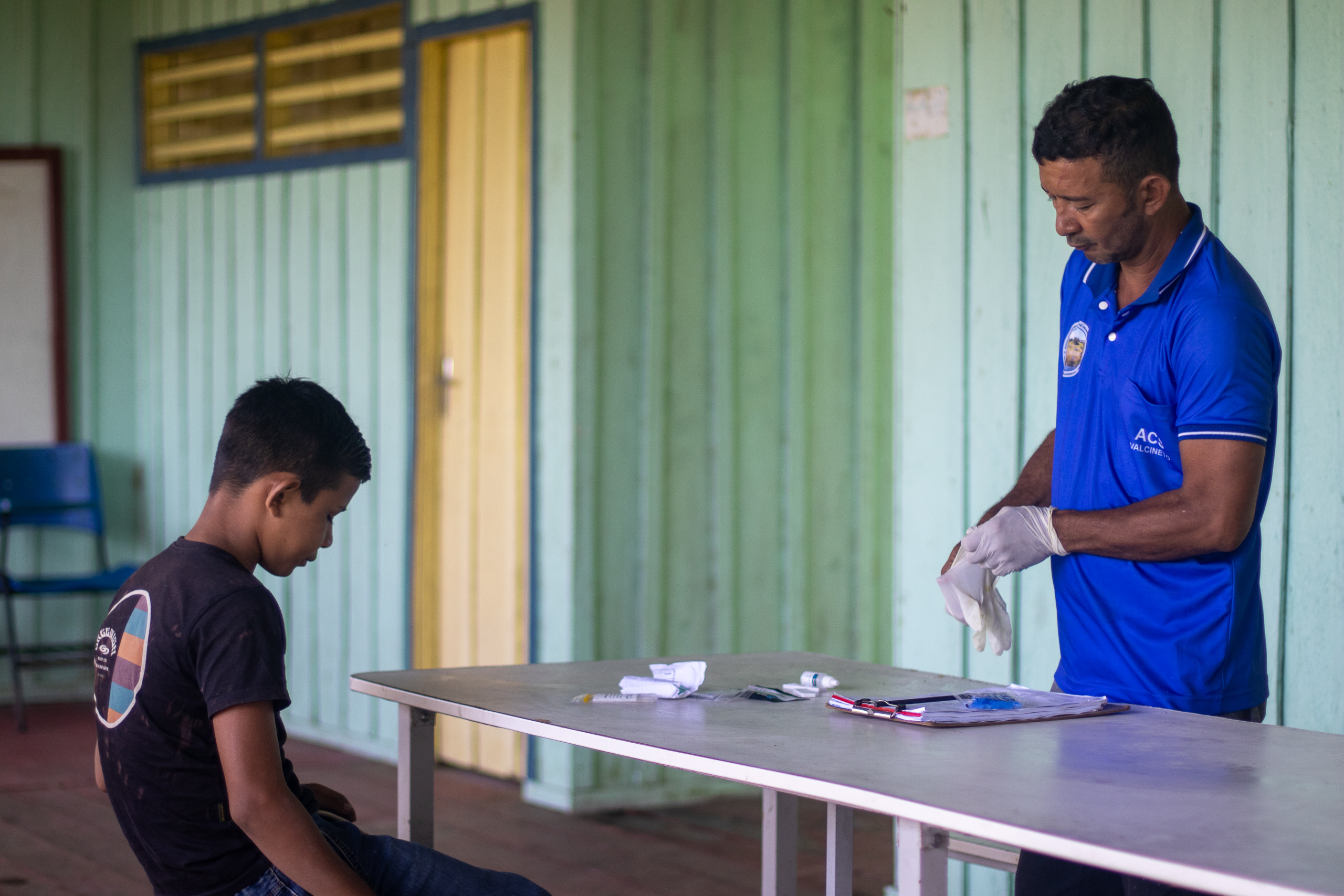
Moreira, who lives in the community himself, recalls the difficulties of being the only link between the residents and the public health system: “It’s preventative work. We collect slides [of blood for diagnosis], we make visits, we monitor. But in the drought, there are areas you can’t get to. It’s muddy; it’s far away; the boat can’t get through.”
In the drought of 2023, Moreira was prevented from returning home – and his absence had consequences for the community. He had left his wife and children in the village and travelled by canoe to the centre of Coari to buy food. In the meantime, the river level dropped so low his boat could no longer pass. Moreira was only able to return three days later in an aluminium dinghy provided by friends. “I found 17 cases of malaria and my wife lying on the sofa, sick,” he recalls.
Official data from the Amazonas State Health Department shows there were 2,471 cases of malaria in Coari in 2023. That is the highest number of the past five years and an increase of 41% compared to 2022. There were 639 cases in August 2023 – the most of any single month in the same timeframe. This coincided with the start of the severe drought. In 2024, cases remained high, totalling 2,225 – 27% more than the period before these historic droughts. The figures reinforce what residents experience in practice: with drought, malaria advances faster and reaches further. Fortunately, the fatality rate is very low.
Five months of lessons per year
Seven families live in the centre of São José do Uruburetama, while the majority of the community is dispersed across a wider area and accessible only by river. When the water gets too low, children from the outskirts cannot reach São José do Uruburetama’s school, which is in the centre.
At the school, education is restricted to primary level. One teacher handles the initial grades and another the final grades – both in the multigrade format, in which students of different levels and ages share the same classroom.
This arrangement, already challenging under normal conditions, becomes even more precarious during droughts. With the lake and the Mamiá River shallow, the school boat stops and classes are suspended indefinitely, even for children living in the centre.
The teachers come from downtown Coari, and travel back to the city once a month to collect their salaries and buy food for the village. However, drought makes the return trip unfeasible. “When the drought comes, the community boat can’t get through,” summarises Mariete Queiroz, a community leader. “Classes stop and only resume when the river fills up. That’s how it is here: those who have learned, have learned; those who haven’t lose the year.”
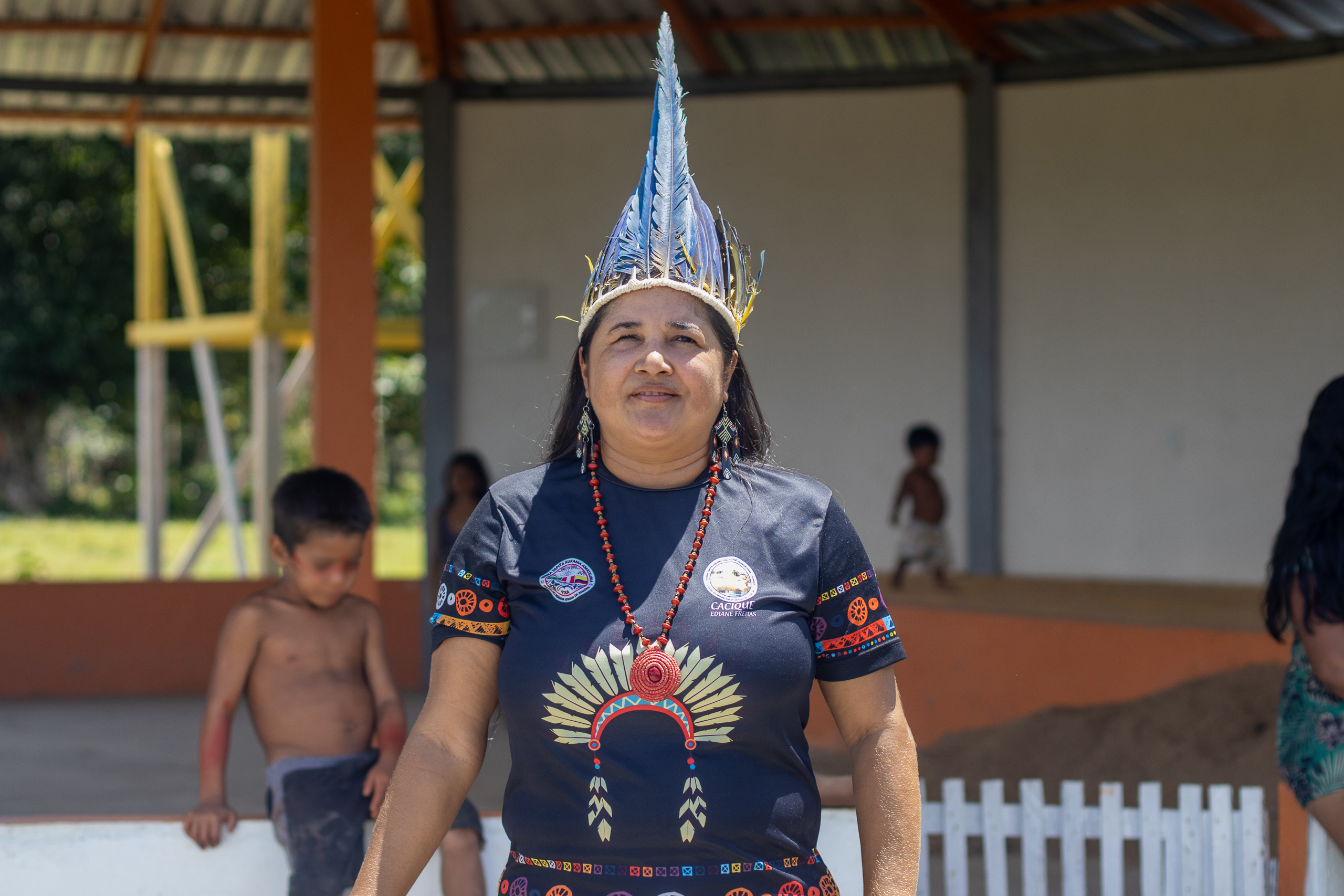
In 2023 and 2024, the school calendar only ran from April until August, when classes were interrupted due to the droughts. To try to minimise the losses, an alternative timetable was set up for students who could travel to the city. Those who remained in the village were often left out due to a lack of resources, like internet connectivity or printed materials. On the other hand, the study plans given to city students to follow at home were insufficient, according to the community’s chief, Ediane Freitas. She says that, without face-to-face classes or pedagogical support, learning was hampered: “A study plan to do at home doesn’t have the same [effect] as the classroom.” For those who remained in the isolated community, there was no educational alternative during the drought.
Freitas has been warning representatives of Coari’s municipal education department about the recurring educational losses among the village’s students. In 2025, the school year began in April and is still ongoing, but she fears it may be interrupted by the drought.
“Once the drought hits, the children are completely stuck,” she laments. “Those who stay here don’t have any lessons. When they come back the next year, what’s gone is no longer replaced. They’ve already lost a lot.”
The government needs to be prepared to deliver food and water to traditional populations when major extreme weather events occurPhilip Fearnside, climate change researcher, National Institute for Amazonian Research (Inpa)
Freitas is calling for planning that takes the reality of isolated communities into account, and for the authorities to take notice. “If we had this special look from the powers that be … but we don’t,” she summarises.
When contacted, Coari’s municipal health and education departments did not respond to questions about local health data, or actions taken during the droughts.
“The government needs to be prepared to deliver food and water to traditional populations when major extreme weather events occur,” says Fearnside. But he also says action needs to go beyond emergency response plans: “There needs to be a rapid change in policies, which [at the moment] are leading the country and the world down the path to ever worse climate crises.”
Fearnside is critical of the Brazilian government’s plans for oil exploration in the Amazon and the proposed reconstruction of the BR-319 highway, which links Manaus to Porto Velho along an 877-kilometre stretch through the heart of the rainforest. According to him, the project would open up vast areas of the Amazon to deforesters and their associated networks.
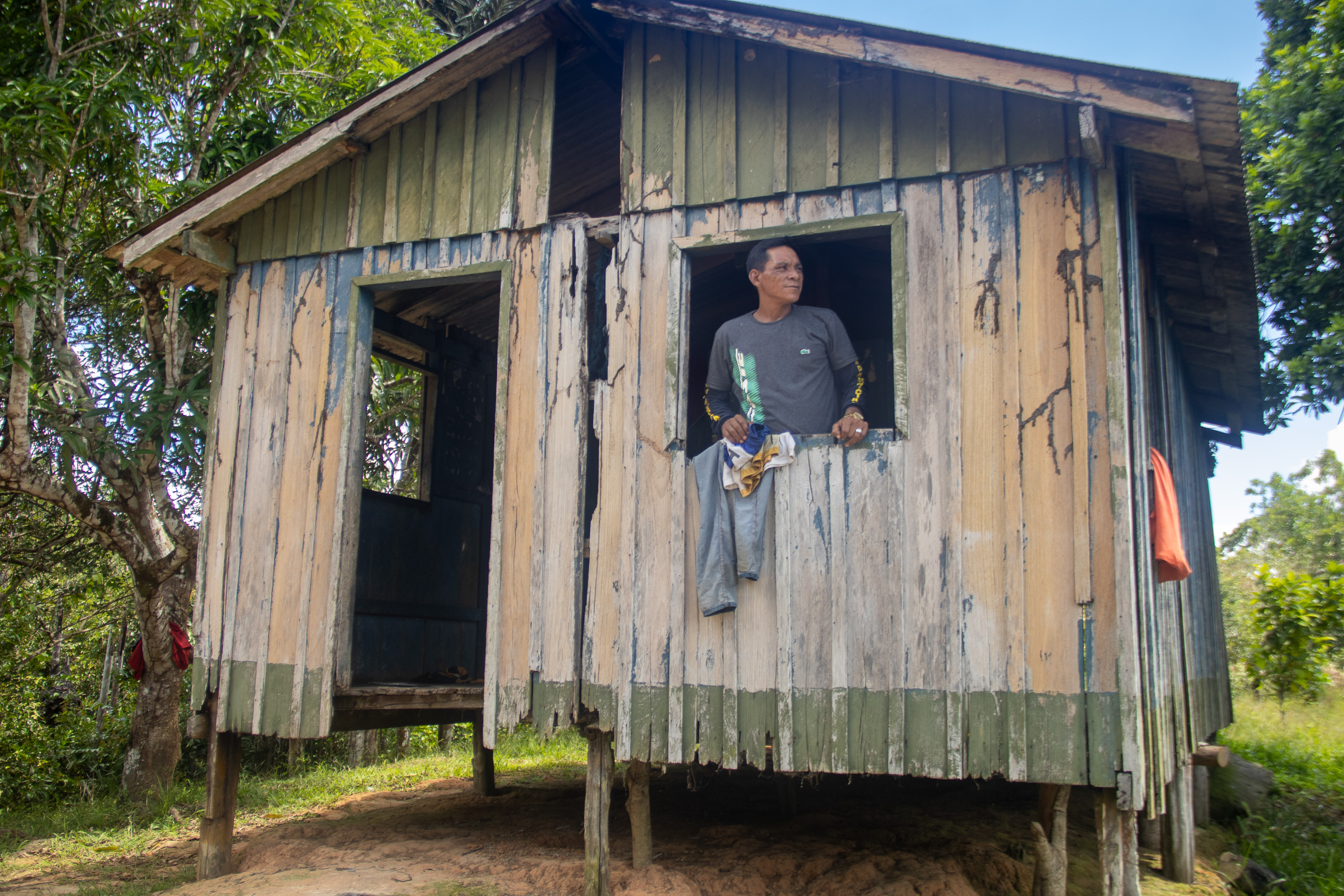
In São José do Uruburetama, the water cycle dictates the rhythm of life. But what used to be only about adapting to nature is now also about resisting an increasingly unpredictable climate.
Despite the difficulties though, no one is considering leaving the community for good. “Here, I feel freedom,” says Freitas. “It represents resistance. It represents my strength.”