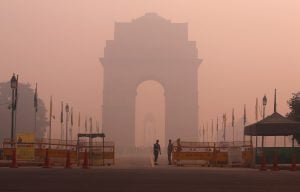
From the beginning of COP23, the issue of loss and damage has cast a shadow over proceedings as developing countries argue for pre-2020 actions to be included. At present, a much more visible gloom hangs over Delhi – air pollution.
Visibility has plummeted, a health emergency has been declared, and schools have been shut down. Various regional governments are quarrelling with each other, and with central government agencies. But the solutions seem elusive.
The Indian environment minister, Harsh Vardhan, advised residents not to panic, saying that a Graded Response Action Plan was in place. But given that this plan has allegedly been in place for 12 months and Delhi’s air is as polluted as last year, it seems to have delivered little.
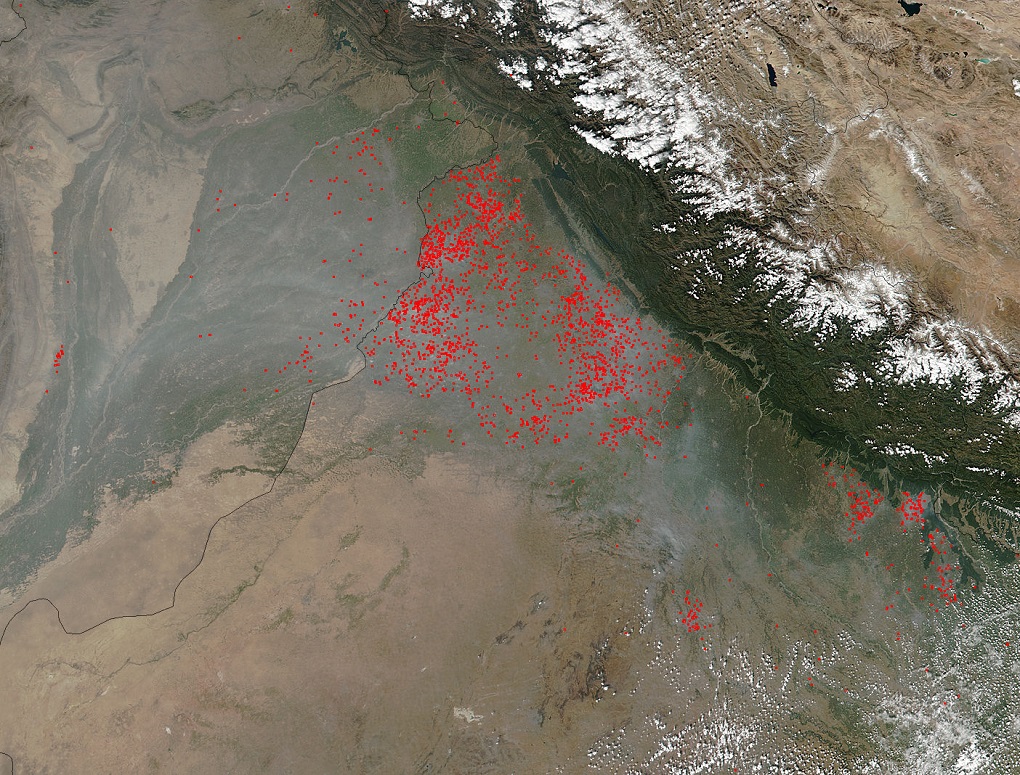
The problem of Delhi’s air pollution has an obvious — but expensive — fix. Up to 90% of the pollution in northern India is caused by farmers burning stubble to clear fields in the neighbouring states of Punjab and Haryana. The Indian government had a plan to deal with the issue, but it fell apart as the states concerned couldn’t agree on a way to distribute the INR 30 billion (USD 460 million) in costs.
See: Delhi smog caused by stubble burning in India’s bread basket
The government is already spending a huge amount to deal with the costs of climate change adaptation. According to a study carried out by the Indian Institute of Management Ahmedabad, the Indian Institute of Technology Gandhinagar and the Council on Energy, Environment and Water, India spent USD 91.8 billion in the 2013-14 financial year. These costs are projected to increase to USD 360 billion to 2030.
Direct damage
In 2016, NGO Germanwatch estimated that India suffered direct infrastructural damage of about USD 21 billion due to extreme weather events, equivalent to almost 1% of India’s total GDP – and about the same it spends on the entire health budget.
See: Climate risk perilously high in India
The Delhi smog, therefore, shows how badly developing countries have been affected by climate change impacts, largely caused by the historical carbon emissions of developed countries. The huge losses and expenses a country such as India faces in dealing with these issues limits its ability to allocate funds to easy but expensive solutions which, in turn, lead to massive carbon emissions. The effects of Indian crop burning will, inevitably, add to the load of carbon already in the atmosphere, compounding the problems of climate change faced by the world at large.
More problematically, countries left to fend for themselves to deal with these issues will have to boost their GDP. At a pre-COP23 briefing for Indian journalists, Thomas Hagbeck, the counsellor for economics, environment and urban development at the German Embassy in India, spoke of German’s Energiewende (energy transition) away from fossil fuels. He emphasised that the transition was not cost-free and required significant investment.
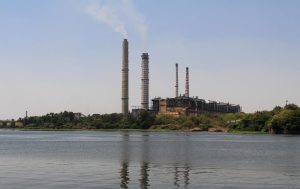
Germany has a per capita GDP of nearly USD 42,000. By comparison, India’s is USD 1,850. As a result, developing countries such as India, which is also the fourth largest carbon emitter after China, the US and the European Union, is likely to adopt the easiest and cheapest technologies to boost its GDP, pushed in part by the costs needed to deal with climate adaptation. It is little wonder then, that coal-based power plants remain one of the key drivers of energy growth in Asia.
Bills coming due
Environmental pollution is famously one of the key externalities left out of economic calculations, as the costs are diffused and long-term – but the bills are now due. This generation is the first in nearly 1,000 years to see a lowered life expectancy compared to the one previous. Our children are paying the costs. One key reason is air pollution, a fact already seen in the US and in China.
As developing countries make poor choices — partially due to the poor choices made by developed countries in the past — this problem is likely to increase. The Delhi smog cannot be disentangled from a larger global problem, which will not go away without a global solution. The fact that developed countries refuse to have that discussion hurts us all in the long run.
We want to hear from you! Tell us what you think about The Third Pole and you could win $100. Take our survey here.