
Pakistan’s image has been tarnished by uneasy relations with its neighbours and the US and links to terrorism. The grounds for this are complex and much of the criticism is not unfounded. But could cooperation on fighting climate change improve Pakistan’s international standing under the leadership of its new Prime Minister Imran Khan?
Cricket is to South Asia what football is to Europe. Maybe even more. When Pakistan won in the final of the 1992 Cricket World Cup, I still remember the whole nation in jubilation, and my 12-year old self glued to a TV screen, watching our team’s captain, Imran Khan, address the crowd with the world cup in his hands.
Fast-forward 26 years to this August, when Imran Khan made his maiden address to the nation as Prime Minister of Pakistan. What moved me the most this time, being an environmentalist and climate change scientist, was that he included climate change in his priorities; not an issue important to any of his predecessors.
Although Pakistan has done little to cause climate change, any actions it takes to combat it would send a positive signal to the world. Take for example the case of Bhutan, whose climate friendly policies are being held up as a global role model.
Can Khan’s new government harness the global focus on this pressing problem to improve the tormented image of the country?
Climate change is seen as a developmental challenge, as it disproportionately affects the poorest communities, with the lowest capacities to cope and adapt. There is also a certain connection between climate change and terrorism in Pakistan. Climate-related calamities may contribute to deepening poverty, offering opportunities for terrorists’ recruiters, as stated by a report commissioned by the German foreign office.
Yet, domestic experts see climate change and water scarcity as a bigger threat than terrorism. Terrorist attacks, corruption, economic development and foreign relations were not the only major issues the country had to face in the last decade or so.
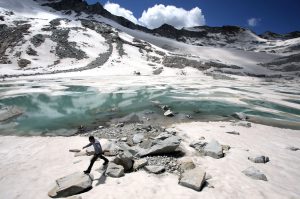
Pakistan’s total greenhouse gas emissions are a mere 0.43% of global greenhouse gas emissions but climate change is already hitting it for six. Pakistan counts to the world’s six most vulnerable countries to climate impacts and is grappling with unsustainable population growth and extreme weather events, such as heatwaves, droughts, shifting weather patterns, receding glaciers, floods, declining ground water levels – the list goes on.
To illustrate what this means for Pakistan in practice, one needs to look no further than the summer of 2015, when the extensive power cuts during the 45ºC summer temperatures tested the limits of its large population. What’s more, the lack of a reliable power supply to industry has hampered the economic growth of the country. Consequently, the textile industry has mostly relocated to neighbouring countries, such as Bangladesh. These electricity shortages were considered to be the main reason why the government of the time was voted out in 2013.
Climate diplomacy: A chance for Pakistan
There are high hopes associated with the new government because, unlike its predecessors, the environment and climate change seem to be among its top priorities. Pakistan has a fully fledged federal ministry of climate change. In the past, this ministry has largely been criticised as being ineffective. However, the appointment of Malik Amin Aslam, a professional environmentalist who holds the portfolio of vice president of IUCN’s global council, and served as environment minister for state in the past, might be a good omen.
Aslam’s most celebrated brain child, the “Billion Tree Afforestation Project”, was to plant one billion trees in a small province during the last five years under the provincial government of his political party. Against all odds, Aslam and his team pulled off this ambitious plan, surpassing the Bonn Challenge commitment, which was later acknowledged by international organisations including WWF, IUCN and WEF. The project brought enormous benefits, such as thousands of jobs, a boost for tourism and protection against floods. Now, the new federal government is planning to roll out a similar plan across the country, the 10 billion Tsunami, and Aslam is committed to lead towards a ‘greener’ direction.
The biggest dilemma
The previous government, elected in 2013, touted electricity generation and transport as its top priorities. With highly unfavourable conditions for investment, Pakistan’s “all-weather” friend China came to the rescue, but with a heavy investment in the dirty coal technology. China’s coal investments abroad have been subject to severe criticism, especially as it was considered as a main player in securing the 2015 Paris Agreement to fight climate change. Notwithstanding the reduction in domestic coal use due to severe environmental impacts, China was responsible for investing an estimated USD 38 billion in coal projects worldwide by 2014, including in Pakistan.
Pakistan is already grappling with severe pollution and related health issues. Under the guise of bringing energy, this investment will pollute the air and water, and negatively impact public health and environment of Pakistan.
The way forward
Considering the fragility of Pakistan’s economy and rapidly decreasing foreign currency reserves, it will be very tough for the newly elected government to roll back on these coal projects straight away. However, it must realise that fossil fuel energy generation is fast becoming an obsolete technology thanks to the rapidly decreasing cost of renewables. Solar and wind now cost as much as, or in some cases even less than, new fossil fuel energy generation in many countries.
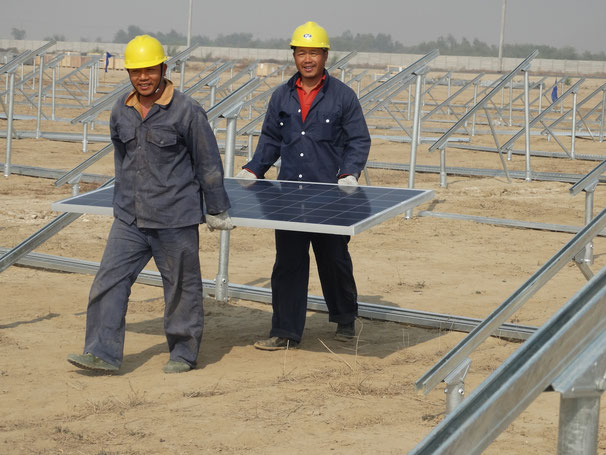
Pakistan has the ideal conditions for harnessing solar energy because of its arid and semi-arid climate. Besides a supply of sustainable energy, solar solutions come with co-benefits, which include more skilled jobs, getting rid of transmission costs to remote areas, and most importantly, health benefits from less air pollution.
It is imperative for Pakistan to adopt a two-prong strategy – on the diplomatic as well as economic front.
On the diplomatic front, presenting itself as a player in the fight against global warming would help Pakistan build up its image as a responsible state. On international forums, the prime minister and his government officials should mention his achievements and future plans to combat climate change.
On the economic front, Pakistan should move towards a clean energy pathway as soon possible. Rather than seeking foreign investment to fulfil its energy needs with fossil fuels, it can ride the renewables wave, developing its workforce and technical and institutional capacity to harness solar energy. Climate conditions suggest the country could produce enough power to both cover domestic needs and to export, along with associated equipment and technology.
![women farming on chilli farms in Pakistan [image by: Zofeen T. Ebrahim]](https://dialogue.earth/content/uploads/2018/10/IMG_3660-300x225.jpg)


![Bhutan elections 2018. Bhutanese scrutinise claims on an election board - the only place where political parties are allowed to put promotional material [image courtesy: Kuensel]](https://dialogue.earth/content/uploads/2018/10/election-2018-300x225.jpg)
![Farming the biofuel Jatropha in Morocco [Image: Joydeep Gupta]](https://dialogue.earth/content/uploads/2018/10/Jatropha_Morocco-300x225.jpg)
![In a village on the edge of the Sundarbans and facing the Bay of Bengal, Jasimuddin Sarkar in front of his farm that now grows nothing, thanks to sea level rise, and his house that gets flooded with dirty saline water every third or fourth day [image by: Joydeep Gupta]](https://dialogue.earth/content/uploads/2018/10/Farmer_Jasimuddin_Sarkar_Baliara_Mousuni_Joydeep-e1515995272635-300x200.jpg)