The agreements reached at last month’s UN Environment Assembly represent a “victory”, delegates from Africa and Latin America told Dialogue Earth.
The negotiations had to weather the efforts of some countries to water down language of certain resolutions, difficulty agreeing the budget for the UN Environment Programme (UNEP), and the absence of the United States from many discussions.
As well as a declaration signed by environment ministers, 11 resolutions were adopted at this the seventh UN Environment Assembly (UNEA7), which is held biennially in Nairobi, Kenya. These concerned issues including protecting coral reefs as the ocean warms, cleaner management of minerals and metals, and addressing a “massive influx” of sargassum seaweed in the Atlantic Ocean.
Tanzanian delegate Richard Muyungi is chair of the Africa Group of Negotiators, which represents 54 African countries at the UN climate negotiations. He emphasised the importance of UNEA7 achieving agreement on UNEP’s strategy for 2026-2029, which included the 2026-2027 programme of work and budget. That amounts to USD 1.1 billion to be distributed among UNEP’s programmes, an increase on the 2024-2025 budget of USD 869 million.
Muyungi, whose country is rich in minerals and forests, said the meeting “gives us a sense of how the global community is ready to work with our continent to address the challenges we are facing: whether it is climate change, biodiversity loss, desertification, ocean acidification or the loss of coral reefs.” He added: “The outcome will inform in the longer term how we can better manage our environment in Africa while ensuring sustainable development”.
Multilateralism under strain
UNEP’s executive director, Inger Andersen, acknowledged to Dialogue Earth that multilateralism is under strain but was bullish.
“What’s the alternative to multilaterialism?” she said. “UNEP has been actively promoting environmental conservation for over half a century, and despite the recent change of direction of some countries, the markets are talking.” She gave the example of Texas, “an oil-producing state that has invested in renewable energy covering the supply of 40% of its electricity demand.”

Andersen said that while the UN and the multilateral system are not moving fast enough, they are trying to speed up. She noted the importance of synergies among multilateral agreements. Nineteen conventions are represented at the UNEA, on topics from chemicals to wildlife trade and plastics.
“I rarely engage with science deniers – we’re a scientific agency – but I would tell them that the price of action today is cheaper than with a 2.3C global warming scenario,” she said. Andersen drew on some of the key messages contained in the 7th Global Environment Outlook report which was launched at UNEA7. An update on the one published in 2019, it contains clearer science, particularly on the scourge of plastics for human health and the environment.
Plastics treaty revival: ‘If you’re not on the table, you’re in the menu’
UNEA7’s ministerial declaration, which closed the negotiations, anounced broad actions to promote international environmental governance.
It mentioned the resolution on ending plastic pollution, adopted by UNEA in 2022. Andrés Del Castillo, senior attorney at the Geneva-based Center for International Environmental Law, noted the “very ambitious language” of that resolution, which seeks to control pollution throughout plastics’ life cycle.
Del Castillo said the declaration, which was signed by all UNEA member states except the US, “emphasises the commitment to continue the negotiation process for the plastics treaty … within the UN system.”
But he believes geopolitical forces will make environmental governance challenging in 2026. Though ambitious countries are beginning to make many concessions, the other side is less generous, he says, especially on the issue of plastics.
He celebrated the adoption of the 2026-2029 strategy but warned of the strings attached regarding gender and human rights. A group of countries whose economies strongly depends on fossil fuels had only approved the strategy on condition UNEP dropped its recognition of the connections between human rights, gender and the environment.
“UNEP’s room for manoeuvre has been restricted,” he said. “The head of the agency will be constrained by a new agenda that is trying to limit the intersections between human rights and the environment.” However, the ministerial declaration does include a mention of the right to a clean, healthy and sustainable environment, Del Castillo noted.
He believes the US will most likely continue to engage in the plastics negotiations, as requested by its manufacturing industry. This is despite the country saying in Nairobi that it had “made a considered decision to step back from negotiations on all UNEA resolutions, decisions and the ministerial declaration.” On 7 January, the US also announced its withdrawal from 31 UN bodies, though it remains a formal member of UNEP.
Del Castillo concluded: “In diplomacy there’s an old saying – if you’re not at the table, you’re on the menu.”
Progress on sargassum: A win for West Africa and the Caribbean
One of the resolutions approved at UNEA7 focussed on a proposal by the Dominican Republic, and endorsed by Barbados, Jamaica, Ghana and Sierra Leone, to strengthen a global response to sargassum blooms in the Atlantic.
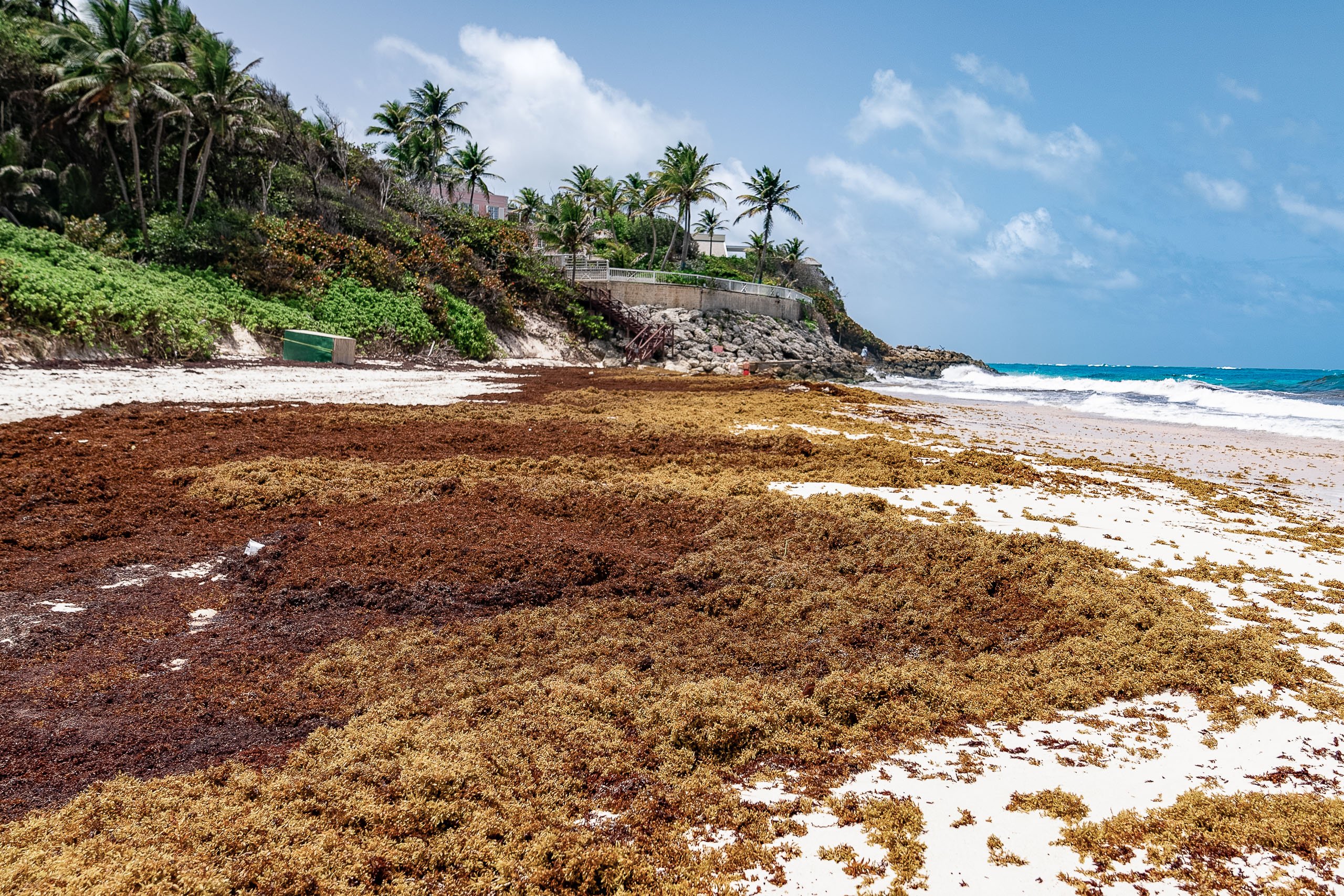
Record volumes of this floating seaweed reached the Caribbean and West Africa in 2025, badly impacting tourism and marine ecosystems.
July 2025 set a new record of 38 million metric tonnes for the Great Atlantic Sargassum Belt, 70% higher than the previous record set in July 2022. According to experts, this may be primarily due to warmer ocean water and stronger winds in spring.
Claudia Taboada, the Dominican Republic’s sole delegate at UNEA7, said some countries had tried to undermine efforts to get the sargassum resolution passed. Environmental multilateralism is being deliberately eroded, she said. “Having a [resolution] that refers to a ‘severe escalating socio-economic and environmental issue’ is … less powerful than calling it a ‘crisis’.”

“Questioning science, reopening already closed consensuses and relativising issues such as the special circumstances of Small Islands Developing States (SIDS) is not a technical difference. It is a political strategy that puts years of progress at risk,” she told Dialogue Earth. “Allowing language manoeuvres to empty our collective decisions of content is unacceptable.”
The adoption of the resolution does, however, represent “a first step towards placing a global interest on the sargassum crisis … and a high-level discussion which will allow us to return reloaded to UNEA8 with an implementation progress report, and hopefully with a political landscape more favourable to our region’s interests.”


A call to accelerate action
Tabi Joda is an ecosystem revivalist and lead of the One Billion Trees for Africa initiative. He travels across the Sahel – a semi-arid region bordering the Sahara Desert – to coordinate reforestation efforts. The initiative can provide environmental services and economic opportunities to communities fighting desertification, he explains.
Desertification such as in the Sahel is creating conflicts and driving migration, as herders and farmers compete for scarce water and pastures.

“We could have a mosaic of biodiversity that would allow for social cohesion, we just need spaces like UNEA to move from mainstream topics to those that have a real impact, like our project in the Sahel,” said Joda.
His call to include more Indigenous knowledge and practices to support science connects with the conservation efforts of Wanjira Maathai, managing director for Africa and global partnerships at the World Resources Institute. She says the health impacts of air pollution are forcing African governments to act, while also putting women closer to decision making.
But her organisation’s annual State of Climate Action report shows the world is off track on all 45 indicators on climate action.
“We must do things exponentially faster,” she says.
This story was produced with the support of GRID-Arendal.