A century ago, Türkiye and Australia faced each other on the shores of Gallipoli (Gelibolu) in one of the most brutal battles of the First World War. Today, the two nations have forged an unprecedented alliance to take the reins of global climate negotiations, at a time when many seem to be losing hope.
Years after WW1, Mustafa Kemal Atatürk, the founder of the Turkish Republic, paid homage to Australia’s fallen soldiers: “Those heroes that shed their blood and lost their lives. You are now lying in the soil of a friendly country.” That spirit of reconciliation now finds new expression at the COP31 climate conference due to be held in 2026.
Türkiye will be the official host and president of COP31 in Antalya, as Australia takes on a more supportive role as “president of negotiations”. Meanwhile, Pacific nations will play a central role in shaping the agenda before and during the UN Framework Convention on Climate Change (UNFCCC) event.
By splitting leadership on hosting and negotiation, the arrangement reduces domestic political risk and decreases cost, whilst creating space for inclusive, cross-cutting collaboration. If executed well, COP31 could serve as the bridge-building moment the UN climate talks need – one that perhaps no single power could deliver alone.
How this deal came about
For months, reaching an agreement on who would host the COP seemed impossible. Both Türkiye and Australia had submitted formal requests back in 2022 to be sole hosts of the negotiations, and had engaged in separate rounds of talks with the UNFCCC throughout 2025. Many climate insiders thought a deal would be done at the UNFCCC intercessional meetings in Bonn, following Australia’s federal election in May. Then, the promise of a shared-hosting deal was floated ahead of the UN General Assembly in September, only to be rejected by Australia’s prime minister, Anthony Albanese, in the lead-up to COP30.
By the time ministers arrived in Belém for COP30, negotiations had gone “back to square one”, according to Halil Hasar, director of Türkiye’s Ministry of Environment, Urbanisation and Climate Change.
Yet the countries eventually struck a creative agreement where Türkiye provides the venue, Australia co-facilitates negotiations, and Pacific nations host a Pre-COP meeting in their region, having previously planned to co-host COP31 with Australia.
Such creative diplomacy is probably only possible in a world where US hegemony no longer features in the climate space and EU leadership is constrained by mounting fiscal pressures. The challenge now, however, is not just to forge a new partnership, but to deliver.
While the structure of COP31 is new, it draws on a long tradition of the UNFCCC utilising co-chairs to move negotiations along. During COP30, Brazil’s Ana Toni took on the role of executive director, while her compatriot André Corrêa do Lago was the official COP30 president. Their balance of high-level diplomacy and textual engagement may offer a glimpse into how next year’s partnership could work. There had been a similar split between executive management and presidency at COP29 in Baku the year before.
Australia’s climate minister, Chris Bowen, will likely take on a similar negotiating role to that of Toni, leveraging his close personal relationships with Pacific leaders, while taking on the bureaucratic burden of drafting a COP31 agreement. Türkiye will likely take on the official presidency, led by Minister of Environment, Urbanisation and Climate Change Murat Kurum, with a key leadership role played by Halil Hasar. It is expected that first lady Emine Erdoğan will also play a prominent role in COP31.
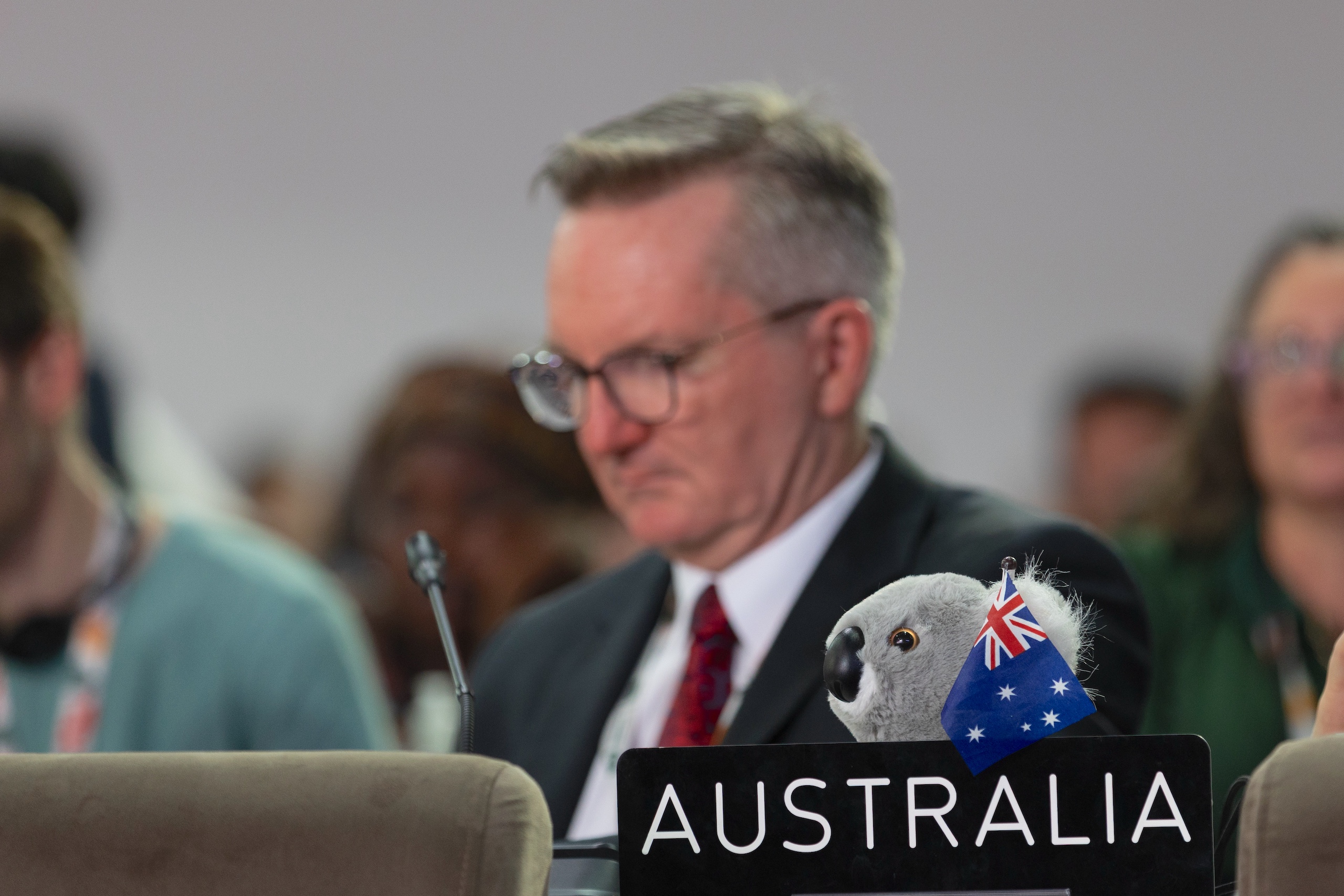
It’s not the first COP to have split the hosting and negotiating responsibilities. Recent precedents include Spain and Chile (COP25) and Fiji and Germany (COP23). In these cases, however, co-hosting was effectively required due to logistical limitations in Fiji and political unrest in Chile. The Türkiye-Australia model separates venue management from negotiation leadership by design, perhaps correctly anticipating the scale and complexity of the COP31 agenda.
How can the countries complement each other?
Antalya is a great location for an international summit, with its world-class facilities, straightforward Turkish visa procedures and affordable travel routes. The city reportedly has more than 600,000 hotel beds and a full-scale congress centre capable of handling COP-level events.
Cost is another key factor. After a series of highly expensive COPs and ongoing UNFCCC budget challenges, Antalya offers a much lower-cost alternative for attendees and hosts alike.
Türkiye’s geographic and diplomatic position, straddling Europe, the Middle East and Russia, makes it an essential bridge between otherwise distant actors in the increasingly multipolar world of climate politics.
Its renewable generation also outpaces Australia in absolute terms, with 156 terawatt-hours (TWh) of renewable electricity generation in 2024, compared with Australia’s 98.8 TWh, according to Ember. Türkiye’s extensive industrial-scale experience in solar and wind could offer a complementary push to advance the UN’s renewable energy goals.
Australia, meanwhile, brings deep experience in UNFCCC negotiations, strong ties with Pacific nations, and emerging climate diplomacy credentials. As the “president of negotiations”, it can leverage these networks to accelerate progress, particularly on renewable energy and just transitions in coal-dependent regions.
By not hosting, Australia avoids domestic political and financial distractions. The costs of hosting became a hot button issue in Australia in recent weeks. And on returning to Australia, climate minister Chris Bowen was attacked for his new international role at COP31 over concerns he would be a “part-time minister” at home. While this isn’t the view held by many across the country, it gives a snapshot of the much larger political headwinds that would have been felt in the coming year if Australia’s hosting bid had been successful. By focusing on negotiation leadership rather than venue management, Australia can concentrate on bridging divides and pushing forward tangible outcomes.
Moreover, its experience in rooftop solar and grid integration can pair with Türkiye’s industrial-scale know-how in domestic solar manufacturing to create opportunities for practical collaboration on renewables, industrial decarbonisation and regional energy transitions.
How about alignment on COP31 themes?
It’s unclear how much of the COP31 agenda will be shaped by the new presidency partnership, rather than Australia alone as negotiations lead. But in addition to renewables, there are at least two opportunities that both countries would likely want to see progress on.
Firstly, steel production is falling behind on shifting from coal to electricity. Türkiye is one of the world’s largest electric arc furnace steel producers and well positioned to shift toward greener steelmaking. At the same time, Australia’s role as the world’s biggest iron ore exporter, along with its abundant renewable energy resources, have led many to believe the country’s future superpower could be in supplying low-carbon green iron to the world. There are key hurdles to overcome in both countries, however, especially in regards to production costs and green steel demand. COP31 offers an opportunity to explore these common interests, and expand on the Belém Declaration on Global Green Industrialization.
Secondly, the global phasedown of thermal coal could be reinvigorated. Australia is a major coal miner and exporter, while Türkiye is a significant coal consumer. While the coal power phasedown has been a key discussion point in past COPs, it was effectively off the table in Bélem, where fossil fuels were not addressed even in the final agreement.
In Antalya next year, joint leadership could facilitate a more grounded, collaborative discussion on how to advance discussions on phasing out coal. This is especially so on efforts to address coal mining transitions, which have been particularly absent from the UN climate talks, but front and centre of both countries’ transition challenges.
Looking ahead
COP31 provides a unique laboratory for creative diplomacy and a moment to model pragmatic geopolitical compromise. Australia and Türkiye now have an opportunity not only to co-facilitate negotiations, but to leverage their diverse capacities and common interests.
This would likely include a push to accelerate renewable-energy uptake, especially across the Pacific and other developing country contexts. The green-steel transition could also be highlighted, linking domestic industrial strengths to global supply-chain challenges. Finally, a new collaborative, trade-sensitive approach to thermal-coal transitions could be advanced, perhaps through an agreement to limit new coal mines.