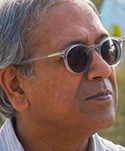
Saleemul Huq, who brought to global attention the need to adapt to climate change impacts and to pay for the loss and damage people suffered, died in Dhaka on the night of 28 October. He was 71; he leaves behind his wife, a son and a daughter.
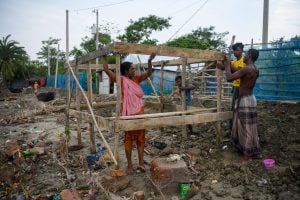
For three decades, Huq was arguably the foremost champion of the poorest countries in UN climate negotiations. This was based on his extensive research among climate-impacted communities in many developing countries. During his long stint at the International Institute for Environment and Development, a London-based think tank, beginning in 2001 Huq pioneered the concept of community-based adaptation (CBA). This concept focused on how communities are in the best position to decide how to adapt to climate change impacts, and how it is the duty of experts, financing agencies and governments to follow the lead given by the communities experiencing the impacts on the ground. He set up the climate change research group in IIED and was associated with it until his death.
A leading voice on climate justice
Huq moved to Dhaka, the capital of Bangladesh, in 2009, and established the International Centre for Climate Change and Development (ICCCAD), where he was director until his death. Through ICCCAD, Huq expanded the scope of CBA and gathered more evidence of loss and damage, work that he had pioneered as both author and lead author of the IPCC‘s third, fourth and fifth assessment reports, released in 2001, 2007, and 2013/14 respectively. Throughout this time, he was a notable presence at the annual UN climate summits as a spokesperson for the most vulnerable countries and small island nations. He has often been called one of the most influential voices in global climate conversations. In 2022, Nature magazine called him a “climate revolutionary” and described him as one of 10 people who shaped science that year.
Huq wrote in various outlets, including The Third Pole, to push his ideas. Apart from his own writing, he provided ideas for articles to The Third Pole and suggested expert authors. On his birthday a few weeks ago, I wrote wishing him a happy birthday, and asking for an article on the current state of the global adaptation debate. He promptly wrote back to say he had requested a colleague in ICCCAD to write the article. The colleague wrote a few days ago that she had drafted the article and would send it after running it past “Saleemul Sir”. Both she, and we, will now no longer be able to ask him for his insights.
From adaptation to loss and damage
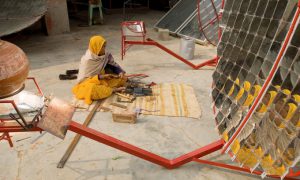
Observers of climate change conversations from around the globe first knew Huq as the champion of adaptation. Rich nations have always focused on mitigation of greenhouse gas emissions as the way to combat climate change; even today, mitigation gets the overwhelming share of climate finance. Huq was the man who from the 1990s kept saying adaptation to climate change impacts was just as important, because these impacts were already hitting people, especially in the developing world. He was the leader of those who got adaptation onto the global climate agenda.
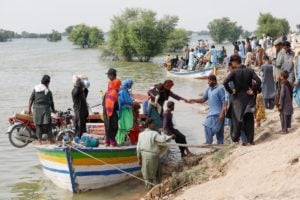
But Huq could see the limits to adaptation, especially as climate change kept gathering pace. At the 2012 UN climate summit in Doha, he brought forward the concept that polluters must pay for the loss and damage being suffered by climate-impacted people. This sent alarm bells ringing through developed nations who feared an avalanche of compensation suits in courts. But Huq and his colleagues kept producing evidence of loss and damage and stood firm through the years, though they were privately warned by delegates from the United States and European Union during negotiations for the 2015 Paris climate agreement that their insistence on including the issue of loss and damage could derail the entire accord.
He and his colleagues persisted, nonetheless, and it was finally included.
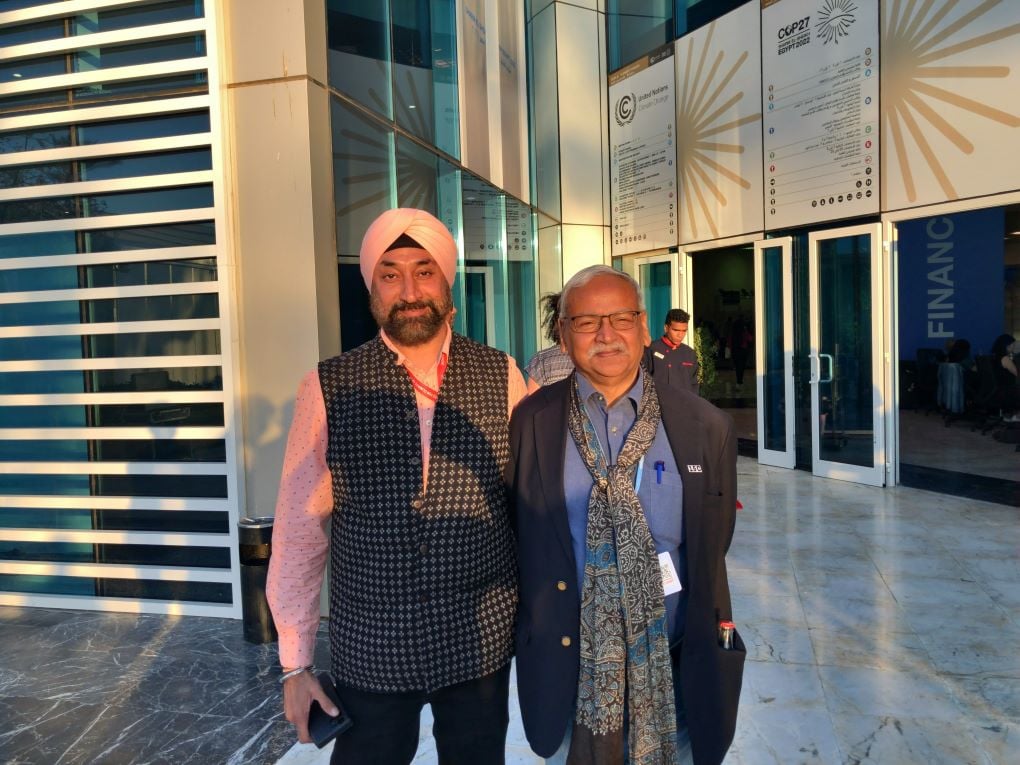
Huq was a skilful and patient negotiator, apart from being an academic and an activist. For 10 years, he kept pushing for a fund to compensate people hit by loss and damage until it was finally accepted at the 2022 UN climate summit in Egypt, despite strong resistance from rich nations led by the United States. Subsequent negotiations for the fund’s establishment broke down recently due to the US insistence on housing the fund within the World Bank, while developing countries want it to be under the control of the UN. Huq was vociferous in expressing his disappointment within climate circles, but did not put out an official statement in the hopes that the next meeting dealing with loss and damage in early November could resolve the issue.
Despite the high stakes global negotiations Huq was involved in, he never lost sight of community-based adaptation, and was the moving force behind the periodic conferences that brought major practitioners of CBA together. My last meeting with him was at the most recent CBA gathering in May this year, in Bangkok. With his trademark smile and in his typical soft-spoken way, he greeted me in Bengali, “Kemon achho [how are you]?” He promptly went on to discuss new adaptation techniques, new studies, and new articles.
For many of us in the climate space, Saleemul Huq leaves behind this rich legacy of suggestions to follow, while he has moved on.