![<p>Weather reporting has to get beyond launching a weather balloon [image courtesy: NOAA Photo Library]</p>](https://dialogue.earth/content/uploads/2017/06/Launching-a-weather-balloon-1988-NOAA-768x476.jpg)
As the advent of the 2017 summer monsoon over mainland South Asia showed once again, Indian meteorologists have become highly accurate in their forecasts. Gone are those Jerome K. Jerome days when you left your umbrella at home if the Meteorological Department predicted rain. Now the weather office can even anticipate a relatively unpredictable phenomenon such as a dust storm in the north Indian summer. It may not be as good for forecasts more than a week in advance, but it’s far better than before.
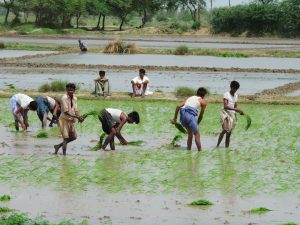
Farmers all over India – especially those who do not have irrigation facilities – are now using the agricultural meteorology (agrimet) service of the India Meteorological Department, and they can get crucial information such as rainfall forecast over the next week through text messages on their phones.
The shortcomings
There is a lot that can and should be done to extend the scope of these weather predictions to large-scale hydrological predictions, both short and long term, so that farmers and administrators can plan for the more frequent and more severe floods and droughts that are occurring in South Asia because of climate change.
Information about water flow in rivers is now available through a water resources information system (WRIS) but that has severe limitations due to regulatory issues – there is no information available to the public about real time water flow in transboundary rivers, thanks to an outdated law. This means there is no real time water flow information available in the public domain from the three largest river basins in the country – those of the Indus, Ganga and Brahmaputra. This clearly affects preparations to face floods.
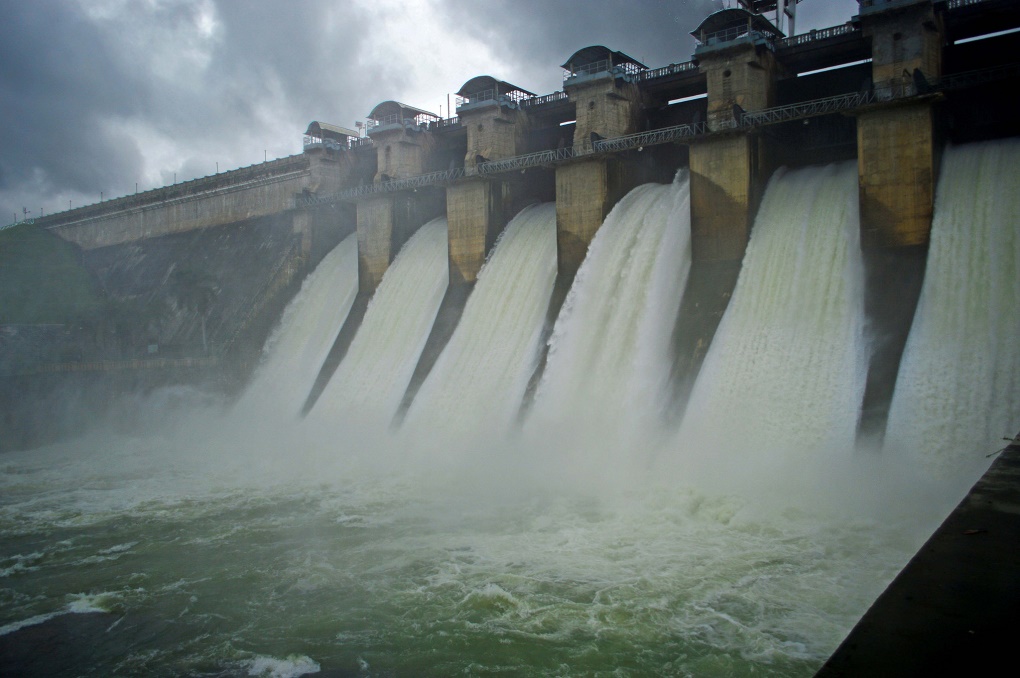
When it comes to drought preparedness, the situation is similar – the information available is better than before but not good enough. The Central Water Commission now puts out in the public domain the water storage status of the 91 largest reservoirs in India and updates this information every week. This list still leaves out far too many water bodies that are crucial in determining if a region will have a drought.
There is another shortcoming – India does not have enough monitoring stations to map the air pollution over the country. Most of the monitoring stations are scattered over a few large cities, though satellites show the most polluted zones to be in and around industrial townships and highways. Improving this observation system is crucial because air pollution – especially through aerosols – affects local and regional weather patterns.
The next frontier
Improving these hydrologic and air quality information systems is essential to manage the crucial food-water-energy nexus in a warming world. This will need integrated observations and predictions, which can be carried out through a Regional Earth System Prediction (RESP) framework. RESP treats land, ocean, atmosphere, ecosystem, agriculture, and human interactions as components of one integrated system. This has to be used with an integrated observation system (IOS) that provides the data needed to build, validate and verify local and regional weather and long-term climate system models.
Despite some shortcomings, all the pieces are in place to build the RESP and IOS for India. The country now has of one of the best instrumental climate data records of a sufficiently long time series covering a large-enough area. Empirical forecasts of the monsoon and various hydrologic variables such as stream flows are now advancing to dynamic forecasts. The research work going on at the Indian Institute of Tropical Meteorology in Pune now includes extending short term weather forecasts to long term climate predictions.
For information essential to manage the food-energy-water nexus, India needs two steps. The first is to improve its hydrologic and air quality information systems. The second is a national strategy to integrate the weather and climate information with the hydrologic and air quality information and manage this together. Then agricultural scientists can improve what they are doing right now to help farmers plan their crops.
To make such an integrated system useful, scientists also need to estimate the length of time to which forecasts from such an integrated system will be reliable.
There are other important parts of an IOS, such as greenhouse gas emissions, soil moisture, soil health, nutrient and sediment loadings in water bodies etc. New scientific developments are happening all the time – a recent one is an improvement in our understanding of how efficiently plants use photosynthesis to turn sunlight into food. These improvements take place at all levels, from the gene to the landscape. Such developments need to be merged into the IOS. Tracking food, energy and water consumption is also an essential part.
When all these are added up, integrating and managing this information may seem a daunting task, but it can be done. Building this capability is a necessary requirement to safeguard the nation’s future.