In June 2023, the International Centre for Integrated Mountain Development (ICIMOD) released its latest report on the cryosphere (regions where water freezes) in the Himalayan region. It stated that at least half or more of the Himalayan glaciers would be gone by 2100, and water availability would start declining from 2050. This will impact everything from hydropower and agriculture to biodiversity.
One of the key regions facing these threats is the Kashmir valley. The Third Pole spoke to Shakil Ahmad Romshoo, a prominent glaciologist and and currently the vice chancellor of the Islamic University of Science and Technology, Avantipora, on these changes and their impact on Kashmir, the Himalayas, and the wider region.
Edited excerpts follow.
The Third Pole: What are the latest developments in glaciology in the Himalayan region?
It is unequivocally clear that glaciers in the Himalayas are melting. They are losing mass, thickness, area and size.
In every indicator of glacier health, there is a change – and it is pointing towards a negative trend.

Nonetheless, it is important to recognize that the Himalayas are not a homogenous entity. Broadly speaking, they can be categorized into the eastern, central and north western Himalayas, with each region experiencing distinct impacts on its glaciers and other resources. In the entire Himalayan region, there are around 54,000 glaciers; 33,000 are located in the Indian Himalayas, with 18,000 in Jammu and Kashmir alone
Jammu, Kashmir and Ladakh are home to various mountain ranges including the Pir Panjal, Greater Himalaya, Zanskar, the Leh and the Karakoram ranges. The glaciers within these ranges exhibit behaviours that are notably different in each mountain range
Is it only global warming making glaciers melt faster?
the main reason behind the accelerated glacier melting is undoubtedly the rise in global temperatures, which is responsible for the increasing rate of ice melting. However, there are other factors also that play a significant role in this process. Taking the Pir Panjal range as an example, which extends from Uri in North Kashmir to Himachal Pradesh, this region receives an average of 7.5 meters of snowfall from 1 November to 30 April (the winter period). Despite this substantial snowfall, not many glaciers are left in this region.
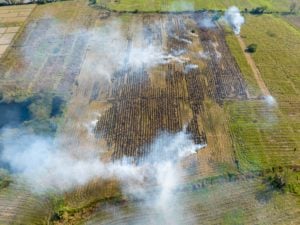
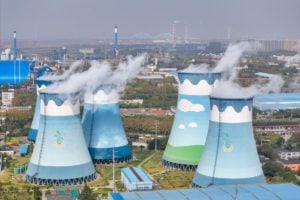
While climate change and the consequent warming of the Himalayas are important factors for glacier melting, but the emission of black carbon also contribute to the glacier melting. Black carbon comes from the burning of wood or fossil fuels, which forms a dark layer on the glaciers, which means that glaciers absorb more sunlight and melt even more rapidly.
Your research suggests glacier alterations in the Kashmir Himalayas could negatively impact water resources, stream flows, and dependent sectors.
In the Kashmir valley, 65% water comes from snowmelt and glaciers. Due to higher temperatures snowfall is being gradually replaced by rainfall. Snowfall is important to replenish glacier mass in winters and counterbalances the melting in warmer seasons. Without adequate snowfall, the glaciers cannot sustain themselves leading to significant impact on water availability not only in Kashmir valley, but also in downstream areas, since we are sitting on the water tower of Asia. Pakistan, which has a large agriculture sector, is very dependent on water from this region, and this is one of the reasons that the Indus Waters Treaty (IWT) was signed in 1960. But the IWT does not mention climate change, as it was not considered a pressing issue at that time.
A fall in water availability will lead to food insecurity, and will also impact regional security. In 2016 India said that water and blood will not flow together. This underscored the growing recognition of the role of water in geopolitical stability. It was the first time India linked it with security.
Should India renegotiate the IWT to address climate change and pollution?
The IWT overlooks critical environmental issues such as climate change and groundwater. The latter is very important as it affects the health of the river basin, and is used extensively for irrigation in many Indian and Pakistani provinces. Additionally the treaty does not address water pollution. But if you look at the existing treaty, it cannot be abrogated without a replacement treaty being agreed upon.
In my opinion, renegotiating the treaty would be a very complex. I have participated in multiple discussions between scientists and policymakers from the two countries aimed at addressing these shared concerns. It might be feasible to introduce a supplementary agreement to the IWT to address these overlooked issues, although achieving this would be also a challenging task.
How should Himalayan states be responding to climate change?
The main impact on glaciers is climate change, for which developing countries bear minimum responsibility. Glaciers are the most important resource for us in the Himalaya and are pivotal for our water security, energy security and food security – and yet we are losing these resources for no fault of ours.
The problem is that we, as Himalayan states, are not able to unite and advocate a common and collective stance about the impact of climate change on glacier melting. We have not been successful in compelling developed nations to either halt the progress of climate change or provide compensation for its impacts.
Some rivers have already reached their peak. Now you will see a decline.Shakil Ahmad Romshoo
ICIMOD’s cryosphere report in 2023 suggested water would peak in 2050 and decline thereafter. What does this mean for the region?
Water availability and the impact of climate change vary markedly across river basins. Take the case of river Jhelum; which comprises of 24 sub basins. These sub-basins vary significantly in terms of glacier coverage; some have extensive glacier presence, others have minimal, and a few have none at all. Consequently, I believe that the tipping point – that critical juncture when water supplies begin to irreversibly decline – will be reached at different times across the various basins of the Himalayas. Some of the sub-basin in the Indus have already reached the tipping point. This implies that strategies for addressing water scarcity post-tipping point must be tailored specifically to each basin’s unique conditions and challenges
As per our projections, the Kashmir valley is predicted to lose 78% of its glaciers by the end of this century, with up to half of them potentially disappearing by 2050. The reasons are straight forward: Less snowfall means less water in the streams. It is as simple as that. Consequently, this will result in significantly lower water availability for food production, electricity generation and various other needs.
What are the barriers to scientific collaboration in the Himalayas?
Comprehensive research is essential, especially considering the interconnected nature of the Indus basin., which encompasses regions like Kashmir, Jammu, Ladakh, and Himachal Pradesh in India; and Hunza, Gilgit and other areas in Pakistan. In the lower Indus basin there are the Punjab provinces of both India and Pakistan, as well as Pakistan’s Sindh province. These areas are scientifically interconnected, with upstream activities impacting downstream regions. However, due to the complex political relations in South Asia, access to certain parts of the basin, especially those across national borders, is severely restricted for scientists like me.
It is with absolute certainty I say that collaboration between Indian and Pakistani scientists – particularly in sharing data – is virtually non-existent. Despite international organisations making concerted efforts to bridge this gap, bringing scientists together on a unified platform to address common concerns remains a challenge.
Given our shared geology, geography and ecology, natural disasters like earthquakes and floods have cross-border impacts. Finding common ground on these matters is not only in the best interest of India and Pakistan, but also the international community. Misunderstandings should have no place in the realm of scientific endeavours.