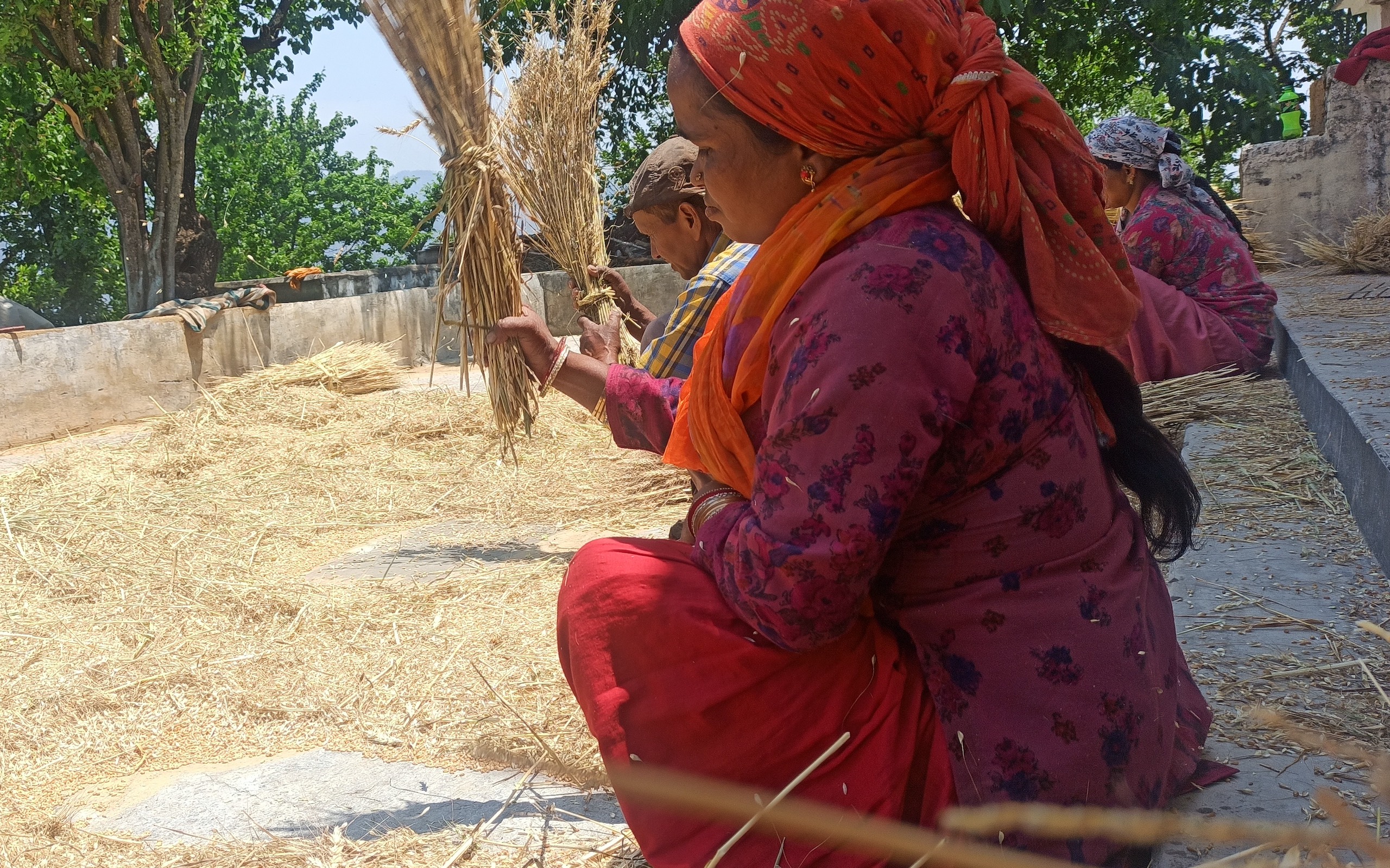
Neema Devi sits with her sister-in-law, Prema Devi, threshing wheat by hand in the village of Dhudholi, in the Indian state of Uttarakhand. Harvesting season is over and, in exchange for threshing wheat in their neighbour’s courtyard, the two women receive hay for their cattle. Neema (Devi is generally an honorific for married women, rather than a family name) says their land is too small to provide them with enough hay. With their tiny plots, people like Neema Devi and Prema Devi are in the forefront of those dealing with climate impacts.
The Himalayas are warming faster than the global average, which has immediate repercussions on agriculture, altering crop cycles, growing seasons and soil moisture. In Uttarakhand, a primarily mountainous province, with some foothills and plains, the problem is magnified because the majority of farmed land – according to the most recent census done in 2011 – consists of ‘marginal’ plots of less than 1 hectare, (36% of the state’s total farmed land) or small ones (1-2 hectares, 28% of the area).
Small landholdings make it harder to adapt
Not everybody is equally hard hit. As one study points out, while all socio-economic groups are represented among small and marginal farmers, this is not true of large farm landholdings (over 4 hectares). Almost none of these are owned by Scheduled Caste, or Dalit, community members. Historically repressed, the Dalit community – to which Neema Devi and Prema Devi belong – has made progress since India’s independence, but their marginalisation is still evident in small landholdings. Climate change threatens even this limited progress.
“Forget about selling [crops]; if we can grow enough to feed ourselves, we’re thankful,” says Neema Devi.
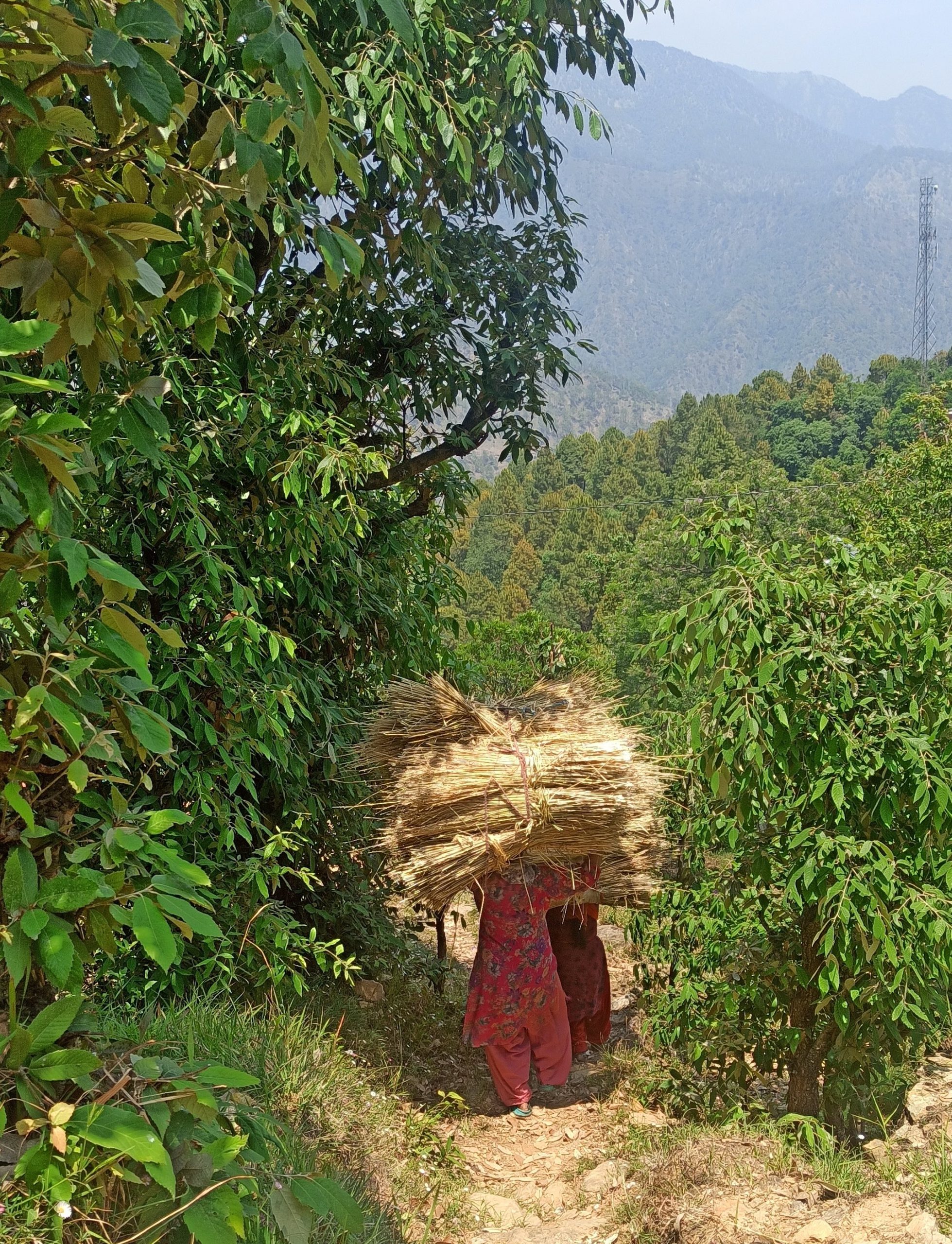
As climatic conditions change, some farmers in Uttarakhand are turning to new crops, with help from the government or NGOs, to maintain profitability. Unfortunately, this is not possible for many women and Dalit farmers.
Although the state government now subsidises the distribution of kiwi plants, raising the fruit requires a significant investment.
“If you want an orchard, you will need support in the form of angle iron, which is a T-shaped support system for [each] plant, and in one nali [approximately 0.049 of an acre] of zameen [land] one can grow only eight trees, and one angle iron costs INR 4,000-5,000 [USD 50-60],” says Pawan, who works with the Institute of Himalayan Environmental Research and Education (INHERE), an NGO focused on sustainable development in the Himalayas. The cost of this infrastructure alone, before transportation and other inputs, would be nearly INR 40,000 (USD 500), roughly what an average resident of Uttarakhand earns in two months.
Such investment is beyond the means of small and marginal farmers who earn much less than the average income, especially as kiwi plants take 3-5 years to start bearing fruit.
Another climate adaptation initiative the government and other organisations are suggesting is the cultivation of herbs and medicinal crops. But this needs a lot of land, which poorer farmers, women farmers, or Dalit farmers, are not likely to have.
“If we just sell the leaves of tulsi [Ocimum tenuiflorum], the market price is really low, and if we sell the oil extracted from it, the rates are higher, but [a plant] only provides a very small quantity [of oil],” says Pawan from INHERE. The same is true for lemongrass, he adds: “If you need 100 millilitres of lemongrass oil, you’ll need at least 10 quintals [one metric ton] of produce, which covers a large area.”
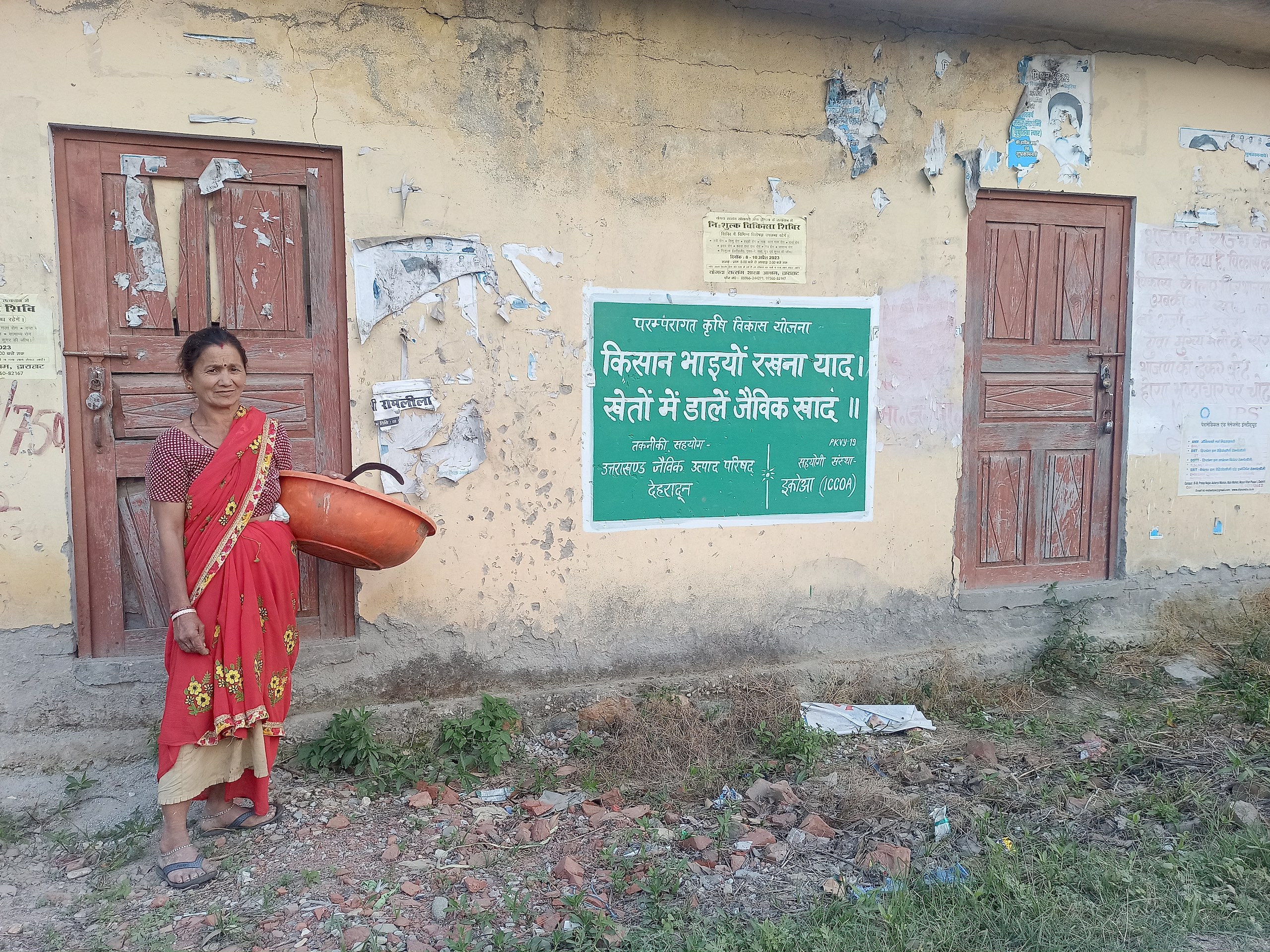
Organic farming is another tack pursued by the government and various NGOs to help people adapt to climate change. The Uttarakhand State Organic Certification Agency (USOCA) was set up to facilitate the shift. The emphasis is on indigenous crops like finger millet and barnyard millet, which are more climate resilient, mould-resistant, and can often grow without irrigation. However, USOCA’s non-discriminatory policy pledges ring hollow when lack of resources create barriers to small or marginal farmers adopting organic farming.
“Many Dalit families don’t even have enough livestock to make cow dung fertiliser,” says Geeta Bisht, an agriculture specialist from INHERE.
Fluctuating rainfall, and little protection
Marginal farmers are also struggling with greater rainfall fluctuation. Only 45% of farmland in Uttarakhand is irrigated, so most rely on rainfall for their crops. Kheema, a field coordinator for the Association for Rural Planning and Action (ARPAN), an NGO focusing on marginalised communities and women’s rights, says rain either comes when it is not needed or is too heavy, destroying the crop.
Basanti Devi of Chinoni village told The Third Pole how her wheat crop was damaged during harvest this year: “The heavy rain washes away the plant’s yield, and whatever we can salvage gets wet, either sprouting or blackening it; in both cases, it becomes unfit for human consumption.”
Non-discriminatory policy pledges ring hollow when lack of resources create barriers to small or marginal farmers
Neema said she and Prema grow crops like wheat solely for family consumption. Cash income comes from their fruit crops – oranges, lemons, plums and peaches. This year, unseasonal rainfall either washed away the flowers, or damaged the fruit, so they got no income.
“We didn’t even sell our fruits…, now they rot on our trees,” Rama Devi says.
Some farmers share information and receive updates about government schemes through WhatsApp groups that NGOs also participate in. For poorer farmers, this remains out of reach as they cannot afford to invest in smartphones to use messaging apps.
“We don’t get to know about anything here, and by the time we do, it’s too late,” Rama Devi says.
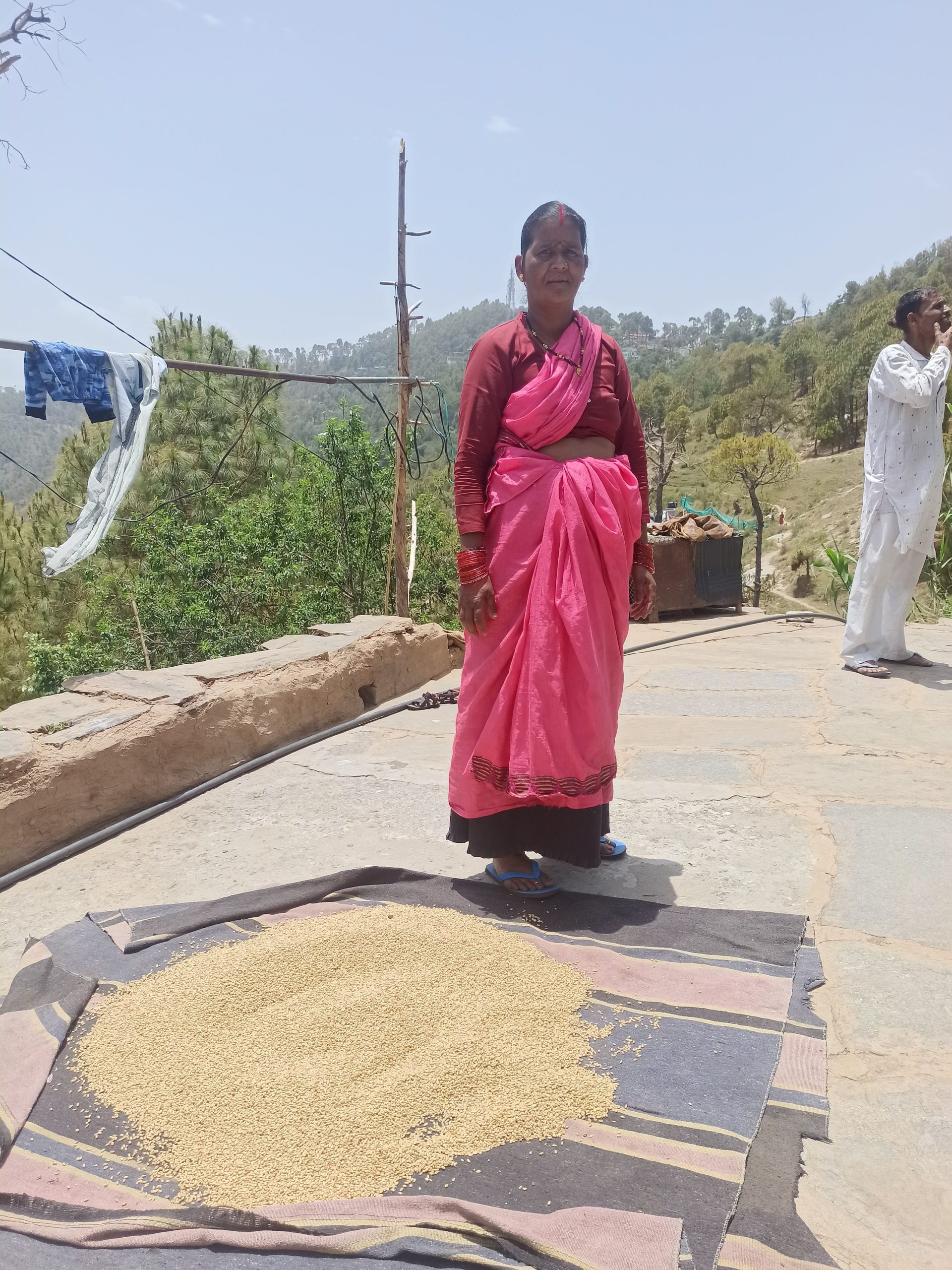
With such unpredictable weather patterns, the government has supported crop insurance schemes, such as the Pradhan Mantri Fasal Bima Yojana or Prime Minister Crop Insurance Scheme. What such schemes ignore is that many poorer farmers, particularly women and Dalit women, work on land that they do not own. They either share the profits with the titular owner of the land, or – a practice found in the mountain communities of Uttarakhand but not in the plains, according to Bisht of INHERE – they are allowed to keep all the produce in exchange for not leaving the land barren.
People who work land that is in the names of absentee landlords cannot get crop insurance. Furthermore, rising temperatures have brought an increase in pest attacks and diseases, forcing farmers to use more pesticides. This adds to out-of-pocket expenses for those farming on the land of others.
While climate change has a direct impact on yield, some farmers, such as Rama Devi, have seen their lands suffer as well. Uttarakhand witnessed devastating heavy rains causing flood and destruction of property in many places in 2021. Due to no proper drainage system in place, water from the highway, located just a ten minute walk upfill from their farm (registered under her husband’s name), washed away about 1,000 square feet of their fields. “Those lands had lemon and orange trees. We even grew cucumbers, but now nothing remains of it,” Rama Devi told The Third Pole.
Forest fires add to woes
A third climate impact is the increase of forest fires in Uttarakhand, which have risen “from 922 in 2002 to 41,600 in 2019,” with a strong positive correlation between outbreaks of fires and periods of hotter weather. For small farmers like Neema, this means human-animal conflict, as animals flee the forests: “Monkeys and wild boar leave nothing on our lands, and because our homes are on the outskirts of the forest, we are on the front lines of their attacks.”
In Uttarakhand’s rural areas, the long impact of marginalisation means Dalit communities are often located on the outskirts of the village, leaving their fields more vulnerable to animal incursions. Furthermore, this segregation by socio-economic grouping means that government or NGO initiatives or information reach them last, if at all.
“No one ever visits us, we’re mostly ill-informed of what’s happening, what new schemes are coming in. Even the track leading to our houses is not well maintained and becomes impossible to walk on when it rains,” says Prema Devi.
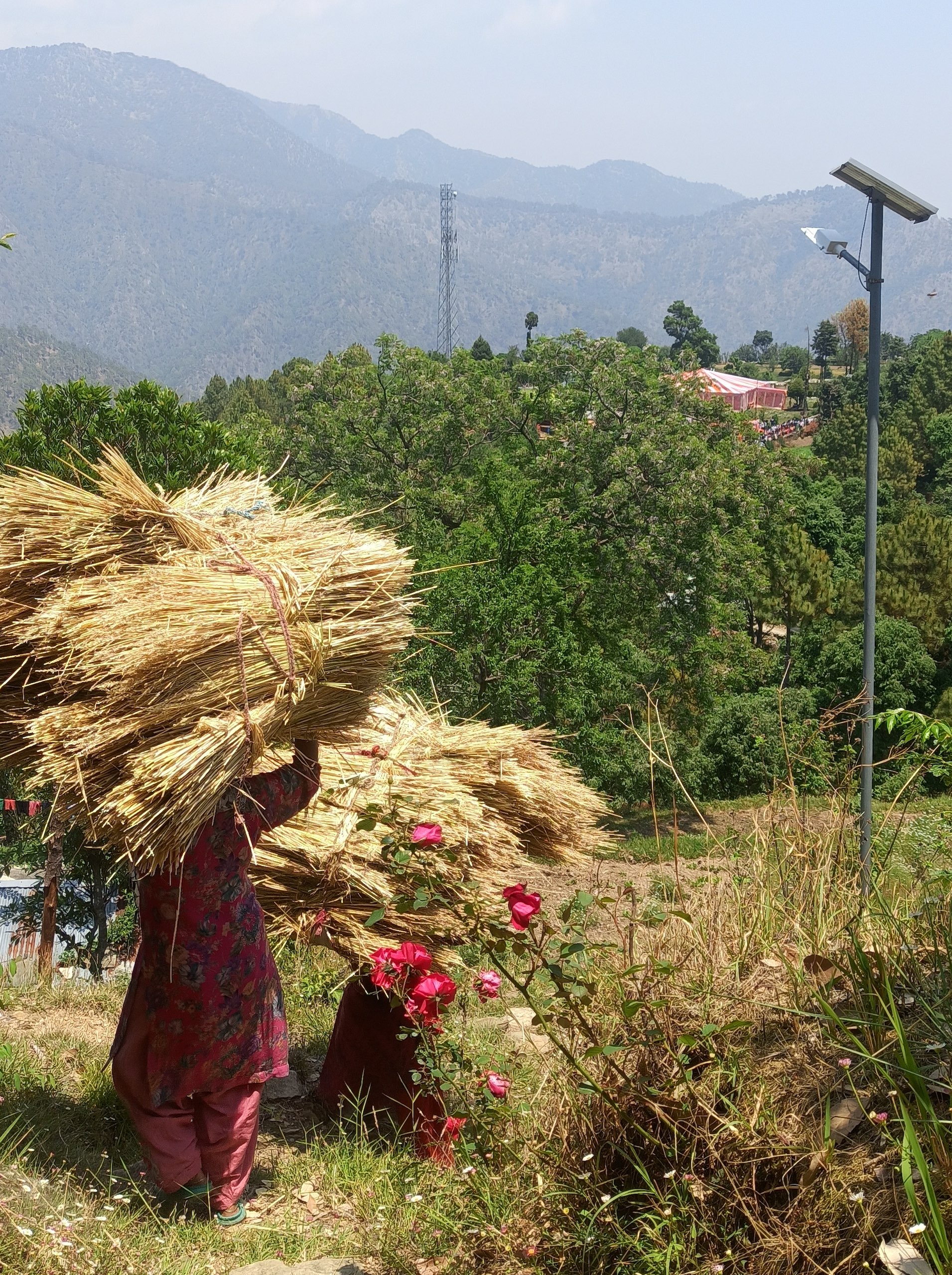
Rama Devi’s life reflects the progress made by Dalit communities, and the distance still to go: “We used to live even further down and shifted here a mere 30 years ago. Even now, it takes 15 minutes to walk down the main road and so we never get to know what is happening in the village,” she tells The Third Pole.
The government of Uttarakhand is running several schemes to provide seeds, fertiliser, and heavy machinery to local farmers. However, farmers must first obtain the land-related documents, then travel to the block office to collect the subsidised material.
Due to cultural constraints, women are either not educated enough, or familiar enough, to navigate often male-dominated official systems. Relying on their men to do so may not be an option, as Uttarakhand has a long history of men leaving to support their families through jobs elsewhere. “The schemes are made for the men here, so they are the only ones who can benefit from them,” says Kheema. The journey between their homes and the government offices is also too expensive for some.
“We earn nothing from this land, but it drains all of our money; we have to spend 350 rupees [USD 4.30] every time we visit the [sub-divisional government] office, and even then, there is no guarantee of when the consignment will arrive,” says Bharti Devi, a woman Dalit farmer from Dhudholi village.
The Third Pole reached out to the Additional Agriculture Director of Uttarakhand to ask if the government knew of these challenges and if there were steps being taken two weeks before publication. The story will be updated when a response is received.