Globally, less than 1% of foreign aid to address climate change goes directly to Indigenous peoples and local communities, or projects to support their land tenure and forest management. This is despite studies regularly showing the important role they can play in driving effective and equitable conservation and environmental protection.
In Indonesia, home to as many as 70 million Indigenous people and over 1,300 different ethnic groups, a new initiative is aiming to bridge this gap. Launched in May, the Nusantara Fund will channel climate funding directly to Indigenous peoples and local communities based on their needs and wishes.
The fund has been created by Indonesia’s three largest Indigenous and civil society organisations: the Indigenous Peoples Alliance of the Archipelago (AMAN), which represents 20 million people in 2,422 communities; the Consortium for Agrarian Reform (KPA), which brings together 143 agrarian organisations; and the Indonesian Forum for the Environment (WALHI), the country’s largest environmental group, comprising 487 NGOs.
Rukka Sombolinggi, secretary general of AMAN, said the funding will be used based on priorities set by the communities, not supporting organisations. “This is not just because we have the money and they will do the work, but is depending on their priorities,” she said.
The Nusantara Fund has so far attracted US$3 million in commitments from various international donors, including the Ford and Packard foundations. It aims to eventually attract US$20 million.
You can be more effective with three million dollars in the hands of a community than 200 million dollars in the hands of a World Bank projectDavid Kaimowitz, International Land and Forest Tenure Facility
“We hear about pledges of one billion dollars for this, or governments putting hundreds of millions of dollars into that, but what’s news in this case is that with a very small amount of money, you can make a huge difference,” said David Kaimowitz, chief program officer with the International Land and Forest Tenure Facility, which focuses on securing rights for Indigenous peoples and local communities. “In many ways, you can be more effective with three million dollars in the hands of a community than 200 million dollars in the hands of a World Bank project. That’s the news here.”
Kaimowitz described the fund as an important innovation that can support communities on the ground to be better organised. Community organisations are key to solving problems related to climate and food systems, he said. He cited a 2021 study by a coalition of environmental and social organisations, which found that 91% of lands managed by Indigenous peoples and local communities are in moderate or good ecological condition. “That is much, much higher than the average,” Kaimowitz said. “It is showing that, in one way or another, a lot of forests managed by these groups are better than people realised in the past.”
Kaimowitz said the new fund is important as it is less bureaucratic, meaning less money may be “lost” before it reaches communities, for example to different organisations, government institutions or consultants. These amounts of money going directly to communities can have a very large impact, as they don’t usually have access to such capital.
Direct funding for communities
Around the world, examples of direct funding mechanisms for communities have increased in recent decades, including initiatives in Brazil and Central America.
“Many of those funds have used direct funding to communities but from semi-government organisations,” Kaimowitz explained. “Like in Latin America, you have the Inter-American Foundation, which is funded by the US government that directly funds grassroots groups.” “They have good results and have been highly documented. But it is not a fund like this [Nusantara] fund, which is directly managed by the small farmers and Indigenous organisations themselves.”
The Nusantara Fund, he added, “has some aspects that have never been tried before”, and evidence of its results will need to be evaluated in time. “But we can say other types of funds, other types of direct funding to Indigenous people and local communities, have been studied and have gotten positive results.”
Unlike funding mechanisms managed by international banks or government agencies, the Nusantara Fund will go directly from the donors to the members of AMAN, KPA and WALHI, after their proposals are approved. The organisations will act as guarantors, assuring that grantees are their members, and monitoring to ensure that the money is used in accordance with the proposal, explained Chaus Uslaini, head of WAHLI’s territory protection and development division.
“If the communities have their own joint bank account, then the money will be directly sent to that account,” she continued. If not, “they should provide a letter or document from a village or custom meeting to point to an account belonging to the member as the recipient of the money, and it will be used for the community’s goals.”
To test out the Nusantara Fund’s mechanisms, 30 locations across Indonesia selected by the three organisations have served as pilot projects since December 2022. The goal is to see whether the mechanism is accessible, easy to understand and ultimately beneficial for the people.
Funds in these projects can be used towards five goals: mapping community lands; economic support; forest and environmental restoration programmes; education; and support for networking with other stakeholders, such as government officials or consultants.
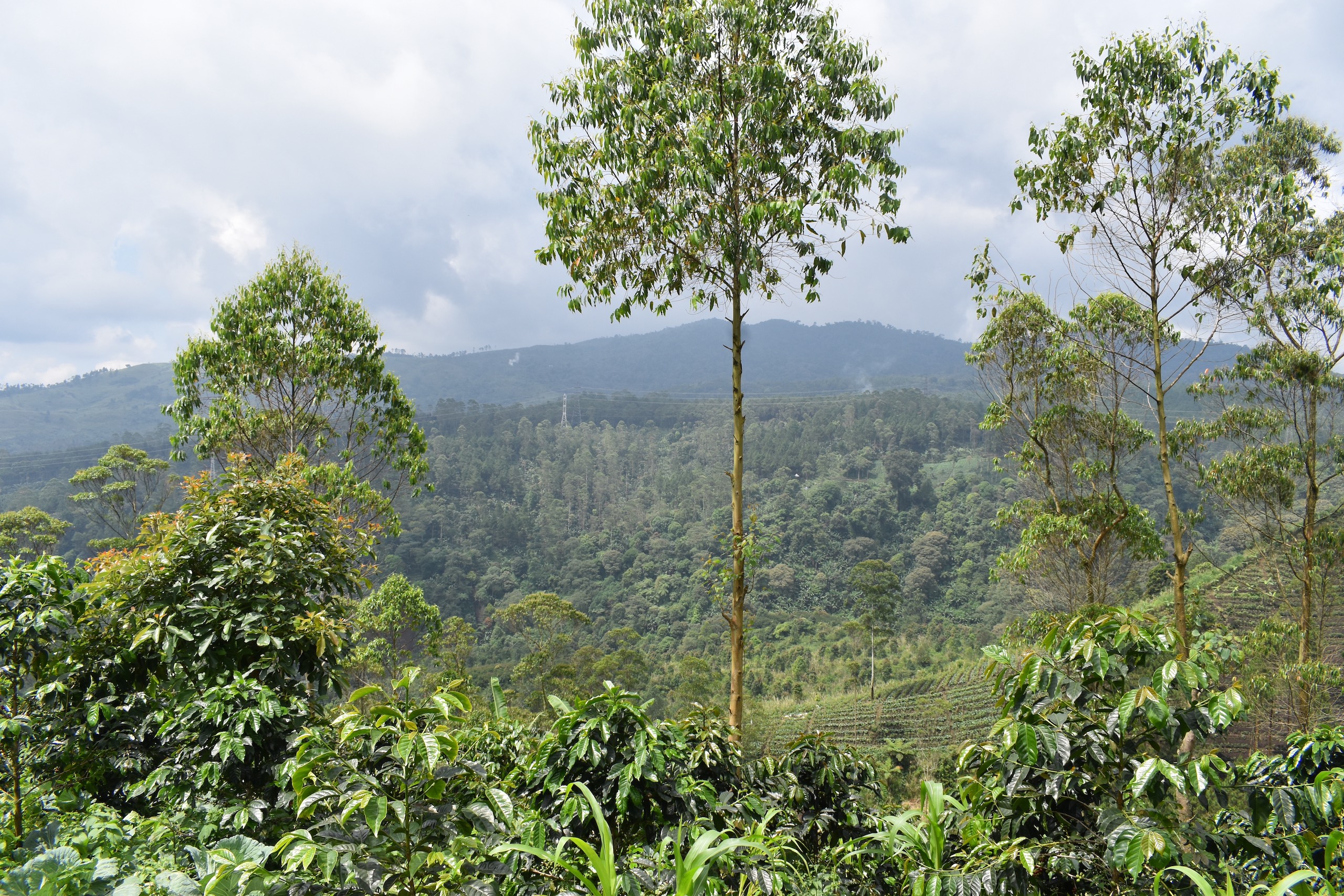
For example, in the village of Ibun in West Java province, a social forestry business group managed by villagers, KUPS Bukit Rakutak Sauyunan, submitted a proposal alongside WAHLI to build a coffee-processing facility, and improve the local economy.
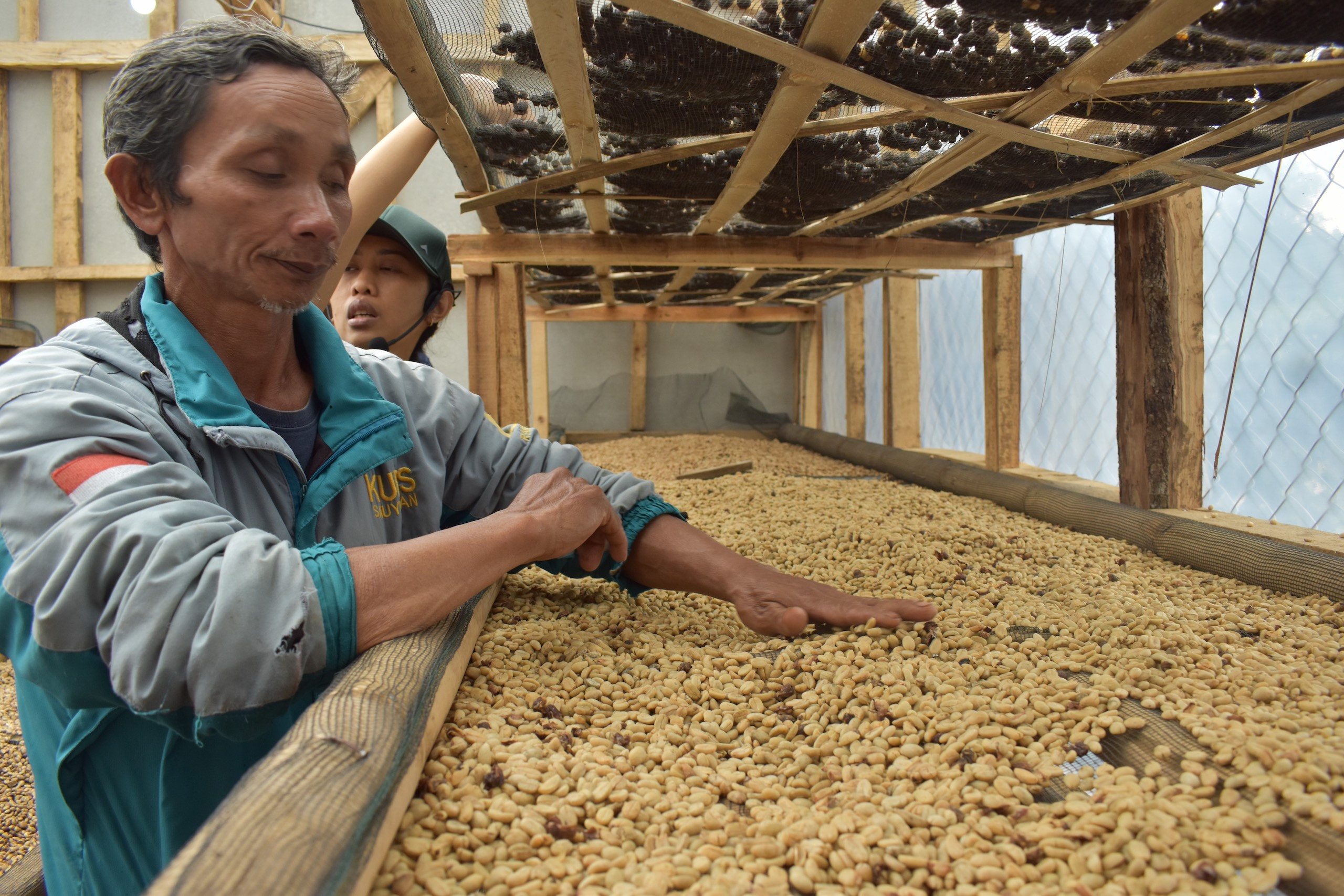
Uslaini said the “clear legal formality” of the group as an organisation was a key factor in the decision to award funding. “Second, there is a clear land management, on which is the zone for management [for coffee production] and zone for protection… With the different zoning [of the land], it should be better to prevent [environmental] damages.”
She added that the KUPS Bukit Rakutak Sauyunan had received 50 million rupiah (US$3,340) towards the coffee-processing facility. The organisation has further plans for capacity building projects in agroforestry, for crops such as avocado, cinnamon, cabbage, lemon and eucalyptus.
Amir Rohimat, head of the KUPS Bukit Rakutak, said they are grateful to be able to build the facility as it is more lucrative to sell processed coffee beans than the unprocessed product.
“We also use the money to upgrade our skill in farming because these areas were previously barren – only bushes – and [we had] lots of floods in the past. The soil is also too sandy, so it’s hard to farm,” Rohimat said. “But, with the help of WALHI, we received guidance and training on how to plant in this type of soil.”
Supporting gender equality
Rukka Sombolinggi of AMAN said the organisation believes that villages know their needs best, and that risks will be shared together. “What we do is work out how to quickly respond [to their needs]. There are villages that just need a little bit of support to, for instance, harvest. There are communities that make education their priority because it is a long-term investment, some want mapping,” she explained.
KPA, for example, selected the Pasundan Farmers Association (SPP) in Ciamis, West Java province, for funding. They had proposed to expand their training programme under the True Agrarian Reform Academy (ARAS) to increase the number of rural women they can reach, preparing them with the knowledge and leadership skills necessary to cultivate their land and advocate for their rights.
ARAS is an academy established by KPA in 2019 for its members, aiming to provide education for women farmers, in the hope that they may become advocates for agrarian reform. They receive instruction on laws around agrarian reform and rights, and are helped to build their confidence as leaders.
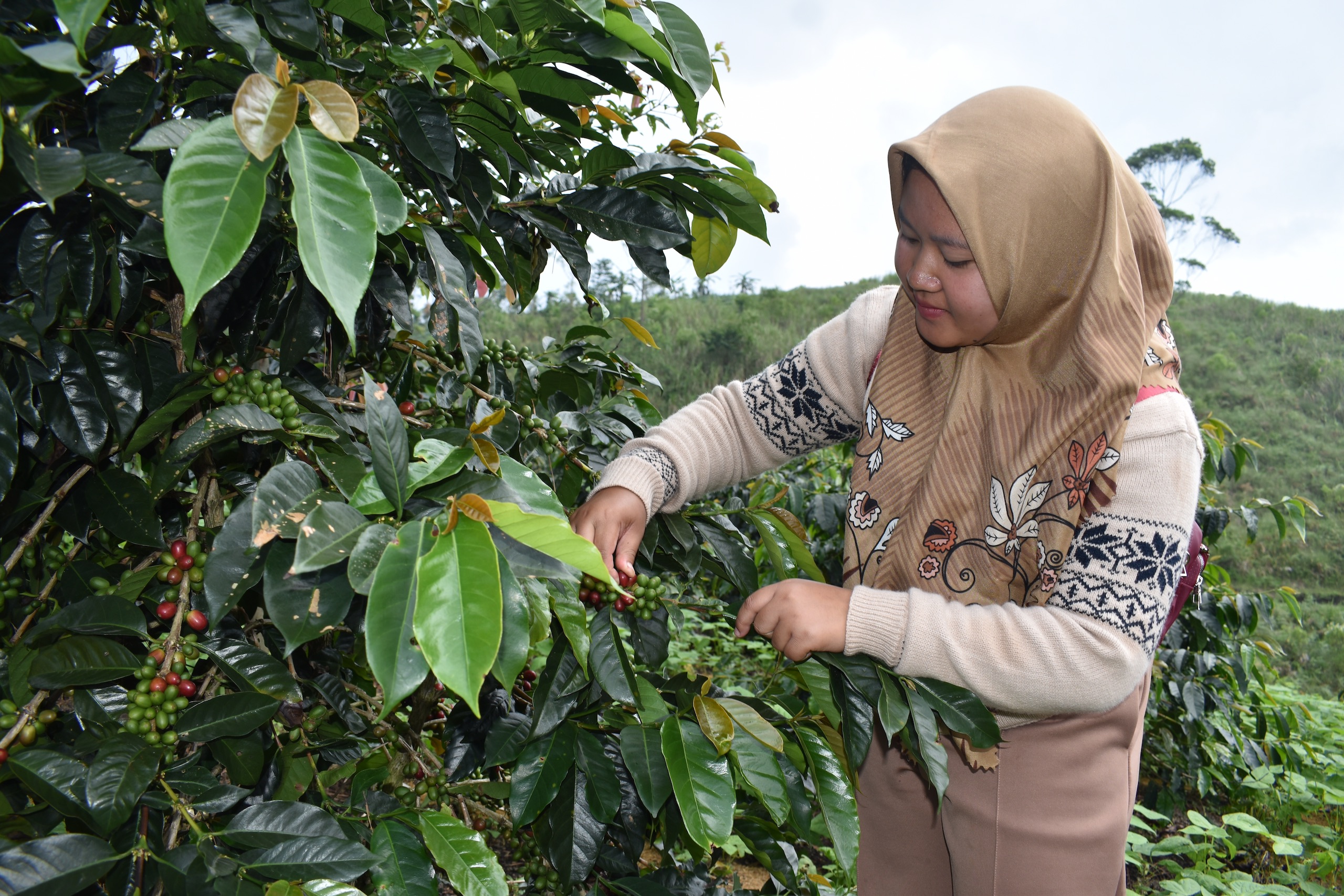
Dewi Kartika, secretary general of KPA, said they chose SPP to receive the Nusantara Fund because the association is open to discussing gender equality, including acknowledging equal rights to lands between men and women farmers.
Kartika said KPA is seeing a “crisis” of female representation, despite having 89 farmer organisations as members and describing women as the driving force behind the agrarian reform movement.
“We hope that we can deploy these 54 women cadres from ARAS to other areas where the organisations need inspiration and capacity building,” she added.
Siti Suryani, one of the women selected for ARAS, said her reason for joining is to help empower other women, to show they can be leaders just like men and should not be alienated just because of their gender.
“ARAS is a place to express aspiration, having previously been ostracised, we can express ourselves and receive positive feedback,” Suryani said. “Women should be great and proud leaders, no longer just watching from the kitchen.”
Debunking myths and solving problems
Rukka Sombolinggi of AMAN said the fund would debunk the myth that Indigenous peoples and local communities cannot be entrusted with funding or lack the capacity to handle it.
“All this time, there have been many saying we [Indigenous peoples and local communities] lack capacity, and we cannot scale up,” she said, adding that their situation is “always seen from the numbers” of their small hectarage compared to larger producers. “But these numbers, even though they are small [individually], there are plenty of them. We also know that those on a large scale usually fail – look at how big companies fail.”
Sombolinggi said AMAN could transfer as much as US$350,000 of funding in just three months, as each of its partner organisations is trusted as an expert to deliver in its own field. This reduces the need for long consultations, training or third parties. “We have members in different villages, and with one consultation, we can invite thousands of people. It would be different if this was on the government’s agenda,” she added.
David Kaimowitz said the funding situation is similar to cases where it has been said to be “impossible” to lend money to small farmers, or to poor people in cities. He highlighted the example of Grameen, a community development bank launched in Bangladesh in 1976, which labels itself as the “Bank for the Poor”. The bank services people that lack collateral, providing micro-credit that aims to alleviate poverty and empower the marginalised.
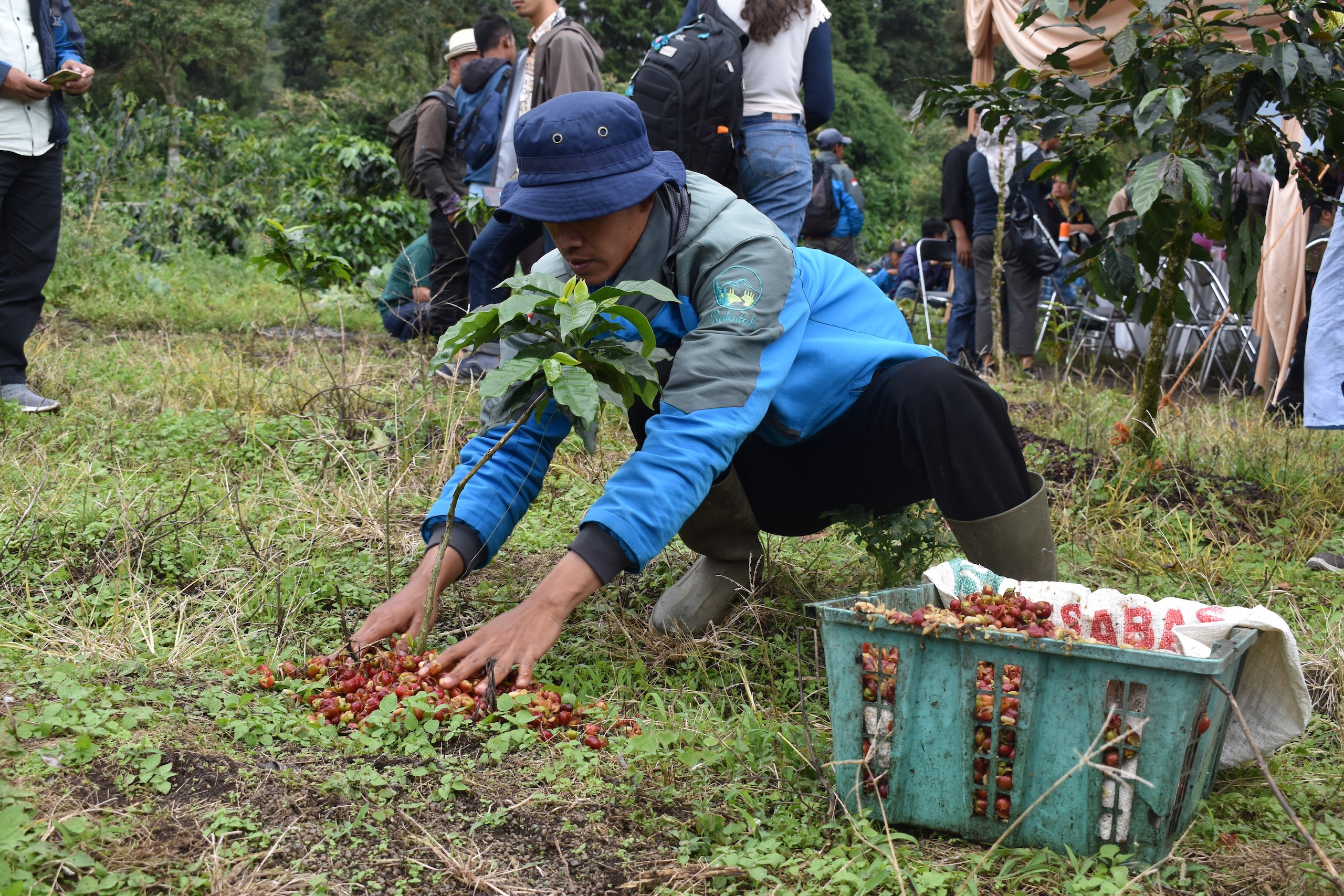
“We found with the Grameen Bank and all of these innovations on the site that it is possible to get money to billions of people at low cost and high recovery rates with very large economic impacts – this is the same thing,” Kaimowitz said.
Darren Walker, president of Ford Foundation, said the Nusantara Fund directly supports Indigenous peoples and local communities, bolstering capacity to manage their natural environments, reduce emissions, build rich local economies and steward crucial resources for the benefit of all Indonesians – and the global climate.
“The fund will also contribute to the achievement of Indonesia’s Nationally Determined Contribution [to the Paris Agreement] and net-zero emissions,” Walker said in a press release.