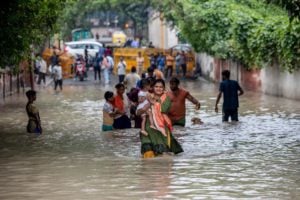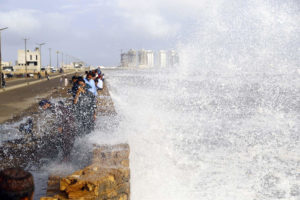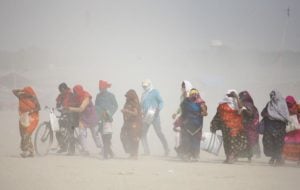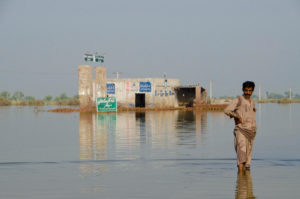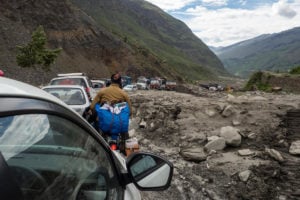
The world faces a disaster emergency, yet nowhere is the threat more immediate than in Asia and the Pacific, which includes 53 UN member states. Ours is a region where climate change-induced disasters are becoming more frequent and intense. Since 1970, two million people have lost their lives to disasters. Tragically, but all too predictably, the poorest in the least developed countries are worst affected. They will find themselves in the eye of the storm as temperatures rise, new disaster hotspots appear and existing risks increase. Unless we fundamentally change our approach to building resilience to disaster risk, temperature rises of 1.5°C or 2°C will make adaptation to the threat of disasters unfeasible. Disaster risk could soon outpace resilience in Asia and the Pacific.
It is worth thinking about what this would mean. The grim tally of disaster-related deaths would inevitably rise, as would the annual cost of disaster-related losses. In the forthcoming ESCAP Asia-Pacific Disaster Report 2023 by ESCAP – due to be released on 25 July, 2023 – we forecast losses to increase to almost USD 1 trillion (3% of regional GDP) under 2°C warming up from USD 924 billion today (2.9%). The deadly combination of disasters and extreme weather would undermine productivity and imperil sustainable development. In the poorest parts of our region, such as the Pacific small island developing states, disasters would become a major driver of inequality. Losses would be particularly devastating in the agriculture and energy sectors, disrupting food systems and undermining food security as well as jeopardising energy supply and production. Environmental degradation and biodiversity loss would be remorseless, leading to climate change-driven extinctions and further increasing disaster risk.
To avoid this exponential growth of disaster risk, there is a narrow window of opportunity to increase resilience and protect hard-won development gains. To seize it, bold decisions are needed to deliver transformative adaptation. They can no longer be postponed.
This week, countries meeting during our Committee on Disaster Risk Reduction will consider key questions such as prioritising greater investment in early warning systems. Expanding coverage in least developed countries so that they have effective multi-hazard early warning systems is the best way to reduce the number of people killed. Early warning systems can shield people living in multi-hazard hotspots and reduce disaster losses everywhere by up to 60%. They provide a tenfold return on investment. To protect food systems and reduce the exposure of the energy infrastructure – the backbone of our economies – sector-specific coverage is needed. Investments at the local level to improve communities’ response to early warning alerts, delivered through expanded global satellite data use and embedded in comprehensive risk management policies, must all be part of our approach.
Nature-based solutions should be at the heart of adaptation strategies. They support the sustainable management, protection and restoration of degraded environments while reducing disaster risk. The evidence is unequivocal: preserving functional ecosystems in good ecological condition strengthens disaster risk reduction. This means preserving wetlands, flood plains and forests to guard against natural hazards, and mangroves and coral reefs to reduce coastal flooding. Forest restoration and sustainable agriculture are essential. In our urban centres, nature-based solutions can mitigate urban flooding and contribute to future urban resilience, including by reducing heat island effects.
Beyond these priorities, only transformative adaptation can deliver the systemic change needed to leave no one behind in multi-hazard risk hotspots. Such change will cut across policy areas. It means aligning social protection and climate change interventions to enable poor and climate-vulnerable households to adapt and protect their assets and livelihoods. Disaster risk reduction and climate change adaptation must become complementary to make food and energy systems more resilient, particularly in disaster-prone arid areas and coastlines. Technologies, such as the Internet of Things and artificial intelligence, can improve the accuracy of real-time weather predictions and how disaster warnings are communicated.
Yet to make this happen, disaster risk financing needs to be dramatically increased and financing mechanisms scaled up. In a constrained fiscal context, we must remember that investments made upstream are far more cost-effective than spending after a disaster. The current level of adaptation finance falls well short of the USD 144.74 billion needed for transformative adaptation, as indicated in our forthcoming report to be released on 25 July, 2023. We must tap innovative financing mechanisms to close the gap. Thematic bonds, debt for adaptation and ecosystem adaptation finance can help attract private investment, reduce risk and create new markets. These instruments should complement official development assistance, while digital technologies improve the efficiency, transparency and accessibility of adaptation financing.
Now is the time to work together, to build on innovation and scientific breakthroughs to accelerate transformative adaptation across the region. A regional strategy that supports early warnings for all is needed to strengthen cooperation through the well-established United Nations mechanisms and in partnership with sub-regional intergovernmental organisations. At ESCAP, we stand ready to support this process every step of the way because sharing best practices and pooling resources can improve our region’s collective resilience and response to climate-related hazards. The 2030 Agenda for Sustainable Development can only be achieved if we ensure disaster resilience is never outpaced by disaster risk. Let us seize the moment and protect our future in Asia and the Pacific.