Climate change has emerged as the biggest threat to Pakistan’s development over the past decade . This was first taken seriously by Pakistan’s government after the 2010 and 2011 floods. The country’s stance has been to prioritise adaptation over mitigation – largely because Pakistan claims to be one of the lowest emitters of greenhouse gases (GHG) in the world, and one of the countries most affected by climate change.
Now, faced with the need to declare its national climate plan to the UN, also known Intended Nationally Determined Contribution (INDC), Pakistan’s Ministry of Climate Change has prepared a draft that promises an “unconditional” emissions reduction of 5% by 2030, compared to 2012 levels. The draft says this figure can go up to 18% if there is sufficient support from rich nations, especially in the areas of finance and technology transfer. The draft has been submitted to Prime Minister Nawaz Sharif for review.
What is becoming increasingly clear, and relevant for Pakistan, is that developed nations are pushing for poorer countries to improve financial transparency and amend their policies, in order to access climate funding. This provides an opportunity for the country to strengthen its infrastructure, whilst reaping the benefits of a greener economy. Pakistan’s national climate plan can promote a shift towards low carbon development. Securing the funds to do so is an opportunity that must be seized at all costs.
The draft INDC is linked to the country’s own development plan, Vision 2025, especially to its goal of adding 25,000 MW of electricity to the national grid by 2025. It is also linked to economic growth targets such as doubling the current GDP and building the Pakistan-China Industrial Corridor. The draft document focuses on energy and agriculture, which are responsible for 90% of the country’s emissions.
It is good that the climate ministry has prepared the draft despite recent uncertainty – it was demoted to a division of the cabinet in 2014, and only turned back into a full-fledged ministry this year. Its minister recently resigned only months before the UN climate summit in Paris.
Pakistan does have a National Climate Change Policy and is developing provincial counterparts – one of the few countries in the region to do all this. However, a recent high court ruling berated the government for failing to implement the policy.
Laggard governments
With the Paris climate summit looming, many governments are still struggling to agree on the nature, scope and overall design of their INDCs.
These plans are reflective of national circumstances and contexts, and are expected to take many forms, including for example, an absolute reduction in current emissions; or an offer to deviate from a business-as usual pathway. Additional forms will include commitments to cap overall emissions by a specific date, or reduce the emissions intensity of economic activity.
With little negotiating time before the Paris summit, the United Nations Framework Convention on Climate Change had received 74 submissions by September 29, reflecting 101 countries (including the European Union member states) and covering 60% of global population, according to the Climate Action Tracker.
The worry is, while most major emitters have submitted their documents, their combined efforts will only achieve two-thirds of the target needed to keep global warming within the internationally-agreed two-degrees Celsius threshold. Over 100 countries are yet to submit their national plans.
Of the countries that have submitted their INDCs, there is considerable variation in the baseline years against which they plan to measure their efforts. The US and Canada have opted for 2005, which makes their promised emissions cuts look higher than they are. For example, Canada has pledged emissions reductions of 30% compared to 2005 levels, which works out as only 2% against 1990 levels.
The situation in Pakistan
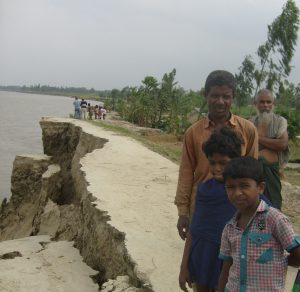
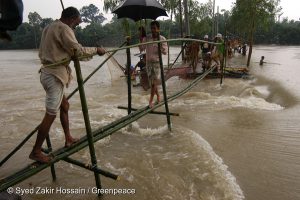
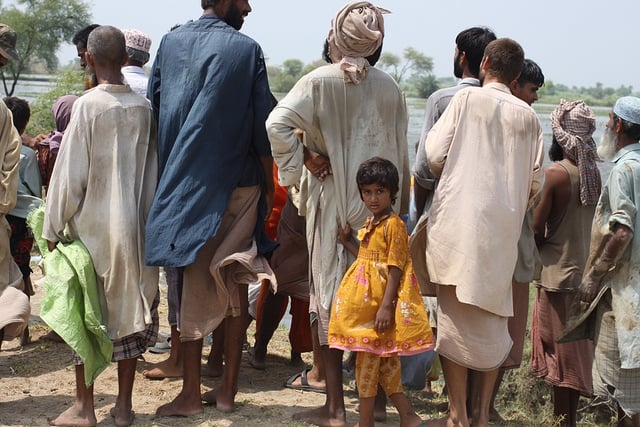
As well as being in a position to contribute to global fight against climate change, Pakistan also has an urgent need to do so. From 2010, it has experienced unprecedented disasters and climate extremes, resulting in economic losses of over US$6 billion, according to the UN Development Programme.
There is no time to ponder the question of whether these disasters are directly attributable to climate change. The reality is that the country is already being hit hard and the need for action is urgent.