
Climate

Pakistan floods not worsened by action in India

Top Pakistani and Indian officials have debunked some media reports in Pakistan, which had alleged that India had opened the gates of the Baglihar dam and had thus added to the current flooding in Pakistan
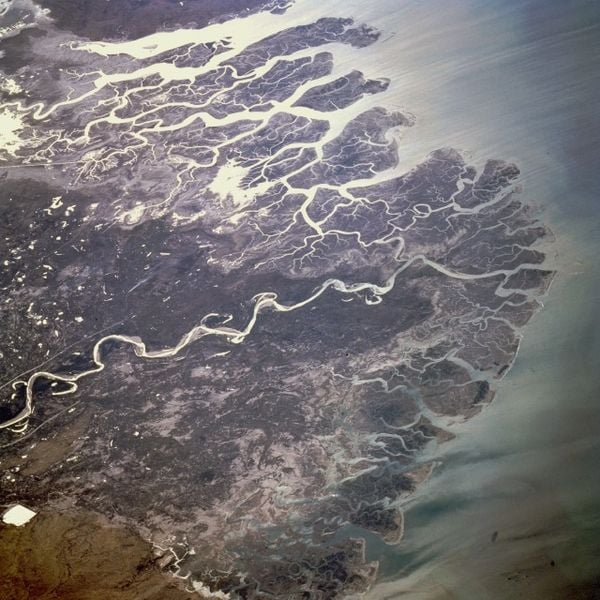
<p>Indus D(Photo of Indus Delta from NASA)</p>

Indus D(Photo of Indus Delta from NASA)

Pakistan’s chairman of the Indus Water Commission, and the head of the Indian organization that operates the Baglihar dam on the Chenab river, have both debunked reports in a section of the Pakistan media, which had alleged that current floods in Pakistan have been worsened because Indian authorities opened the gates of the Baglihar dam.

The Chenab flows into Pakistan downstream of the Baglihar project site in India. It is a major river of the transboundary Indus basin, over which India and Pakistan entered into the Indus Water Treaty in 1960.

Asked if it was true that floods in the Pakistan stretch of the Chenab were due to release of water from the Baglihar dam in India, Mirza Asif Baig – chairman of the Indus Water Commission – told thethirdpole.net, “No, these floods are caused by rainfall in the basin of the Chenab river.”

The Indus Water Commission – with co-chairs from Pakistan and India – looks after the implementation of the Indus Water Treaty.

A similar reaction came from India.

“Where is the question of opening the dam gates in a run of the river hydroelectric project,” Mehraj Ahmad Kakroo, Managing Director of Jammu and Kashmir State Power Development Corporation (JKSPDC), told thethirdpole.net when asked to react to the media reports. “The gates are not closed at all. Except in mid-summer when the water flow is at its minimum, they are kept open all the time.”

JKSPDC runs the Baglihar hydroelectric project, of which the first two phases have been built, and are generating power. Kakroo, the head of the corporation, said on the morning of September 6, “We are constantly monitoring the water flow in the Chenab at the dam site. The average flow at this time of the year (early September) is 2,400 cumec (cubic metres per second). Due to the heavy rain, the flow has now gone up to 3,200 cumec, but that is not enough to cause flooding downstream.”

Both upstream India and downstream Pakistan are facing a serious flood situation in the Indus basin, due to heavy rain in the Himalayan region from September 4.

See Floods create havoc in Jammu and Kashmir

See Floods kill scores in Pakistan

Speaking to thethirdpole.net on the evening of September 5, Mohammad Riaz, a senior official in the Pakistan Meteorological Department, also categorically denied that any water released by India had been the cause of any flooding in Pakistan. Weather experts in Pakistan have said the flooding has been due to heavy rainfall.

Cookies Settings

Dialogue Earth uses cookies to provide you with the best user experience possible. Cookie information is stored in your browser. It allows us to recognise you when you return to Dialogue Earth and helps us to understand which sections of the website you find useful.

Required Cookies

Required Cookies should be enabled at all times so that we can save your preferences for cookie settings.

Dialogue Earth - Dialogue Earth is an independent organisation dedicated to promoting a common understanding of the world's urgent environmental challenges. Read our privacy policy.

Cloudflare - Cloudflare is a service used for the purposes of increasing the security and performance of web sites and services. Read Cloudflare's privacy policy and terms of service.

Functional Cookies

Dialogue Earth uses several functional cookies to collect anonymous information such as the number of site visitors and the most popular pages. Keeping these cookies enabled helps us to improve our website.

Google Analytics - The Google Analytics cookies are used to gather anonymous information about how you use our websites. We use this information to improve our sites and report on the reach of our content. Read Google's privacy policy and terms of service.

Advertising Cookies

This website uses the following additional cookies:

Google Inc. - Google operates Google Ads, Display & Video 360, and Google Ad Manager. These services allow advertisers to plan, execute and analyze marketing programs with greater ease and efficiency, while enabling publishers to maximize their returns from online advertising. Note that you may see cookies placed by Google for advertising, including the opt out cookie, under the Google.com or DoubleClick.net domains.

Twitter - Twitter is a real-time information network that connects you to the latest stories, ideas, opinions and news about what you find interesting. Simply find the accounts you find compelling and follow the conversations.

Facebook Inc. - Facebook is an online social networking service. China Dialogue aims to help guide our readers to content that they are interested in, so they can continue to read more of what they enjoy. If you are a social media user, then we are able to do this through a pixel provided by Facebook, which allows Facebook to place cookies on your web browser. For example, when a Facebook user returns to Facebook from our site, Facebook can identify them as part of a group of China Dialogue readers, and deliver them marketing messages from us, i.e. more of our content on biodiversity. Data that can be obtained through this is limited to the URL of the pages that have been visited and the limited information a browser might pass on, such as its IP address. In addition to the cookie controls that we mentioned above, if you are a Facebook user you can opt out by following this link.

Linkedin - LinkedIn is a business- and employment-oriented social networking service that operates via websites and mobile apps.