India is struggling to contain the devastation brought on by a sharp increase in Covid-19 cases. Infections are surging in Nepal and Bangladesh. Authorities in Pakistan fear the same upsurge in cases as in India.
As thousands die daily, the pandemic shows how badly both developing countries and the world are placed when it comes to responding to global crises. Many of the problems that have arisen during pandemic echo well-known issues that have dogged the world’s response to the climate crisis, from the impact on vulnerable populations, to narrow, nationalistic responses to global problems, to the divide on technological cooperation between developed and developing countries. Unless the world takes to heart the lessons from this disaster, it will remain unprepared for coming catastrophes as the Earth continues to warm.
The politics of science
It is useful to begin with science, and its politicisation for narrow domestic reasons. The Chinese Communist Party suppressed information initially about the spread of the new “SARS-like” disease. Two weeks were lost as Chinese scientists tried to communicate with the World Health Organization (WHO) while government officials dragged their heels, releasing the minimum information they could to the UN agency. Although China opened up cooperation thereafter, this decision – taken largely to manage domestic opinion – had significant consequences for the spread of the disease as well as China’s global reputation as a trustworthy actor.
China was far from alone in politicising the pandemic. Donald Trump, the former US president, did everything from praising China to blaming China – setting off a wave of anti-Asian hate crimes – as well as pulling funding from the WHO. Jair Bolsonaro, president of Brazil, has downplayed the seriousness of the crisis, advocating ‘cures’ that are scientifically unsound and opposing advice by healthcare professionals to the extent that there is now a Senate inquiry into his management of the crisis.
India has been among the worst in terms of politicising the pandemic, denying community spread, advocating homeopathic cures that do not have scientific backing, downplaying numbers and allowing large gatherings – both religious and electoral, at a time of rising infections. Nepal’s Prime Minister KP Sharma Oli has followed the lead of India’s rulers.
This mirrors how the world has responded to climate change to the point where we now speak of a climate crisis. Political leaders have denied or derided the scientific consensus on human-driven climate change, often for narrow domestic reasons favouring a few industries. Donald Trump cut much of the budget on environmental research, while pulling the US out of the Paris Agreement. Both Brazil’s Bolsonaro and India’s Prime Minister Narendra Modi have a history of casting doubt on the science, though both have shifted their views in public.
Both health science and climate science are inherently political. Preparing for any emergency requires allocation of scarce resources
While there have been calls to delink science from politics, this misrepresents the problem. Both health science and climate science are inherently political. Preparing for any emergency requires allocation of scarce resources, incentivising certain actions (such as subsidies for the quicker introduction of certain technologies or guaranteed orders by the government for vaccines) and the disincentivising of others (taxing polluting industries, requiring adequate health safeguards for gatherings). These actions inevitably benefit some and inconvenience others. They require clear communications, the offsetting of the problems of those inconvenienced (such as the new US administration’s plan to retrain and skill those working in the coal sector) and a plan of action with buy-in by political actors from the central, regional and local levels.
None of this is easy, especially for poor countries that do not have the economic reserves to support robust welfare measures for a population in crisis. But, as the Allahabad High Court observed in a scathing order on the Indian state of Uttar Pradesh’s response, “Economy, economy and economy is the only tune that the government is all the time harping upon, but bread and butter if you take to a person who needs oxygen and medication, it will be of no use to him.”
It is countries that are hit, not just individuals
This highlights another issue where the pandemic’s effects mirror that of the climate crisis. The impacts of the pandemic and climate-induced disasters are borne by specific countries. While some of the ultra-rich may have the means to insulate themselves from disasters, or fly to safer harbours, on the whole even relatively privileged people find themselves unable to access relief. It is worth reiterating that large health crises, or climate-induced disasters, disproportionately affect marginalised communities, and especially women. Nevertheless, as states remain the principal means of management around the world, the impact is on individual countries, and their infrastructure.
As health systems near their limit in places like India and Nepal, the consequences of underfunded social infrastructure are becoming clear
What this means is that poorer communities in poorer countries bear the brunt of the problems – problems that they may have the least responsibility in creating – while there are limited resources to deal with them. This has been the conversation on “loss and damage” around climate change for years, a conversation that rich countries have largely brushed aside. As health systems near their limit in places like India and Nepal, the consequences of underfunded social infrastructure are becoming clear. Such tragedies inevitably lead to the international community providing emergency aid, which is necessary, but far more expensive and inefficient than helping support the creation of such infrastructure before disasters of this scale occur. This requires a resetting of global priorities towards disaster anticipation rather than merely disaster management.
Practical methods are spelt out in the Sendai Framework for Disaster Risk Reduction. Though most countries have signed up to this, few pay heed to it.
A global agreement on how to reduce the risk and impact of disasters endorsed by the UN General Assembly in 2015. It outlines seven clear targets and four priorities for action to prevent new and reduce existing disaster risks: (i) Understanding disaster risk; (ii) Strengthening disaster risk governance to manage disaster risk; (iii) Investing in disaster reduction for resilience and; (iv) Enhancing disaster preparedness for effective response, and to “Build Back Better” in recovery, rehabilitation and reconstruction.
Future technology hobbled by past inequities
Finally, the crisis has shone a harsh light on how technology transfer remains a major bottleneck. Rich countries “including the US, EU, UK, Switzerland, Japan, Norway, Canada and Australia” have blocked the temporary waiver of intellectual property rights for vaccines requested by India and South Africa and supported by around 100 developing countries. The move would help speed vaccination in poorer countries. Furthermore, it is in the self-interest of the developed world, as mutations in unvaccinated populations may make the early vaccines ineffective. Pharmaceutical companies in rich countries argue that this would disincentivise their work in vaccine development – a weak argument given that many of the new vaccines were developed through state support.
The short-term super-profits of a few important sectors in rich countries remain a major obstacle to cooperation on climate mitigation and adaptation technologies as well. In the long term it will benefit the populations of rich countries fairly little if they are able to manage their carbon emissions, but much of the developing world cannot afford those solutions, and thus continues to emit away. The poorer countries may bear the brunt of the disaster – as they are doing now – but a world made much more unsafe for everyone is not in the interest of anybody. It is past time the world understood that and acted upon it. The pandemic will hopefully be brought under control; the climate crisis is only just beginning.
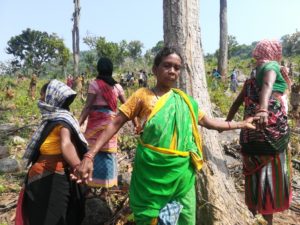

![The four person medical team at Kwaring village of Lahaul tests for Covid-19 during winter in the high Himalayas [Image by: Rakesh Parihar]](https://dialogue.earth/content/uploads/2021/02/Photo_5_Kwaring-2048x1375-1-300x201.jpg)