
Life isn’t easy for rickshaw puller Ajoy Mandal. In summer, it becomes intolerable. “Working in the heat has become virtually impossible but I have no choice,” says Mandal, who has been ferrying passengers on his leased rickshaw for the past three years in Noida on the outskirts of Delhi. “My skin burns even in the evenings.”
Mandal is one among the millions of outdoor workers in India who are finding it difficult to work as temperatures rise every year, hurting productivity and health. This has a direct impact on the economy, a fact that has been recognised only recently. A major report last month by the United Nations Development Programme (UNDP) said levels of heat in many tropical locations are already very high even for acclimatised populations.
The hotter summers seen in recent years that have been partly attributed to climate change are likely to worsen the situation, the international agency said. In places across India, summer temperatures are frequently higher than 40 degrees Celsius, reaching extremes of around 50 degrees in quite a few places ranging from Odisha to Rajasthan.
The poor get hit first
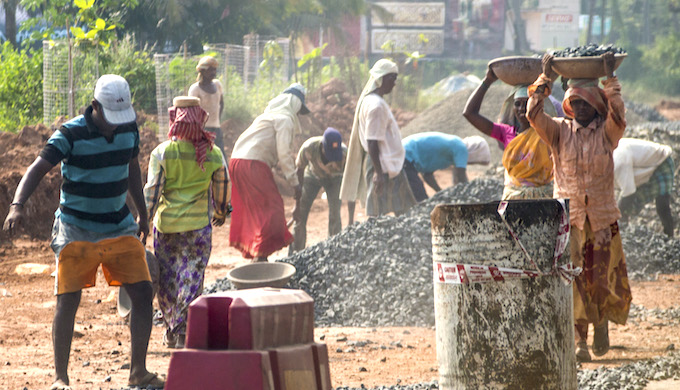
“The lowest income-bracket work – heavy labour and low-skill agricultural and manufacturing jobs – are among the most susceptible to climate change,” UNDP said. Agriculture is the biggest employer in India (55% of the working population, or 263.2 million people), followed by manufacturing and construction. Working out in the sun is a fact of life for the majority of working Indians. Then there are millions in industry and services, many of whom work in urban heat islands. It is getting too hot to work, singeing livelihoods and economic growth.
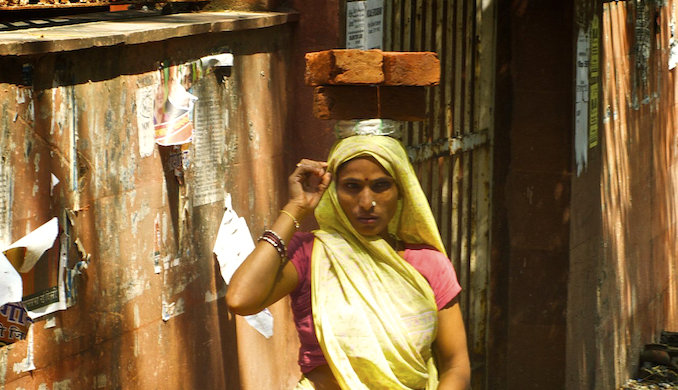
A number of studies on industrial workers have shown that workplace heat has a strong negative bearing on productivity, or even the ability to work. When physical activity is high in a hot working environment, a worker is at risk of increased core body temperature (above 38 degrees Celsius), diminished physical work capacity and mental task ability, increased risk of accidents and eventually heat exhaustion, Tord Kjellstrom, Ingvar Holmer and Bruno Lemke said in a paper in 2009.
One result of climate change is a reduced work capacity in heat-exposed jobs, according to Kjellstrom, an expert on heat and occupational health who has studied industrial workers in India. He was the lead technical author of the latest UNDP report.
The economic impact of global warming has been documented mostly through its effect on farm output, where high temperatures are associated with low crop yields. The impact of heat on workplace productivity, which also results in significant economic loss, is a more neglected aspect of climate change.
Fall in output
“We estimate output declines of between 4% and 9% per degree on days when wet bulb globe temperatures (WBGT) are above 27 degrees Celsius,” E. Somanathan, Rohini Somanathan, Anant Sudarshan and Meenu Tewari said in a 2015 working paper titled The Impact of Temperature on Productivity and Labor Supply: Evidence from Indian Manufacturing. WBGT is a measure of heat stress in direct sunlight, which takes into account temperature, humidity, solar radiation and wind speed, among others. It differs from the heat index, which considers temperature and humidity and is calculated for shady areas.
“Based on our estimates, this warming may have reduced manufacturing output in 2009 by 3%, an annual economic loss of over USD 8 billion. These estimates are conservative because they do not account for the costs of incurred adaptation or capture the impacts of local urban heat islands,” the researchers said.
Satellite images of Indian metropolitan areas show the presence of urban hotspots with temperatures five degrees Celsius above that of the surrounding countryside. “Modern urban development can add several degrees to local temperatures through heat absorption in concrete buildings, road tar etc.,” the 2009 Kjellstrom paper said.
Temperature impacts on worker productivity may be even more pronounced and widespread in sectors such as agriculture and construction across the world because exposure may be higher and adaptation possibilities more limited, according to Somanathan and co-authors.
In many hot areas of the world, the temperatures are so high that life becomes difficult. Such high heat is already common during hot seasons in many tropical and sub-tropical countries, and also in the southern US, southern Europe and Australia. This results in reduced work capacity, lower labour productivity and losses of economic output, according to a 2014 paper.
Heat overload in work
Outdoor work is particularly affected by the extra heat load from solar radiation, but millions of indoor workers are also affected as many factories and workshops in tropical countries lack efficient cooling systems, researchers say. In a survey of Chennai workplaces, Karin Lundgren, Kalev Kuklane and Vidhya Venugopal found that all the indoor workplaces surveyed had very high heat exposure in the summer months, often exceeding international WBGT limits.
The effects of rising heat may lead to more than 10% loss of productive work in South Asia and West Africa, the 2014 paper said. “As an example, the annual daylight work hours lost in India (the largest country in South Asia) may be 5% more in 2050 than in 1975.”