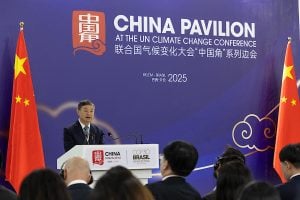
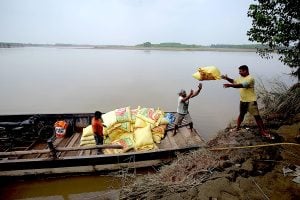
African participants left COP30 with sharp disappointment but also guarded optimism. In the end, Belém delivered neither the sweeping breakthrough many had hoped for nor the collapse some had feared. For the African participants Dialogue Earth spoke to, the summit’s outcomes landed somewhere in the uneasy space between progress and paralysis.
Ethiopia’s confirmation as host of COP32 was a welcome signal of Africa’s importance in global climate diplomacy. Negotiators also secured the creation of a just transition mechanism – to support a fair and inclusive shift to clean energy – though it requires some finessing before COP31. And they achieved a hard-won agreement on indicators to measure progress on adapting to climate change. These wins promise, eventually, to deliver the kind of accountability and support the Global South has long fought for.
However, certain countries resisted the inclusion of language on phasing out fossil fuels and pushed back against proposals to embed critical minerals into the just transition agenda.
All told, as the participant takeaways below make clear, for Africa Belém was a reminder of the limits of climate multilateralism and the widening gap between what vulnerable nations need and what the COP process can deliver.
‘Not the best COP ever, but not a failure either’
Julius Mbatia is global climate justice manager at ACT Alliance, a faith-based coalition of organisations working on humanitarian aid and development

Urgent action was needed at COP30, on the 10th anniversary of the Paris Agreement to limit global warming to 1.5C – a threshold now in danger of being breached in the 2030s.
We wanted greater ambition, greater signalling around the urgency to reduce emissions, to transition away from fossil fuels in a just, orderly manner. That’s not exactly what we got. The formal negotiations did not land language that requires countries to transition in this manner.
However, to keep the momentum going, the presidency promised to issue its own roadmap for the transition, with further consultations planned and reports to be tabled at COP31. This was an important signal of leadership from Brazil.
Similarly, we had hoped for greater ambition on supporting developing countries to adapt to climate impacts, especially on finance, which has consistently lagged behind support for cutting emissions. The urgency of scaling up adaptation finance cannot be overstated. Developing countries are facing ruinous impacts, and COP30 needed to do more than acknowledge this reality. In the end, the Global Goal on Adaptation indicators were adopted, which should help countries assess their progress more accurately.
COP30 also agreed to a target to triple adaptation finance by 2035, one of the most significant outcomes of this COP, especially after last year’s finance commitment failed to include targets for adaptation or for support to address irreversible loss and damage from climate impacts. Vulnerable nations, led by the Least Developed Countries and the Africa Group, pushed hard for this outcome.
The overall result falls short of the urgency many demanded, but that is the nature of multilateral negotiations. Ambition is often tempered by diplomacy. Still, it is painful to see the pleas of vulnerable communities diluted in the process.
This was not the best COP ever, but it was not a failure either. The work continues, and what was left unresolved in Belém will have to be settled at the next COP. Importantly, we have not lost faith in the process.
‘A modest advance in global adaptation governance’
Sherri Ombuy is a consultant at Perspectives Climate Group, a policy consultancy

COP30 in Belém had been branded the “COP of adaptation” by the Brazilian presidency. While the issue did rise up the agenda, Belém delivered only a modest advance in global adaptation governance.
The adoption of the Global Goal on Adaptation indicators is a meaningful institutional milestone. It concludes two years of technical work to translate an abstract global goal into a measurable framework to help countries assess adaptation progress across sectors.
Parties agreed to 59 indicators, although the final package largely bypassed the expert-led process and instead emerged from a late presidency text. Several parties formally noted their concerns about methodological weaknesses, insufficient reflection of national contexts, and limited country ownership.
A new work programme is now required to refine and substantiate these indicators and to deliver operational guidance by 2027. This next phase is critical because credible indicators strengthen accountability, support continuous learning, and guide resources toward priority sectors such as water and agriculture.
On finance, the call to triple adaptation finance by 2035 recognises the widening gap between adaptation needs and current financial flows. However, without an agreed baseline year, clear tracking parameters, or a defined delivery pathway, the commitment risks remaining aspirational. It could create additional challenges for developing countries that need predictable and far greater adaptation support.
‘We will return to COP to fight for our rights’
Mwanahamisi Singano is director of policy at Women’s Environment & Development Organization, a global NGO advocating for gender equality, women’s rights and environmental justice
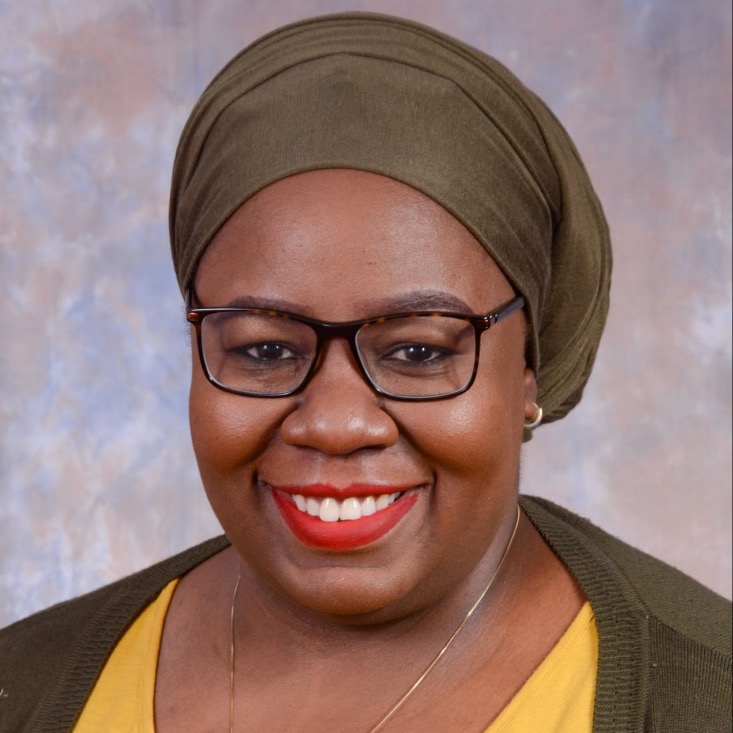
The power of our people is alive in the UN climate negotiation process. Two years ago, a long-term mandate on the Gender Work Programme was only a dream, yet we delivered it in Baku. In the halls of Belém, feminist power delivered a Gender Action Plan that names and recognises the factors shaping climate injustice, that protects women environmental defenders, and that strengthens coherence at national level for real impact.
As we leave here with collective pride in the victories won, we know that the true power is not in the decisions alone but in how they illuminate our struggle and our strength. And we are not done. We will return to the halls of COP to fight for our rights. We will return to end the culture of trading our rights as bargaining chips. Our feminist power, our people’s power, will win the human rights fight.
‘Just keeping the multilateral show on the road will not deliver its aims’
Iskander Erzini Vernoit is director of the Imal Initiative for Climate and Development, a non-profit thinktank based in Morocco

Difficult conversations denied, meaningful multilateralism delayed: COP30 tells the story of a hollow process. We await the day when governments are ready for at-scale action and funding, not only words, to meet the climate emergency.
On mitigation, calls for a roadmap from fossil fuels drew media focus, but the presidency saw too much divergence to deal with the topic under the formal process, instead opting for an initiative under its own authority.
Insufficient media attention was given at the “Implementation COP” to the implementation gap, although the agreement on a COP30-31 Global Implementation Accelerator has potential. Many “developing countries” already have plans for phasing down fossil fuels, and have flagged that this transition requires international support to happen sooner rather than later. These calls, made in national climate action plans, must not fall on deaf ears.
The shadow of COP29 lay over COP30. Rich countries repeatedly sought to shut down discussion by pointing to the highly insufficient USD 300 billion goal for annual climate finance, agreed last year, which is assumed to be largely loans and only mandated to materialise from 2035.
COP30 did, however, initiate a new work programme on climate finance. It is hoped this will provide a space for focused conversation on debt-free, grant-equivalent provision of finance under Article 9.1.
On adaptation, COP30 offered little reassurance, with “developed countries” unwilling to triple adaptation finance by 2030, committing instead to the unserious date of 2035. The EU had said it would withhold tripling unless part of a quid pro quo, which various countries noted was contrary to legal obligations to provide adaptation finance, per the UN climate convention and Paris Agreement.
Clearly, just keeping the multilateral show on the road is not enough to achieve a meaningful multilateralism capable of delivering on its aims.