The world is facing several environmental “tipping points” that are interrelated and could cause drastic changes to societies if unaddressed, scientists have said in a new report.
Published by the UN University Institute for Environment and Human Security (UNU EHS), “Interconnected Disaster Risks” is designed to highlight the interconnections between the risks the world faces. It underlines that when ecosystems, food systems and water systems deteriorate, instability can slowly build until a tipping point is reached, changing the system fundamentally or even causing it to collapse.
The report favours solutions that address the root causes of the six risks it highlights: unbearable heat, biodiversity extinctions, groundwater depletion, glacial melt, uninsurability and space debris.
These risks are all apparent already in some regions of the world. For example, more than 50% of the world’s aquifers are losing water faster than it is being replaced. If water falls below the level that wells can access it, food production is put at risk. Saudi Arabia has passed this tipping point: in the mid-1990s, large-scale groundwater extraction allowed the country to become the world’s sixth-largest wheat exporter. Since 2017, however, it has relied on imports.
The report’s solutions include: slashing greenhouse gas emissions; creating a world without waste; respecting the needs of nature; nurturing “a global civic mindset”; and replacing growth based on relentless economic increase with one based on supporting human wellbeing while remaining within planetary boundaries.
Melting ice
Meltwater from glaciers and snow provides water for drinking, irrigation, hydropower and ecosystems. But, like groundwater overexraction, glacial retreat – when glaciers melt faster than snow can replenish them – is underway in many locations. Between 2000 and 2019, glaciers experienced a net loss of 267 billion tonnes of ice per year.
Glacial “peak water” – the point at which a glacier produces its maximum volume of water run-off due to melting – has already passed in the Andes, leaving communities with unreliable sources for drinking and irrigation. Peak water is expected within the next ten years for many small glaciers in Central Europe, western Canada and South America, according to the report.
Meanwhile, heatwaves are becoming more frequent and intense. In the past two decades, extreme heat has been responsible for an average of 500,000 excess deaths per year. This is disproportionally affecting people who are particularly vulnerable due to, for example, age, health conditions or profession.
The tipping point at which a human body can no longer survive is a “wet-bulb temperature” of 35C for more than six hours. This measurement combines temperature and humidity and is important because high humidity hinders the sweat evaporation needed to maintain a stable core body temperature.
Wet-bulb temperatures have already crossed the human survival threshold on occasion in the Persian Gulf and the Indus River Basin, researchers warn. By 2070, parts of South Asia and the Middle East are predicted to surpass it regularly. The report says that by 2100, more than 70% of the global population may be exposed to deadly climate conditions for at least 20 days per year.
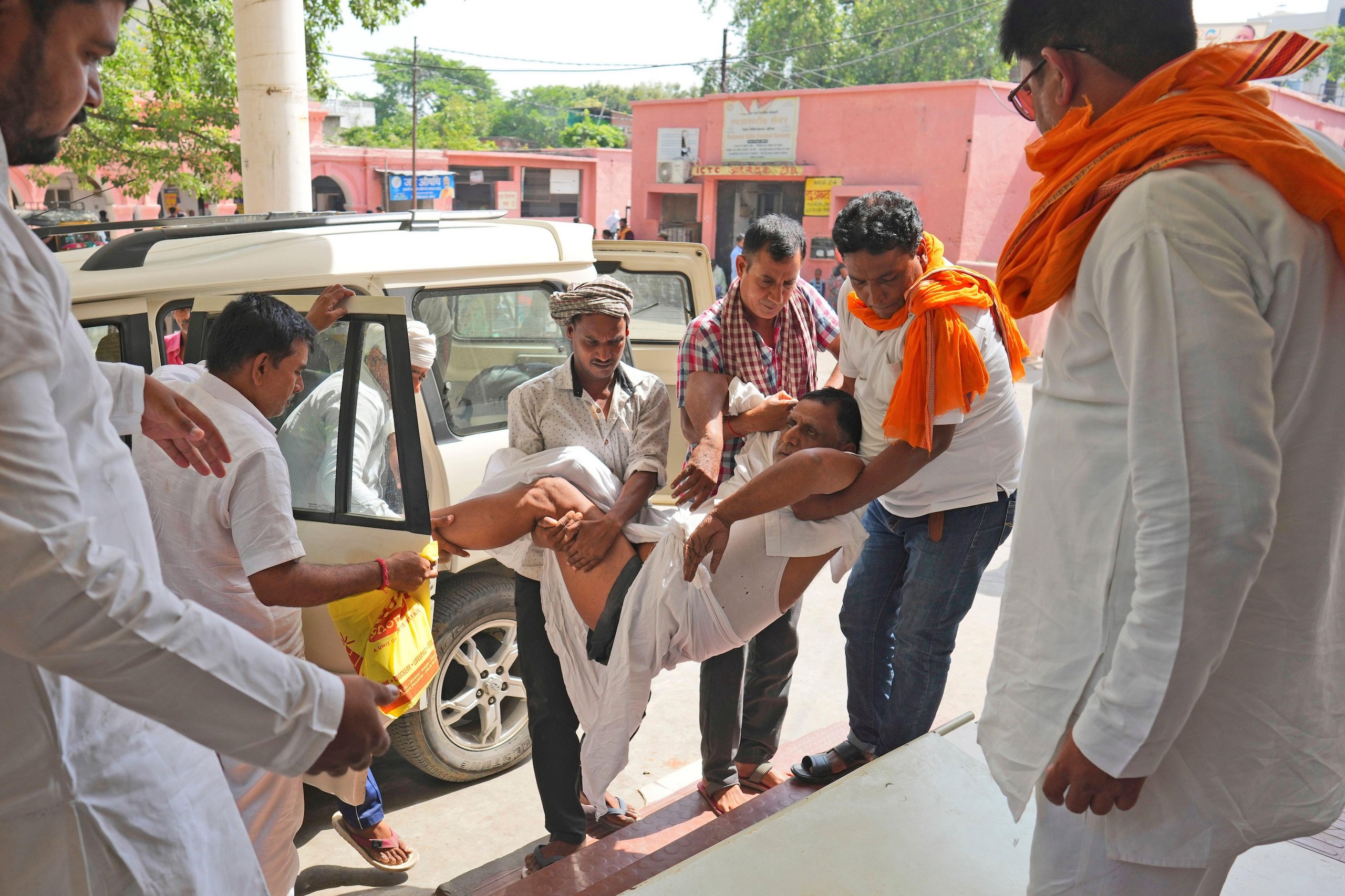
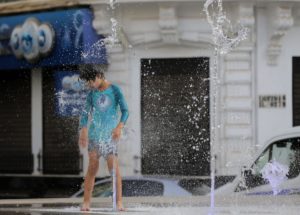
Events this year back up these findings. Record-breaking heat in the south-west of the US and Mexico, Southern Europe and China raised heat-related hospitalisations and caused multiple deaths. In July, more than 200 people in Mexico died in this way, while authorities issued heat warnings for large parts of the population in Italy and Spain and over 100 million people in the southern US.
Uninsurable
The researchers also outline how adapting to severe weather will become more challenging as locations or activities become uninsurable. Insurance premiums have climbed by as much as 57% since 2015 in areas where extreme weather events are already common. Some insurance companies have limited the amount or type of damages they can cover, cancelled policies or left the market altogether.
If this trend reaches a tipping point, where insurance becomes unaffordable or unavailable, people will be left without an economic safety net if disaster strikes. This will increase socio-economic consequences, particularly for those least able to move to safer areas.
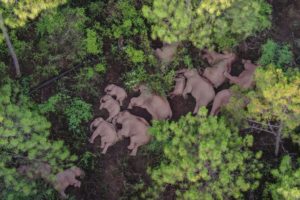
Extinctions are also at risk of a tipping point, the report warns. If a strongly connected species in a particular ecosystem disappears, this can trigger cascading extinctions of dependent species, eventually leading to ecosystem collapse.
For example, sea otters help balance Pacific kelp forests by feeding on sea urchins, but they are endangered due to overhunting. If sea otters are not there to protect kelp from urchins, more than 1,000 species, including sharks, turtles and whales, will lose the shelter, food and protection of these forests.
Transformational change
The report asserts that societies and governments are currently failing to deal with the root causes of these problems with the necessary transformational change. Instead, action is being delayed with temporary solutions that merely slow the journey to tipping points, rather than halting it.
For example, global heating has led to a huge rise in air conditioning installations across the world. The report’s lead author Dr Zita Sebesvari points out that while this is understandable, these cooling technologies are also increasing greenhouse gas emissions. She says the world could be slashing these emissions by using more efficient technology, for example.
Sebesvari says the upcoming UN climate talks at COP28 will provide an opportunity to deal with this: the United Arab Emirates presidency and the UN Environment Programme have been promoting a pledge to reduce emissions from cooling that they hope governments will sign up to.
Dr Jack O’Connor, lead author and senior expert at the UNU EHS, says the issues raised in “Interconnected Disaster Risks” are very much related to COP28: “If we look at these tipping points, continuing CO2 emissions is connected to driving up risk in many different areas, so addressing this will logically reduce our risk in many different areas.”