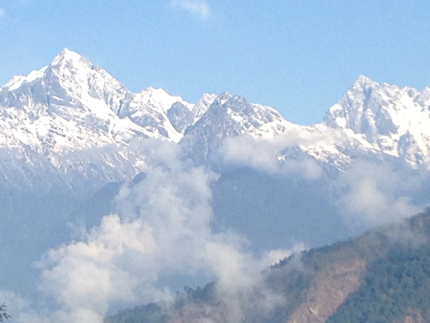
How exactly does soot or ‘black carbon’ particles released from the incomplete burning of fuels affect hydrologic sensitivity and glacial melt in the fragile Hindu Kush, Karakoram and Himalayan (HKH) mountain system? The answer could hold the key to the water needs of millions and a team from the Indian Institutes of Technology (IITs) at Kanpur and Kharagpur along with the University of Oslo is hoping to provide valuable clues towards it.
Since black carbon absorbs light, its deposits on snow increase the amount of energy absorbed and enhances melting and rapid loss of water. The three-year ‘Hydrologic sensitivity to Cryosphere-Aerosol interaction in Mountain Processes’ (HyCAMP) project, which started in 2014, is aimed at developing a national emissions inventory and through it a deeper understanding of the phenomena.
Knowledge gained from the project is expected to also improve hydrologic forecasting for Norway.
The results of the national inventory under preparation would be extrapolated for the Himalayan region, Mukesh Sharma, department of civil engineering, Indian Institute of Technology, Kanpur, told thethirdpole.net.
“Himalayan glaciers are central to India’s water needs, they supply water to large river systems that support millions of people inhibiting the surrounding area,” Sharma said at the two-day Anil Agarwal Dialogue, held in March by the Delhi-based think tank Centre for Science and Environment.
Grid level studies
Sharma explained the challenges scientists face while preparing detailed inventories to study the climate and health impacts of black carbon. One is a problem of resolution of grid areas to be studied. For example, while studies on climate impacts require grids of a coarse resolution, of 40 km by 40 km, studies on health impact need grids of finer resolutions, of 2 km by 2 km.
Also, he added, “Often our inventories are in the form of tables that do not yield much information. We need a spatial geographic information system (GIS)-based inventory.”
The HyCAMP project is preparing one such GIS-based inventory in India. “GIS inventories are more understandable and accessible, increase integration and consistency of data, provide various analytical tools for database and help in visualization, mapping and modelling,” Sharma said. A GIS inventory can yield data even at a district level, and help understand emissions flows beyond political boundaries, he added.
A GIS inventory also helps break down uncertainties at the grid level to source level in various sectors such as industry, agriculture and household. In the industrial sector, for instance, it can yield information on whether emissions are from steel plants or thermal plants; similarly, in the agriculture sector, whether emissions from open burnings are from crop residue burning or waste burning or open fires; or whether domestic source emissions are from liquid petroleum gas (LPG), kerosene, biomass, dung cakes or agriculture residue.
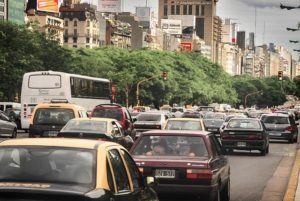
Preliminary findings from the project estimate black carbon emission from domestic combustion in India at 321.75 kilotons per year – 106 kilotons from open burning, 191.7 kilotons from industrial emissions and 209 kilotons from transportation.
Replacing dung cakes and wood with LPG could help control soot emissions in other regions of the Himalayas too, Sharma said.
Global voices on glacial melt
Scientists worldwide are also increasingly concerned over the sources and impacts of black carbon on glacial melt in the Himalayas and the lack of accurate data to devise mitigation strategies.
According to Tobias Bolch, senior researcher at the department of geography at the University of Zurich, “Black carbon emissions have significantly increased during the last decades” and its deposition is rising even at the highest elevations in the Himalayas. Scientists are measuring black carbon deposition increase at Mount Everest ice core and other locations in the Himalayas, he said at a conference on adaptation to climate change held at the International Centre for Integrated Mountain Development (ICIMOD), Kathmandu, last November.
Knowledge of black carbon deposition in the Himalayas has increased since the fourth assessment report of the Intergovernmental Panel on Climate Change (IPCC) of 2007. But, “We still need both more detailed in-situ and remote sensing-based studies in order to have reliable data to understand and to be able to model the important processes in detail,” Bolch said.
Soot deposition and aerosols are likely important parts of the Himalayan climate-glacier system, especially in recent decades, and the effects of industrial and natural particulates as well as global warming on glaciers should vary across the region, he said.
Arnico Panday, ICIMOD’s senior atmospheric scientist and coordinator of the atmosphere initiative, added that scientists still need accurate assessments of the relative contributions of different black carbon source regions to different parts of HKH cryosphere, including nearby households, Himalayan forest fires, cities in the HKH region and the Indo-Gangetic plain. Scientists also need assessments of contributions of different sectors, for example, diesel engines, brick making, cooking stoves with biomass fuels and open fires.
According to Maria Shahgedanova, associate professor at the department of geography and environment science, University of Reading (UK), industrial emissions of black carbon are among the highest in the HKH region.
“We need regional atmospheric and hydrological models,” she told the ICIMOD conference.
Scientists, she said, needed diverse inputs and data on both regional and distant emissions of black carbon, aerosol properties, meteorology, snow properties and snow reflection to understand the magnitude of impact of black carbon on snow and ice melt.
Cong Zhiyuan, associate professor at the Institute of Tibetan Plateau Research, part of the Chinese Academy of Sciences, said black carbon on mountain glaciers had been the subject of much focus. “However, seasonal snow cover is also sensitive to the black carbon deposition, not only due to the much larger spatial coverage, but also because it corresponds to the high black carbon emission seasons, that is, winter and spring. We need more in-situ research.”
Cong and colleagues have developed a model to track black carbon deposition in monsoon and non-monsoon seasons. Their model, details of which are published in the February 2015 issue of Climate Dynamics, shows that soot deposition in the monsoon season is less than that in non-monsoon seasons in the southern parts of the Hindu Kush Himalayan region.
The westerly winds prevail throughout the year and transport soot particles from central Asia to the northern Tibetan Plateau, and in the monsoon period, aerosols can cross the Himalayas and be transported to high altitudes by the south-westerly winds over South Asia.
Cong, who also studied the transport of black carbon across Mount Everest during pre- and post-monsoon, reported at the Nepal conference that black carbon transport will accelerate on the Tibetan Plateau.
Understanding the sources of black carbon is important to devise mitigation strategies, said Bolch.
Shahgedanova agreed. “To inform policies and design mitigation strategies, we need to quantify the relationship between black carbon emissions, deposition and changes in snow and glacier melt and runoff, using regional models. The required data are currently limited and observational networks should be expanded.”

![An Indus river dolphin spotted in Dhunda [image courtesy: WWF-India]](https://dialogue.earth/content/uploads/2018/05/Indus-River-Dolphin-in-Dhunda_WWF-India-300x200.jpg)