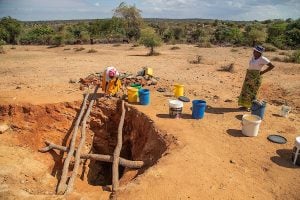
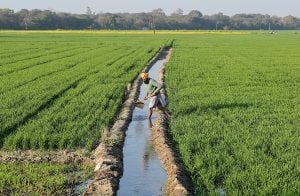
In climate conversations, heat is often treated as a number. It is a threshold to watch out for, a line not to be crossed. But in many parts of the world, heat does not arrive alone.
It comes with humidity, applying an invisible pressure to the human body that is poorly understood and dangerously underreported. We call it humid heat: a combination of high temperatures and moisture in the air.
Humid heat is increasingly seen as one of the most dangerous weather extremes. But current ways of measuring and responding to it often fail to reflect the lived experiences of many people. This is especially the case in regions where efforts to adapt to the changing climate have been limited.
Dangers of humidity on the body
When exposed to high temperatures, a body’s primary response is two-fold.
First, it tries to dissipate the internal heat by redirecting blood away from the core and toward the skin and extremities. Second, it produces sweat which carries heat away from the skin as it evaporates.
This is a CATCH story
This story is part of Dialogue Earth’s work on the Community Adaptations to City Heat (CATCH) project, in partnership with Boston University. The project is funded by Wellcome. All Dialogue Earth content is editorially independent.
How effective this process is depends on how well the sweat can evaporate. When humidity is high, sweat cannot evaporate easily because of the large amount of moisture already in the air. The sweat is therefore trapped on the skin, making it harder to cool down.
To envisage what this is like, imagine trying to breathe through a damp cloth or wrapping yourself in a wet blanket on a hot day. As humidity rises, even moderate temperatures can feel suffocating. The body’s core temperature begins to climb, straining its ability to regulate internal heat and placing extra pressure on the heart and circulation.
Our bodies will continue to produce sweat even in high humidity levels, but to little benefit. As well as not solving overheating, all the sweating now creates another problem, as it leaves the body dehydrated. This further strains the cardiovascular system and potentially damages cells, tissues and organs. Left unchecked, this can lead to confusion, collapse and even organ failure and death.
Measuring the heat
There are several ways to measure heat stress, each with its limitations.
A commonly used metric is the wet bulb temperature (WBT), traditionally measured with a thermometer bulb covered by a damp cloth. As air flows over the cloth, it draws out heat and brings the reading down. WBT combines air temperature and humidity to indicate how well our bodies can cool down through sweating and evaporation. A key input is relative humidity, which indicates how much moisture is in the air compared to the maximum the air can hold at that temperature. When WBT reaches 35C (a commonly used theoretical upper limit for human survivability) even healthy people resting in the shade may no longer be able to maintain a safe core temperature. WBT is a useful indicator but it assumes a breeze, which may not always reflect the real world.
For outdoor settings, especially in workplaces or the military, a more comprehensive measure is the wet bulb globe temperature (WBGT). It adds the effects of solar radiation and wind speed, offering a more realistic assessment of heat stress for physical activity in the sun. But WBGT still misses crucial factors, like housing quality, access to cooling or underlying health risks.

The most widely used public metric is the heat index, which combines air temperature and relative humidity to give a “feels like” value. But it assumes shade, light wind and healthy, acclimatised individuals, making it poorly suited for the conditions many people face.
In short, none of these tools fully capture real-world risk, particularly in humid regions with poor infrastructure and high social vulnerability.
The problem with 35C limits
As scientific interest in humid heat has grown, so has public attention, though not always with clarity. The WBT threshold of 35C is frequently cited in the media as a definitive limit between survivable and fatal conditions. While it is true that sustained exposure to such extremes can be deadly, this framing can be misleading. It implies that anything below 35C is safe, when serious health effects can occur well before that point, especially with prolonged exposure, physical exertion or a lack of cooling.
The human body does not respond to heat in absolute values, and our assessments should reflect that complexity
These thresholds are often treated as universal, which overlooks how vulnerability varies depending on a person’s occupation, housing, underlying health and ability to adapt. The duration of exposure also plays a crucial role, as even moderate humid heat can become dangerous if sustained over many hours or repeated day after day. Public agencies, healthcare workers, emergency responders, journalists and even researchers may unintentionally reinforce this misunderstanding, by focusing on such simplified thresholds instead of acknowledging a spectrum of risks. The human body does not respond to heat in absolute values, and our assessments should reflect that complexity.
The disconnect between measured thresholds and actual vulnerability has serious consequences.
Because humid heat often unfolds quietly and without a single dramatic spike, its toll is frequently absent from official records. People may collapse from what is recorded as cardiac arrests, strokes or respiratory failures with no mention that heat was a contributing factor. In many parts of the world facing rising levels of humid heat, particularly in rural or informal settings, heat-related illness and death go underreported or misclassified. This is due to a combination of limited surveillance systems and systemic gaps in recognising how heat contributes to health outcomes.
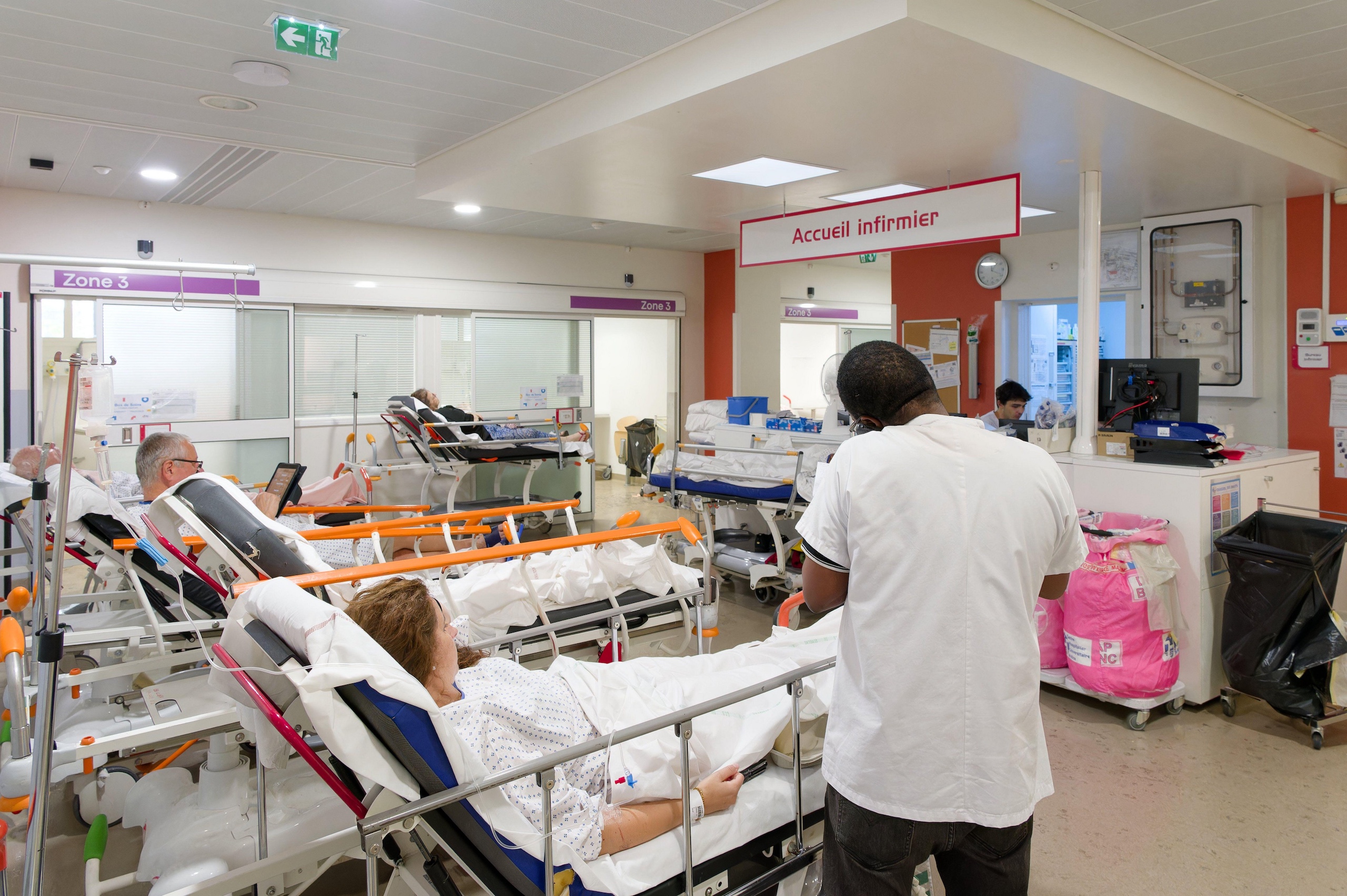
Heat is rarely recorded as a contributing factor in cases like stroke or cardiac arrest, even when high temperatures may have exacerbated preexisting conditions. As a result, heat-related deaths are attributed to underlying illnesses, leaving the true impact of humid heat hidden in official records. This undercounting makes it harder to raise public awareness, design early-warning systems or allocate resources for heat action plans.
In the absence of reliable data, the burden of humid heat remains largely invisible, especially for the poor, the elderly and those with preexisting health conditions.
Unequal risks from the same heat
Even when temperatures are the same, not everyone experiences heat in the same way. A construction worker labouring under the direct sun, a child in a tin-roofed classroom, and an older adult in a crowded, poorly ventilated home all face very different levels of risk. Access to cooling, shade, ventilation, clean water and medical care plays a major role in shaping outcomes. Yet these resources are unequally distributed.
In many cities dealing with humid heat, air conditioning is still a privilege of the wealthy. Meanwhile, informal workers, from delivery riders to street vendors, often have no choice but to stay outdoors during the hottest parts of the day. Rural populations, particularly women and older adults, may be indoors but in buildings that trap heat and lack airflow.
Even where cooling is available, access to electricity is not guaranteed. Power grids are increasingly strained during heatwaves and can also be knocked out by compounding hazards, like pre-monsoon storms or cyclones. Such outages leave millions exposed just when they most need relief.
These differences in exposure, occupation, infrastructure and energy access mean heat stress is deeply tied to socioeconomic inequality. It disproportionately affects the same communities already at risk from poverty, marginalisation and poor health access.
Community solutions to heat
Heat stress is not only a meteorological phenomenon. There are social, political, economic and historical determinants as to why certain areas are hotter than others and why certain people are more exposed and less able to adapt than others.
This means the solutions for protecting everyone from the dangers of heat must also consider these determinants to be successful.
Policies and programmes that improve the social safety net of communities also improve their ability to adapt to heat. The Clean Power Prescription programme at Boston Medical Center in the United States, for example, gives low-income patients the ability to pay their energy bills with a prescription, written by their primary care provider. Microgrid projects that build small and localised power networks can also help. These allow communities to generate their own energy, thus reducing their reliance on power from national grids during outages and allowing them to keep running fans and air conditioning.
Other US programmes that bring cooling directly to communities have also been shown to be successful, such as air conditioning giveaways, or the Community Lighthouse programme in New Orleans. The latter turns existing community spaces, such as churches, into designated cooling spaces, by adding solar power and back-up battery capacity. This provides somewhere for people without sufficient cooling at home to go and find safety and comfort.
As the frequency and intensity of heat continue to rise globally, we must go beyond the individual measures of protection and adaptation and create new ways of caring for one another that can withstand the pressure, no matter how hot and humid things get.
Akshay Rajeev contributed to this article in a voluntary capacity.