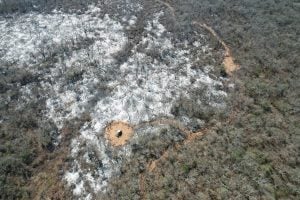
When I first set foot in Belém, host city of the United Nations’ climate change conference, COP30, in November, it wasn’t the big blue UN logos or the endless lines of delegates that welcomed me. It was the air. That humid air that clings to your skin, thick, warm, heavy with the smell of the river, old leaves, time standing still. It was an air I recognised like a distant relative.
Editor’s note
This article is part of Dialogue Earth’s Indigenous Voices fellowship. The eight fellows are Indigenous journalists and storytellers from across the Global South. The fellowship aims to foreground not just Indigenous issues, but also the storytelling, reporting and insights of Indigenous journalists themselves.
Belém doesn’t just smell like the Amazon. It exudes it.
And yet, even though we were in the heart of the largest tropical forest on the planet, inhabited in and protected by many fellow Indigenous communities, it did not always feel that COP30 spoke the language of the territory. The words that flooded the panels – mitigation, adaptation, financing, just transition – seemed to come from a parallel world to that inhabited by the communities that depend directly on the river, the forest, the climate cycles – things that are felt here not as concepts, but as life.
More than once, as I wandered through the conference corridors, I thought of my grandfather. He always said that the forest is a living being that listens. I wondered what he would think if he saw this scene: thousands of people discussing how to save the Amazon, but so few who know the silence of dawn on the river or the sound of the forest at dusk.
The COP sometimes seemed to talk about the Amazon without really having listened to it.
Being an Indigenous communicator at COP
Participating in the COP as an Indigenous communicator is like walking with feet in two different worlds.
On the one hand, you are in air-conditioned rooms where global policies are discussed; on the other, you carry with you the memory of your territory, the voice of your community, the stories of your elders, the concerns of your youth. For me, that is the territory of the Shuar and the community of San Luis Ininkis in Ecuador.
This dual perspective – from within and from without – becomes a tool for reading the COP not only as a technical space, but also as a political, symbolic and deeply unequal space.
From the outside, Indigenous peoples continue to be presented as guardians of the forest, as symbols of a wisdom that is respected in discourse but rarely integrated into real decision-making.
From the inside, I discovered something it hurts to admit: the global climate change negotiations system is not designed for Indigenous peoples to decide.
Uyunkar Domingo Peas Nampichkai, an Achuar leader from Ecuador, summed it up clearly as we walked between pavilions: “They invite us to speak, but not to decide.”
That phrase should be engraved at the entrance to every COP.
Beyond the official broadcasts
Official broadcasts show smiles, speeches and ceremonies. But the reality is very different for the Indigenous people who attend.
I heard Indigenous leaders discussing how to pay for their daily meals, while outside, there was talk of millions of dollars for climate funds. I saw delegations without confirmed accommodation and young Amazonians broadcasting from borrowed mobile phones to keep their communities informed.
I witnessed how, in one panel, the word “territory” was translated three times as “available land”. For us, territory is not a resource. It is body, memory, spirituality, history, river, mountain, time and connection.
I came looking for agreements. I found speechesTony Chimbo, young Kichwa leader
A group of Yanomami Indigenous women living in the Brazilian Amazon, near Belém, opened a discussion with a ritual song. It was not a show. It was a way of summoning the spirits of the forest, of asking permission, of ordering the energy. Many did not understand; those of us who come from the territory did.
In the corridors of the conference hall, I listened to the voices of Indigenous leaders.
Carla Medrano Criollo, a Siona leader who came with the delegation from the Confederation of Indigenous Nationalities of the Ecuadorian Amazon (CONFENIAE), told me honestly: “Here they only listen to us if we speak their language.”
Tony Chimbo, a young Kichwa leader from the Amazon who was attending a COP for the first time, confessed to me: “I came looking for agreements. I found speeches. I’ll come back anyway. If we’re not there, others will decide for us.”
Juan Bay, president of the Waorani nationality (pictured), sitting in a forum where they were talking about climate change, asked me a question that still resonates: “Why are you talking about the future if you are not protecting the present?”
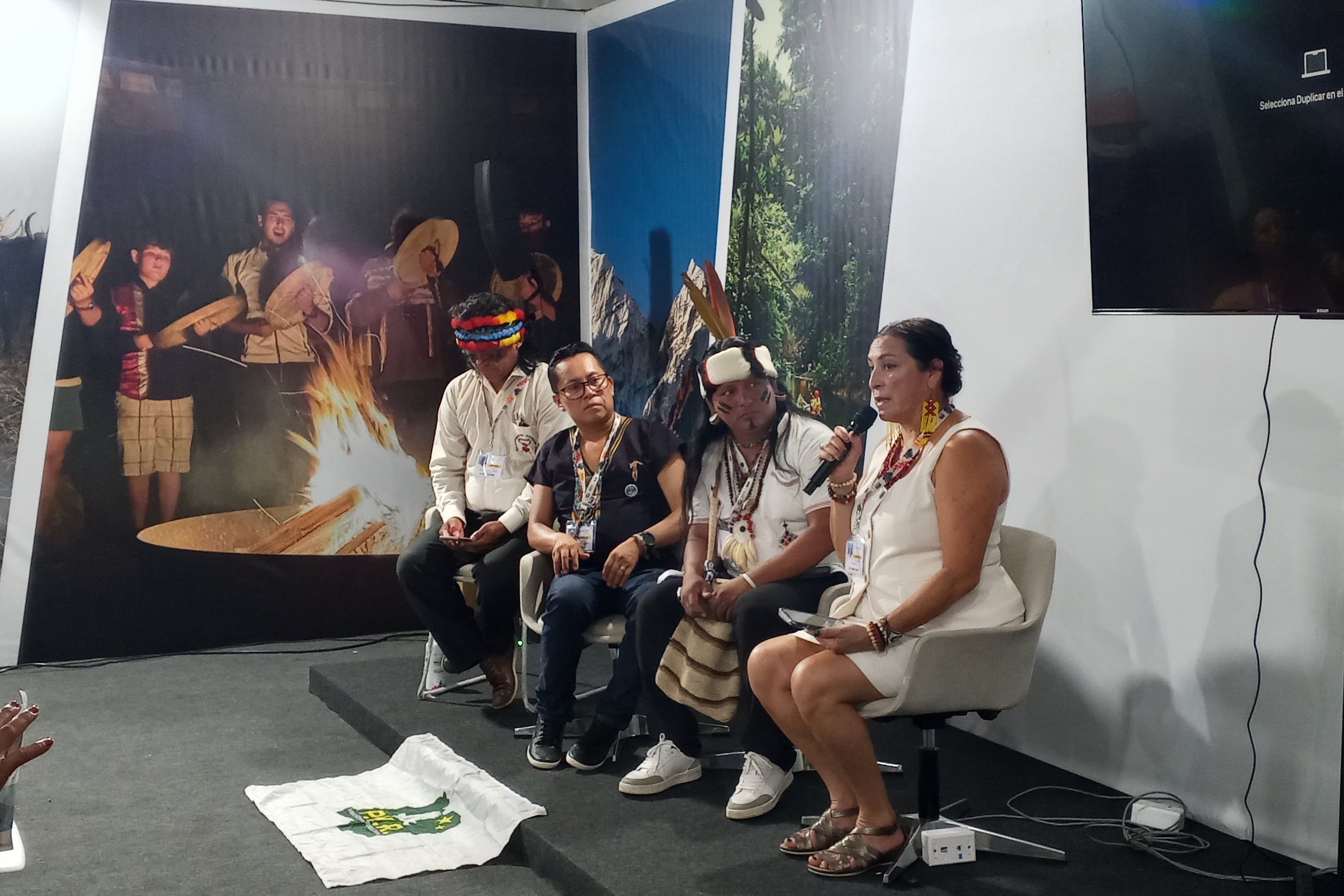
These voices – random phrases, glances, silences – construct an emotional and political map of the COP that no official document captures.
Ecuador at COP30
Ecuador played a key role among the Amazonian delegations. The interventions of the prefect of the province of Morona Santiago, Tiyua Uyunkar, and the president of CONFENIAE, José Esach, were innovations in Amazonian Indigenous discourse at the international level.
In a roundtable discussion, Uyunkar presented a vision calling for direct financing for Indigenous nationalities, without intermediaries. He also called for the strengthening of subnational leadership, the promotion of new forest economies based on the bioeconomy and ecosystems, and Indigenous digital sovereignty as a tool for technological autonomy.
His speech highlighted something fundamental: Amazonian territories should not be passive beneficiaries, but central actors in global climate governance.
For his part, Esach was direct in his speech at another event: “The Amazon has been protected by Indigenous peoples for millennia, but we remain excluded from the decisions that define our future.”
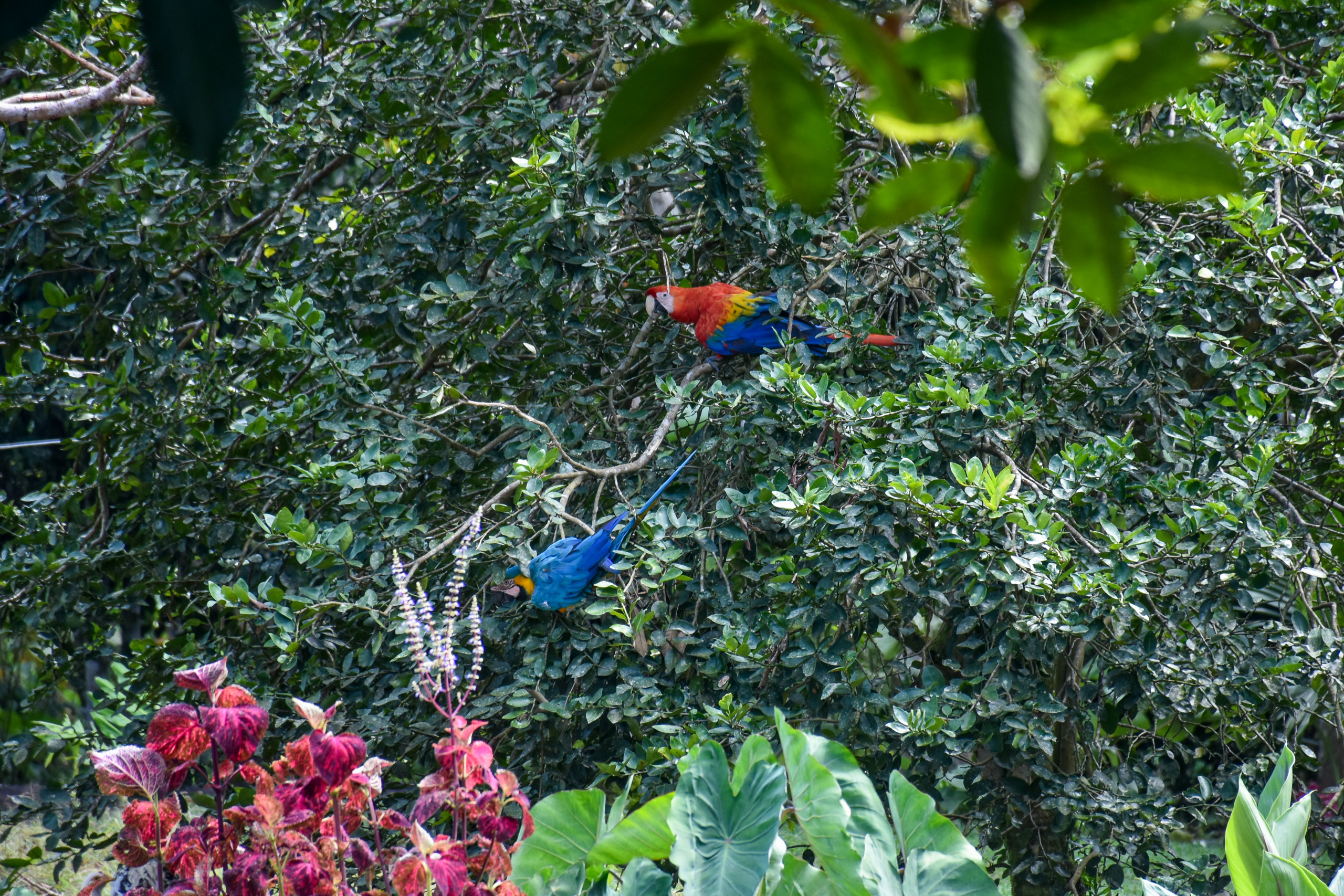
His demand is that Indigenous communities not just be consulted but empowered – to truly be a part of discussions and decision-making. This is a novel part of the Amazonian narrative, a part that the international community must receive.
Toward concrete results
Many powerful arguments were heard in Belém, about concepts including climate justice, direct financing for Indigenous peoples, territorial rights and community sovereignty. These words circulated freely in panels, speeches and diplomatic conversations. But in the end, none of them were transformed into binding commitments. There was progress in language, yes, but it was discursive progress, closer to desire than guarantee. The gap between what is said on stage and what happens on the ground remains wide.
Real results will not come from what happened in Belém but from the work that comes next: follow-up, territorial coordination and political pressure. Real change will require genuine coordination between Indigenous authorities, local governments and the state. International processes move at a pace that contrasts with the urgency of the situation in the territories. Gains can be lost amid these lengthy negotiations.
Through their actions at COP30, Amazonian representatives have forged a stronger presence in the global debate. Ours is a force that makes people uncomfortable, questions and reorganises. However, occupying space is not the same as exercising power. Climate adaptation continues to be designed from outside our territories and, although the international community has shown it is open to listening, it is not yet willing to relinquish the control that would allow it to truly change the course of climate decisions.
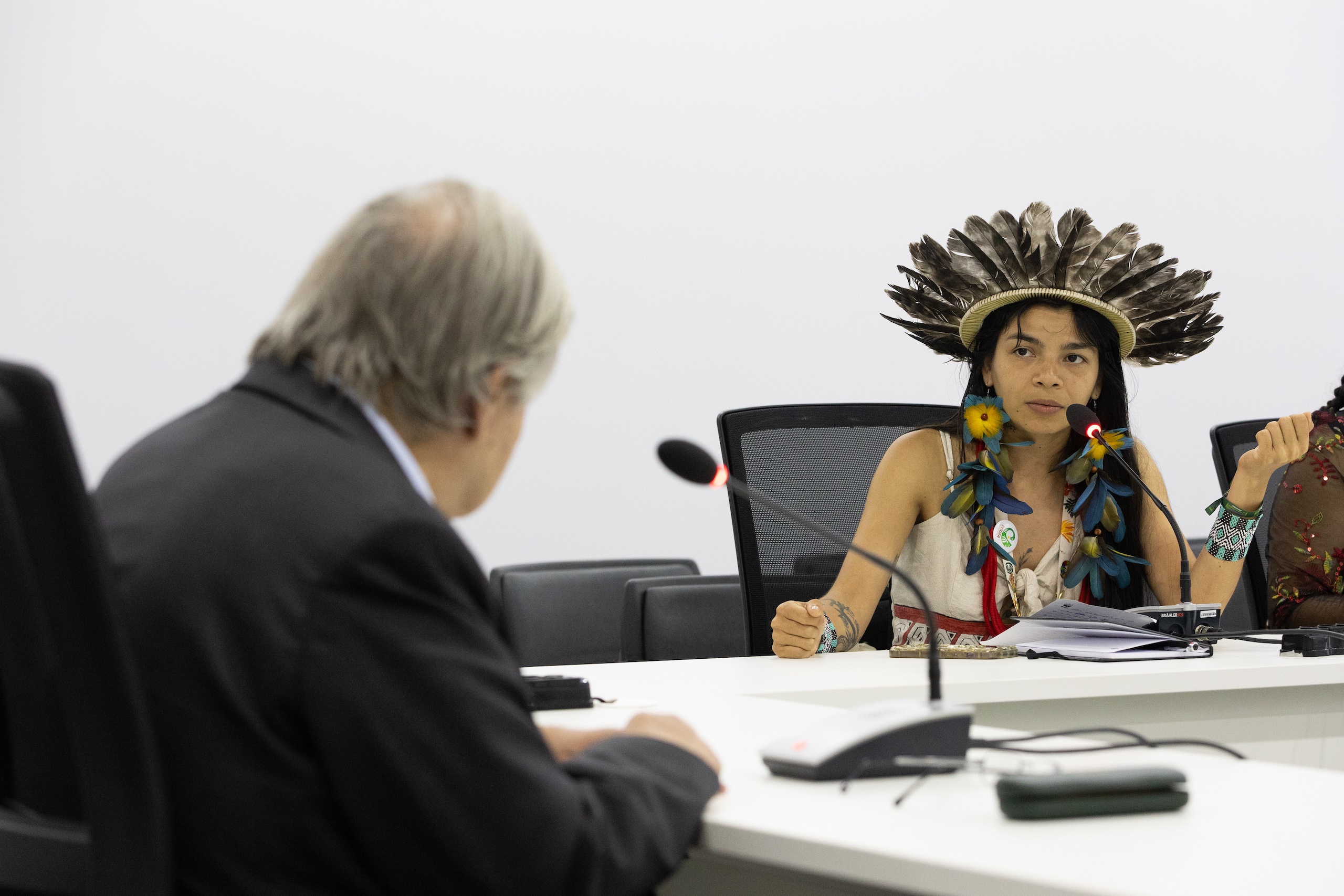
If Indigenous voices are fully included, the fruits will be felt over time, gradually and concretely. But if political will dissipates and decisions get caught up in global bureaucracy, this COP will end up being remembered as a missed opportunity to listen to the forest and those who inhabit it.
Our voice, at COP and beyond
Belém left me with a deep certainty: the climate struggle is not defined in diplomatic halls, but in the territories. The future of the Amazon will be decided in the rivers, in the communities, in the forests that still breathe and resist.
The Amazonian peoples will continue to attend, not because we fully trust the system, but because withdrawing would mean that others will tell the story of the Amazon for us. And when others tell it, the forest ceases to be alive and becomes a resource.
Our voice – the voice of the peoples who inhabit the forest – should not only be present at the COP. It should be the one that sets the course.