“Schools were designed at a time when the climate crisis was not a problem,” says Rodrigo Ferreyra, a teacher at a college in the city of Rosario.
Now, in Argentina’s third most populous city, it is a problem. There have been 23 heatwaves in Rosario over the last 15 years, the same number as in the previous five decades, according to data from the National Meteorological Service (SMN). In the city, a heatwave occurs when the minimum temperature exceeds 20.5C and the maximum temperature exceeds 33.4C for three consecutive days. The longest in Rosario’s history was one of the most recent, occurring in March 2023 and lasting 10 consecutive days.
During that one, a school in the city drew global attention after telling pupils to come to school in swimwear to try to stay cool.
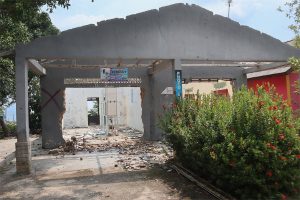
In March of this year, classes were interrupted in 20 private schools and 18 public schools due to a four-day heatwave, according to data shared with Dialogue Earth by teachers’ unions.
Argentina is not an outlier in this.
In 2024, heatwaves were the main climate-related factor forcing schools to close around the world, according to UNICEF. In Latin America and the Caribbean, 30 million students suffered significant disruptions to their education as a result of heatwaves, floods, cyclones and severe storms. (See Too hot to learn: Why school heat is a growing problem.)
This is a CATCH story
This story is part of Dialogue Earth’s work on the Community Adaptations to City Heat (CATCH) project, in partnership with Boston University. The project is funded by Wellcome. All Dialogue Earth content is editorially independent.
The heat brings major health risks: dehydration, heatstroke, organ problems, even death. Children are especially susceptible as their smaller bodies find it harder than adults to regulate heat. In schools their lack of agency may make them even more vulnerable as they are not able to move to cooler areas or hydrate when they choose.
Francisco Chesini, a public health researcher at the National University of Avellaneda (Undav) in Buenos Aires, says the fact more intense and frequent heatwaves are being caused by climate change should drive the discussion in Argentina on what needs to be done in schools during such events.
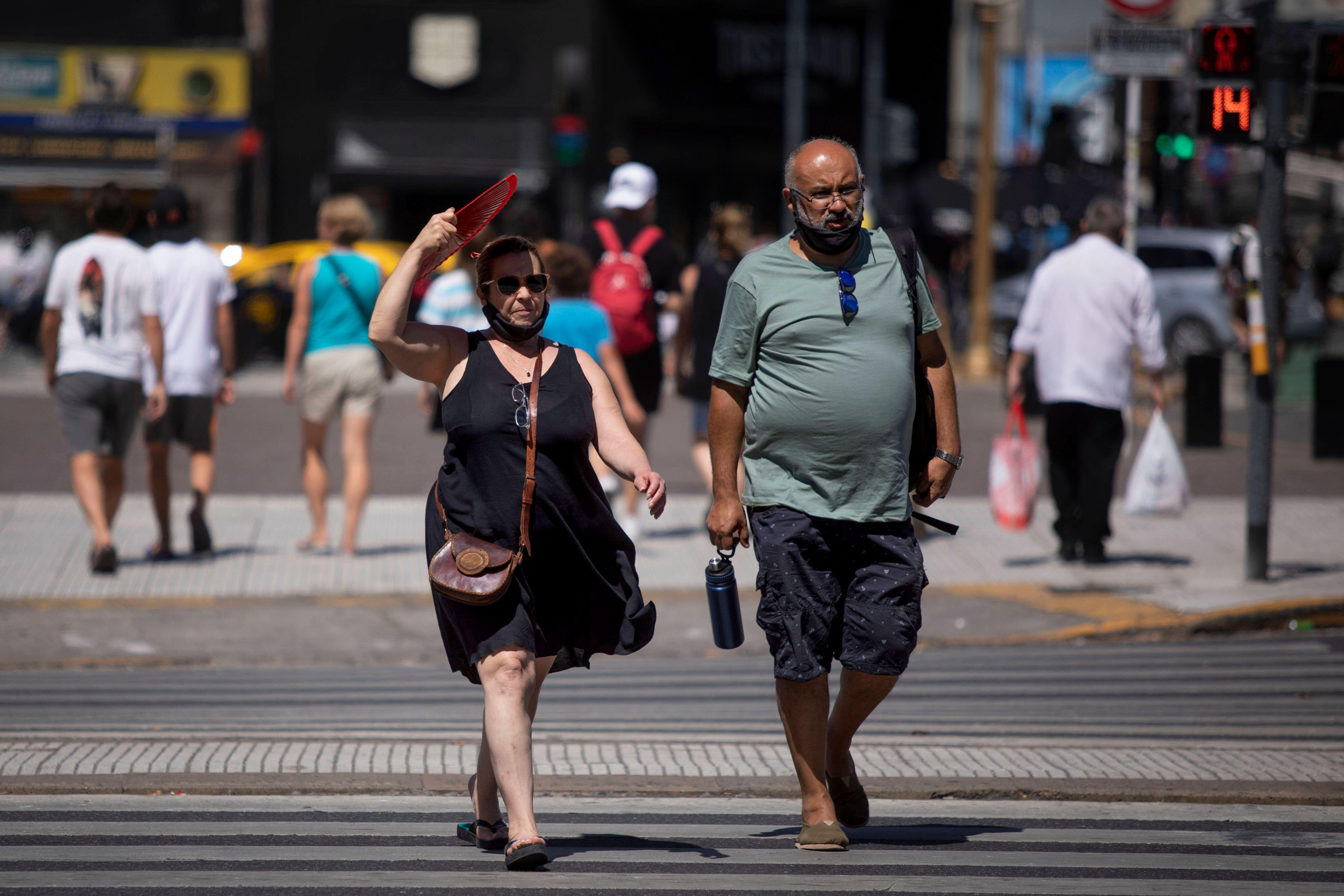
High temperatures can cause dehydration, heat cramps, swelling, and dizziness or fainting in children. “If any of these symptoms are not treated, they can trigger what is known as heatstroke, which is a condition that requires immediate hospitalisation because the body’s temperature exceeds normal levels and needs to be controlled,” he explains.
Chesini believes that suspending classes is not an option, as it violates students’ right to education. Better solutions to this problem are varied, he says, and can include short-term fixes such as air conditioning, and medium- and long-term fixes such as setting up protocols to deal with heatwaves and overhauling the designs of school buildings themselves.
The short-term fix
When temperatures are very high, cooling spaces depends on fans or air conditioners.
“There’s a lot of criticism against using window air conditioning [units] from a sustainability perspective,” says Patricia Fabian, a researcher at Boston University who studies air conditioning in schools in the United States.
Window units can be installed cheaply but can be less efficient to run than central systems that are designed to cool entire buildings.
“They’re not energy efficient, people crank them up, they don’t get taken out of the windows in the winter, and then that creates a bigger energy demand for heating. But the alternative to that is closing schools and kids not being able to attend school, which has enormous implications on learning, on parents working, and childcare, etc.”
In many countries, schools are seeking other solutions due to the purchase and operating costs of AC, combined with an electrical grid that cannot handle demand from these devices and suddenly shuts down. There are ways to reduce dependence on AC: changing the buildings, and changing the cities they exist in. But these are not short-term solutions.
Building better buildings
When thinking about cool architecture, the key is to take advantage of “delay time”, says architect Adolfo Schlieper, who teaches at the Faculty of Architecture of the National University of Rosario (UNR).
Sunlight does not instantly warm classrooms when it hits schools. Heat takes time to move through walls and windows, and the time it takes depends on the materials and their thickness.
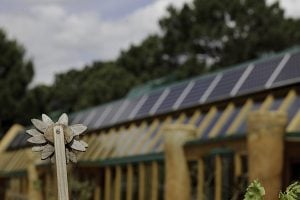
Walls, windows and roofs have “heat reduction coefficients”, which can be modified with adequate thermal insulation, such as glass wool or plastered roofs. Existing walls can be made thicker or high ceilings can be lowered using false ceilings to create an air chamber, says Schlieper, helping maintain desired temperatures. New schools can be built in ways that help mitigate the effects of urban heat.
The architect also cites more innovative and easier-to-install materials and solutions, such as corrugated sheet panels with injected polyurethane. But these are more expensive than conventional materials and clients are often reluctant to use them as they prefer to prioritise financial savings “without taking the global climate crisis into account”, he notes.
There are 437 primary schools and 312 secondary schools in Rosario, according to data from the municipality’s Department of Culture and Education. Applying a standard solution is not advisable, and each case must be reviewed individually, experts say.
Dialogue Earth attempted to contact the Ministry of Education of Santa Fe, the province where Rosario is located, to inquire about initiatives to solve heat problems such as those that occurred in March, but did not receive a response.
Rethinking urban planning
Schools are not isolated from their neighbourhoods. Cooling their surroundings will cool them too, and keep those inside healthier when things heat up. This approach typically relies on “green” and “blue” infrastructure – vegetation such as trees and water bodies such as lakes – to mitigate heat.
In 2007, the Rosario City Council approved a plan to create a “Green Terraces” programme promoting the use of vegetation on city buildings to improve urban air quality. But the programme does not mandate action and has not been widely adopted.
Rosario’s undersecretary for climate change, María del Pilar Bueno, says a pilot project is also in development with residents in the Moreno neighbourhood, a vulnerable area of the city, to incorporate green infrastructure.
“It’s not just about planting trees, but removing concrete and actually creating absorbent surfaces and reducing heat,” she says. “It’s a participatory design that is being developed from scratch.”
There are currently 22 projects in Argentina that have incorporated nature-based solutions, according to research by Natasha Picone and her colleague Valeria Duval. This does not include the recently started Moreno project.
Picone, a geographer and lecturer at the National University of the Center of Buenos Aires Province, stresses that local knowledge is vital and such solutions rarely just change one aspect of a neighbourhood. They can bring biodiversity, and water and food security, benefits as well as cooling, for example.
“It is very important to look at all the possible effects,” Picone says. For example, she says it is important to address what type of vegetation to use to reduce temperature, how it will be used from a social perspective, and how this green infrastructure will be maintained.

As a specialist in urban climatology and sustainable development, Picone proposes going further and planning cities with more tree-lined streets and blue infrastructure, such as lakes and ponds. Such major redesigns require a comprehensive approach that also includes school communities. “They can be a focal point for raising awareness among people about these increasingly frequent phenomena,” says Picone.
Rosario currently has a Climate Action Schools Network programme, in which more than 2,000 teachers participate in activities linked to the Local Climate Action Plan (PLAC). This tool developed by the municipality aims to adapt the city to climate change with a plethora of initiatives such as promoting bicycle use, installing micro-hydropower and using school food waste to generate biogas.
Looking to the summer with dread
Planning for continued rising temperatures is taking place across many locations, many of which have not historically struggled with heat, such as Boston, where Fabian works. But across the Americas, as with Rosario, even traditionally hot areas need to think harder about how climate change is altering temperatures.
“Northern Mexico gets very hot, and most of the schools don’t have air conditioning, because the prevailing thought is that in the summer the kids aren’t in school,” says Fabian. “But now that it’s getting hotter, earlier, and more intensely, its actually an issue.”

Keeping heat in mind when building and planning in cities means that when cooling is needed, it can be cheaper and more climate friendly.
“If you weatherise a building, you’re adding insulation, you’re air sealing, and it’s easier to cool. It’s more affordable to cool,” says Fabian. “At a neighbourhood level, if you plant trees – and in the city in particular, where you reduce the urban heat island – you then also don’t need quite as much air conditioning.”
These solutions to heat can also bring benefits for linked issues of air quality. Climate change can worsen air quality in multiple ways, including via weather systems that trap pollutants as well as raise heat, and increased wildfires which generate dangerous smoke.
Boston Public Schools has now installed sensors that measure heat and air quality in all 121 of the schools it oversees. These sensors are used to inform decisions about school closures, make temperature adjustments to classrooms, and fix problems with cooling systems.
Efforts on this scale are still unusual on the global stage, but the need to find solutions to heat and air quality in classrooms is rising up the agenda. This month the UN building in New York is hosting an inaugural high-level meeting on indoor air quality and launching a Global Pledge for Healthy Indoor Air.
“Talking about indoor air at the UN elevates the fact that breathing clean air indoors – where most people spend 90% of their time – is a global human right, on the same level as drinking clean water. My hope is that this momentum around indoor air, which started during the Covid pandemic, leads policymakers to support health-based indoor air standards for places where we work, study and live,” says Fabian.
Teaching and learning from climate change
In Argentina, environmental issues must be included in education by law. The Environmental Education Law of 2021 says students must be able “to reflect in order to generate a critical awareness that enables them to think of solutions”, says Ferreyra, the teacher who works in Rosario.
He teaches climate change at the Municipal School of Gardening, and his attempts to educate students in this topic are now entwined with the disruption of their learning thanks to the surging temperatures and the risks they bring.
“To what extent can the transmission [of knowledge] I want to achieve be detached from this planetary crisis?” asks Ferreyra. “The environmental factor becomes central to the learning process of students. The climate crisis is here with us and the time to act is now.”
Additional reporting by Katharine Sanderson.