


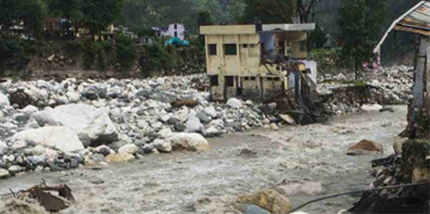

“No information for any further compensation has been shared with us, only some immediate relief. Previously, the Patwari (Revenue Officer) came to our village to assess the damage, but after that we haven’t heard anything and nothing has been done till now,” lamented Savitri Devi and Kamla Devi, farm workers in Narayanbagad village, Chamoli, one of the areas badly affected by the Uttarakhand flash floods that killed at least 1,000 people and devastated the infrastructure of the Himalayan state this June.
Four months after the disaster, several areas remain cut off due to landslides. There has still been no comprehensive damage assessment across all impacted villages. Media reports have focused on ‘most affected’ districts, while other vulnerable areas have been ignored.
The fallout of the information gap is that the most marginalized groups – people with disabilities and vulnerable children – have received little specific support. Problems such as water and sanitation have been touched upon by a few aid agencies. However, appropriate local measures to purify water or address the lack of sanitation facilities have not been communicated on a broad scale.
Relief efforts by humanitarian agencies and the government have often been haphazardly coordinated or do not meet peoples’ needs. “There was very little rice, lentils and cooking oil to be had,” said Rajeshi, a young mother in Didsari village, Bhatwari block of Uttarkashi district. “One cannot survive on biscuits alone. Many of the packets were also past their expiry date and some of my neighbours don’t know to look for these dates.”
 Now the vast majority of humanitarian agencies have withdrawn, waiting for government permissions to start reconstruction work. With winter fast approaching, the homeless are still fending for themselves.
Land permits have emerged as a core challenge. The extent of damage jolted Uttarakhand awake to the dangers of climate change. Growing numbers of people are worried about where they can build safely now. The flood plains area seems to be widening and increasing rainfall levels will enhance the risk posed by landslides.
The extreme fragility of the region’s ecosystem means alien materials, particularly non-biodegradable industrial materials, need to be avoided. The region’s indigenous safe technologies such as ‘koti banal’ construction and stone-based masonry can serve as strong foundations for reconstruction. Information on this urgently needs to be disseminated and considered, along with that on local materials and culturally appropriate designs.
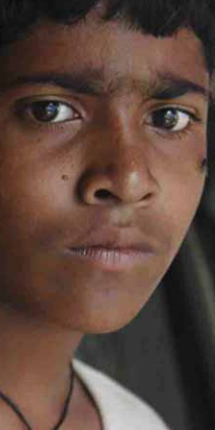 In the meantime, children who no longer feel like students wait anxiously for their schools to restart and families whose entire livelihoods have been wiped out desperately seek employment. Gajeshwar Singh Kanswal, a 37-year-old farmer in Lothrun Village in Uttarkashi despaired, “The government and NGOs are hiring menial labourers as porters to carry relief packets, or to break stones and carry head loads for reconstruction work, but these are not locals. We’re the ones who need the work most. Everywhere we go, we’re treated not as labour, but as people who need to be rescued by outsiders.”
For more on the hidden stories and issues behind the Uttarakhand floods, download The Unheard Voices.
Vijayalakshmi Viswanathan works with Saferworld Communications. The blog includes field inputs from Gayathri Sreedharan and Sunny Kumar