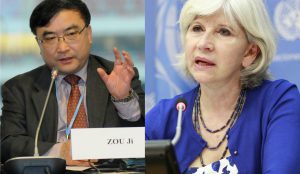
In October, Ma Jun, a special advisor to the UN Environment Programme, co-chair of the G20 Green Finance Study Group and chair of the Green Finance Committee, shared his views on differences between Chinese and European green bond standards in an interview with Caixin.
Ma Jun argued that developing countries have different priorities to developed ones in their approach to green finance standards. He claimed that China’s air pollution problem is more urgent than its goal of reducing carbon emissions and so green finance should support upgrades to coal-fired power plants that promote cleaner burning.
New coal tech still pollutes
Addressing the air pollution problem is certainly a high priority for both politicians and the public. According to Greenpeace’s PM2.5 City Rankings, nearly three-quarters of Chinese cities failed to meet national air quality standards in 2016.
But let’s not overlook the fact that China’s air pollution and greenhouse gas emissions stem from the same sources. According to a report by the Natural Resources Defense Council, an environmental advocacy group, coal utilisation contributed 50% to 60% of annual PM2.5 emissions at a national level.
In Ma Jun’s book, “Economic Policies for PM2.5 Reduction”, he notes that structural challenges such as China’s reliance on sectors such as heavy industry and chemicals, its coal-based energy system, and a transportation system that prioritises road vehicles, all exacerbate air pollution.
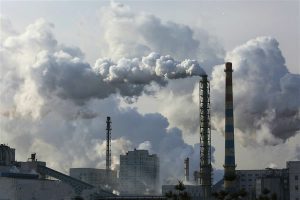
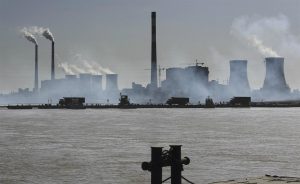
But the main cause of air pollution is China’s overreliance on coal for energy. Although clean coal technologies can reduce the intensity of emissions from coal-fired power plants, coal power remains the largest source of air pollution in the country. According to the 2016 China Environmental Statistical Yearbook, the electric power industry’s emissions of sulphur dioxide, nitrogen dioxide, and smoke in 2015 accounted for 36.1%, 48.7% and 20.5% of total emissions, respectively.
China’s green bond standards currently support coal-to-chemicals technologies, a fact that has drawn criticism given the industry emits high levels of greenhouse gases and other pollutants, and has a large water footprint.
According to recent reports, Shanxi Jinmei Huayu Coal Chemical Co., Ltd, raised 1.5 billion yuan (US$230 million) in green bonds to finance the construction of a high-sulfur clean coal chemical industrial project. Since its completion, the project’s CO2 emissions have reached levels as high as 1.9 million tonnes per year – equal to one-sixth of the carbon emissions from Chinese coal power plants shuttered in 2014.
The reason this project had access to green finance is because the project used the best production technologies available at the time. Nonetheless, the coal power and coal chemical industries are highly polluting. Whether or not the most advanced technologies in these industries should be labelled “green” is an important matter for discussion.
Slowing the pace of transition
Although technological upgrades of coal-fired power plants or coal chemical projects can reduce the emissions intensity of a single project, the negative environmental impacts of financing clean coal are apparent once you consider other factors such as extraction, transportation and consumption.
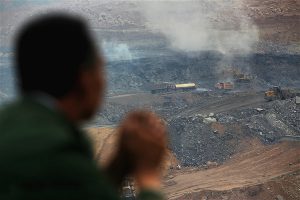
A 2012 report, “The True Cost of Coal,” showed that the environmental and health cost of a single tonne of coal equalled 260 yuan, including external costs from coal production (66.3 yuan/tonne, 25%), transportation (27.8 yuan/tonne, 11%), and consumption (166 yuan/tonne, 64%).
If China continues to label technologies used in the coal power or coal chemical industries as “green”, the entire coal industrial chain will benefit from green financing. This will divert resources meant to support renewable energy towards coal companies, strengthen the position of the coal industry, and slow the pace of China’s energy transition and campaign against air pollution. These outcomes obviously run counter to the principles of green finance.
China’s reliance on coal in its energy system means that it must use coal more efficiently. But this does not mean labelling the best technologies in the coal industry as green. Instead, China should reduce coal consumption and improve efficiency of coal as the country moves to a low-carbon energy system.
China’s planning body, the National Development and Reform Commission, and the People’s Bank of China are currently drafting green bond standards. They should seize this opportunity to establish strict definitions of what is “green” to ensure that green bonds and green finance become more transparent.