
China has signalled that coal power will be a top priority within national energy policy as the government prepares its next Five Year Plan (2021-25).
On 11 October, Premier Li Keqiang chaired a meeting of the National Energy Commission in Beijing that emphasised China’s energy security and coal utilisation and downplayed the importance of a rapid transition away from fossil fuels.
Each meeting of the commission, which was established in 2010 and has met only four times, has had a significant impact on policymaking. Chaired by Premier Li and attended by more than 20 chiefs of China’s ministries and bureaus, the commission is the top body for coordinating energy policy.
Why is energy security back at the top of the agenda?
Li told the conference: “The government should diversify energy supply to improve energy security… enhance domestic oil and gas exploration and development efforts, and promote oil and gas reserves and production, in order to improve oil and gas self-sufficiency”.
The renewed focus on energy security comes amid an increase in domestic consumption of oil and gas, which is largely being met through imports. China’s dependence on energy imports rose from 9% in 2014 to more than 20% in 2018.
China’s domestic crude oil production has declined and efforts to tap unconventional sources of natural gas, such as shale gas and coalbed methane, have faltered.
Other causes for concern lie outside China. The ongoing trade dispute with the US is a threat to the energy trade between the two superpowers, and supplies from the Middle East are at risk from mounting instability in the region.
The green transition loses ‘acceleration’
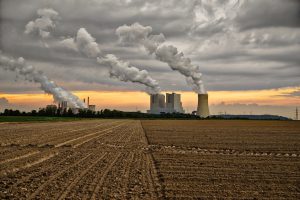
The government’s concern over energy security is positive for coal given that China has lots of it. At the meeting, Li Keqiang spoke of speeding up the construction of large-scale coal transportation and electricity transmission infrastructure. He wants to promote “safe and green coal mining”, the “clean and efficient development of coal-fired power”, and to “develop and utilise coalbed methane”.
Li also downplayed China’s low-carbon energy transition. At the same meeting in 2016, Li called on China to: “increase the proportion of renewables in the energy mix” and “accelerate” such a transition. This year, there was no mention of renewable energy’s share of the energy mix and “acceleration” was replaced by the blander term “development”. The change of tone was hard to miss.
Controlling coal power development and supporting renewable energy is the bedrock of China’s energy policy in the current Five Year Plan (2016-2020). The National Energy Administration announced recently that China had already completed the plan’s objective of eliminating 20 gigawatts (GW) of inefficient coal-fired power units, and is set to stay beneath its cap of 1100GW of installed coal capacity.
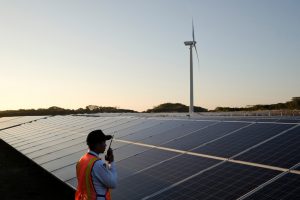
Solar and wind power capacity have also grown rapidly in recent years, exceeding the five-year target. As costs fall, the NEA expects that in the early 14th Five Year Plan period – meaning by 2021 or 2022 – solar and wind will compete with coal power without any subsidies. However, Li’s speech suggests momentum in the energy transition could be lost if the next Five Year Plan for Energy charts a different path.
Will China maintain the pace of its low-carbon transition?
The 13th Five Year Plan for Energy was drafted in 2015, the same year China made an international pledge to peak carbon emissions by 2030 and increase its share of non-fossil energy to 20% by 2030.
The plan was created against a backdrop of international pressure for ambitious climate action and domestic concern for air pollution. Released in 2016, the plan and its package of energy policies can be seen as the product of climate consciousness.
But circumstances have changed, leading some to believe the 14th Five Year Plan for Energy may be very different. Though China has worked to shut down small thermal power stations and eliminate inefficient heavy industry in recent years, phasing out coal entirely will be far more challenging. There is also greater volatility in global energy supplies and jitters over China’s economy.
China achieved its 2020 climate target ahead of schedule but it faces enormous challenges in achieving its 2030 goals. A recent paper from China’s National Centre for Climate Change Strategy and International Cooperation (NCSC) finds that the 13th Five Year Plan’s policies guarantee that 20% of primary energy will come from renewables by 2030. Though these measures can reduce carbon emissions per unit of GDP by 60% to 65% in 2030 compared to 2005 levels, they are insufficient to peak total carbon emissions by 2030.
There is still no consensus on the role of coal in the 14th Five Year Plan. Chen Zongfa, a power industry expert, argues the role of coal should be limited to balancing peak loads on the power system and providing back-up.
Even though so-called “clean coal” and coal-to-chemical projects, such as coal gas and coalbed methane, may reduce local air pollutants they have been criticised for being even more polluting than the average coal-fired power plant once the whole production process is taken into account.
Advocates of the low-carbon transition, including Dr Jiang Kejun of the National Development and Reform Commission, believe fossil fuels are “yesterday’s source of energy” and need to make way for low-carbon sources. Even Fu Chengyu, the former chairman of China Petroleum and Chemical Corp (Sinopec), said recently that cost reductions in renewable energy are the key to China achieving energy independence.
Although China is under international pressure to increase its climate ambition in 2020 and accelerate its energy transition, Chinese policymakers still see coal as the bedrock of the country’s energy security, playing a major role in the 14th Five Year Plan.
![Chief Minister Hafiz Hafeezur Rehman of Gilgit-Baltistan talks to reporters [image by: Peer Muhammad]](https://dialogue.earth/content/uploads/2019/11/IMG_20191120_174847-1-300x295.jpg)