On Commander Ebi’s baseball cap, the logo reads: “Alaska”. Little else connects the 42-year-old – who has spent the past five years in a militant camp deep in the tropical creeks of the Niger Delta – with the prosperity and polar bears of the northernmost US state.
Except, that is, for oil. But while petroleum has made Alaskans among the wealthiest people in the world’s wealthiest country, Nigeria’s oil province – on which the United States depends for nearly one in every 10 barrels of crude it imports – has known little but conflict, corruption and misery in the half-century since the first barrel was shipped.
Yet Nigeria’s rulers are hoping a new policy to deliver the benefits of oil to the local population – as Alaska does with its pioneering approach of distributing petrodollars in cash to citizens – might help placate an insurgency that has cut production by as much as 40%.
That puts them at the frontier of new ideas for solving the problems that oil brings. “Countries that have managed natural resources well are those with powerful constituencies that can stop the government from feeding at the trough [of oil money],” says Todd Moss from the Washington-based Center for Global Development and an advocate of cash distributions. He favours Alaska-style pay-outs, which he says “are a way to manufacture such a constituency”.
Where civil society or non-resource business is weak, Moss points out, natural resources do not put a country on a fast track to development. “Look at Nigeria – [US]$300 billion [in oil revenues] over the past three decades, but the average Nigerian has got poorer.”
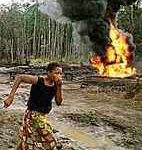
So thoroughly has crude corroded the contract between government and citizens that most of Nigeria’s 150 million people regard the state more as predator than benefactor. In the delta, thousands of jobless young men extort, kidnap and blow up pipelines under the banner of resistance to a state that has failed them, and oil companies that have despoiled their lands.
A recent amnesty has lured them to surrender their arms for the present. Under government proposals designed to keep the delta from re-arming, the state would hand over 10% stakes in the joint ventures that run Nigeria’s biggest energy industry to “host communities”.
While the proposals could face stiff opposition from elsewhere in the country, they have been approved by ministers and a presidential implementation committee has been created, according to the architect of the plans, Emmanuel Egbogah, special adviser to president Umaru Yar’Adua on petroleum matters. The initiative, he says, is “revolutionary” and will mean that “every community – whether blind or deaf or dumb, every citizen – will say: ‘I own a part of this business.’ ”
Direct cash distributions are perhaps the most radical idea that has emerged from a decade-and-a-half-old movement to transform the way poor states manage their natural resources. That movement sprang from a growing realisation of a “paradox of plenty”: life in resource-rich countries often remains miserable.
Part of the reason is economic. Volatile commodity prices, and the built-in revenue bust inherent in depletable resources, complicate planning. Even in good times, resource economies can suffer from 1970s-style “Dutch disease”: the hard currency a country earns from its oil, gas or minerals distorts its economy, crowding out agriculture or manufacturing.
The other problem is political. States flush with resource revenues have a strong incentive for patronage and outright corruption. Entrepreneurship becomes an effort to “feed at the trough” in rent-seeking that at best fritters away productivity and at worst breaks down the rule of law.
There are exceptions. Norway, Botswana and Chile have harnessed oil, diamonds and copper for national development, giving hope that other countries too may succeed. In 2002 Tony Blair, then the British prime minister, announced the Extractive Industries Transparency Initiative (EITI), with dozens of governments, mining companies and oil groups pledging to declare payments and revenues. But neither such pledges, nor even the strictures of Washington’s multilateral institutions, can ensure countries keep to the straight and narrow.
Under fire from critics claiming resource extraction harmed the poor, the World Bank in 2000 placed conditions on financing an oil pipeline from Chad to the coast of Cameroon. It required that Chad’s royalties went into a special account rather than the national budget and that all payments were published. A share would be saved for future generations. Withdrawals had to go towards health, education or other social needs.
“It was a beautiful plan on paper – but there was nothing to stop the government from reneging on the deal,” says Moss. Chad soon diverted money to military spending. In 2008 the World Bank withdrew from the project. Still, an international consensus emerged on policy for commodity-dependent countries: channel revenues into funds to insulate national budgets; increase transparency of payments; include checks and balances in spending.
Yet not even countries that have adopted such policies may succeed where Chad failed. East Timor’s government raided its savings fund by withdrawing more than the prescribed maximum. Such cases suggest the standard recipe is not enough to end the cycle of corruption. Advocates say only giving the people a direct stake in the resources will mend the bond between state and citizens.
“If every citizen [of Chad] had been entitled to cash payments … the political dynamic would have been very different,” says Moss. “Cash distribution is complementary to transparency efforts; in fact, it would help. If the amount paid out to citizens is different from what the government receives from oil companies, or if this year’s distribution is $52 while last year’s was $58, the government would have to explain that to people.”
The idea is gaining interest. When she was in the US Senate, Hillary Clinton, now secretary of state, sponsored a resolution recommending that Iraq set up a trust fund to distribute part of its oil revenues to the people. Presidential candidates in Iran and Venezuela have mooted the idea too, as has Muammar Gaddafi, Libya’s leader. According to proponents, the scheme could make about US$555 million annually available – about $20 a year for every man, woman and child of the delta’s 28 million people, a significant amount in a region where 70% live on less than $1.50 a day.
Nigeria’s oil producing states already receive an extra slice of oil proceeds – but much of the money vanishes. Dimieari Von Kemedi, an activist recently drafted into the government of oil-rich Bayelsa state, says his audit of state finances found contracts had been inflated to the tune of 17 billion naira (US$114 million).
Whether the new scheme can avoid such problems is critical to its success. “It will not be like the Alaskan case, when each individual gets his money,” Egbogah says. The intended option is a system of trust funds administered at the behest of each community – bypassing the delta’s state and local governments.
By receiving a share in the proceeds of an oil industry they have long resented, delta dwellers would have an incentive to facilitate production, Egbogah reasons. But even so, critics warn that trusts risk replicating what they say is oil companies’ practice of allocating funds to some communities in order to safeguard their own facilities, generating resentment in less favoured settlements.
A heated debate one recent morning in the royal hut of the Edagberi clan suggests the tensions that could emerge. “Some communities, they only have a pipeline or access road,” says Anigbo Williams, 52, chief of one of the clan’s six communities. “If you give him with his one well [a payment] and come and give me with 44 wells the same, you have a problem: we will feel we have been cheated.”
The proposals come at a critical moment not just for the delta. Tensions and a sense of paralysis are mounting with each day that the ailing Yar’Adua remains in the Saudi hospital to which he was rushed in November. The government is in the thick of oil industry reforms. It wants to incorporate the state oil company – long regarded as a vessel of patronage – and formalise loose joint ventures.
Oil companies are fighting tougher terms and negotiating renewals of 40-year leases on prime oil blocks. Adding the 10% plan into the mix heightens what was already a sense of make or break ahead of elections due in 2011.
All the while, the delta holds its breath. “It is left to [the government] to do something that will be favourable to each and every one of us in this part of the country,” says the Alaska-capped Ebi. But he warns that a badly executed plan would have harsh consequences, bringing new vigour to the guerrilla campaign to disrupt oil production. “If we are not developed, we will bounce back to the creeks. We are not afraid.”
Delta proposals
Can the centre hold together an oil fund handout?
The title of Nigeria’s most famous novel, Chinua Achebe’s Things Fall Apart, hangs like a perpetual warning over a country of 150 million disparate people stitched together under British rule, writes Tom Burgis. Predictions of imminent unravelling are often alarmist but the tension – broadly between the mainly Muslim north and mainly Christian south – is real, particularly over the distribution of oil wealth.
Another rift between the 28 million people of the crude-producing Niger delta and the rest has been sharpened by proposals to grant delta residents 10% stakes in oil ventures, to be taken from the national oil company’s holdings.
The proposals’ architects hope to give people who have long resented the oil industry an incentive to support it. Others fear that acknowledging the delta’s rights to “ownership” could increase discord. After a string of initiatives to placate the volatile region, one northern legislator speaks for many when he says the delta has already been offered “too many carrots”. To which many Ijaw, the delta’s biggest ethnic group, retort: give us our due or let us go our own way.
When civil war broke out in 1967, the central government, terrified of losing the delta’s newly drilled oilfields to secessionists, declared all natural resources state property. Today, however, the delta oil-producing states, where poverty is often less acute than in the north, receive 13% of oil proceeds before the remainder is shared out among all 36 states. Once the proceeds of a multibillion-dollar trade in stolen crude are included, the delta looks awash with cash. But, with graft and mismanagement, little reaches its inhabitants, even if oil spills do.
Nonetheless, delta leaders demand that the extra share is raised to 50%, arguing that the same principle could be applied to the barely exploited natural resources of other regions.
Privately, at least one minister expresses willingness to concede to delta demands if it would end militant attacks on the oil industry. The proposals’ authors calculate that, with a restructuring of the national oil company, the treasury would lose only about 2% of oil revenues.
Yet striking such a bargain would be delicate – especially for president Umaru Yar’Adua, who draws much of his political capital from his northern home city. By diverting oil revenues directly to deltans, he might break the hold of militant commanders. But by bypassing the state authorities, he risks alienating the delta barons of the ruling party ahead of 2011 elections. Everyone else will be left to ponder whether there is more prising them apart than holding them together.
Copyright The Financial Times Limited 2010
Homepage image from City of Refuge Africa