This is a companion piece to Son Masayoshi’s article “A solar belt for Japan’s disaster zone?” Read that article here.
Softbank chief executive Son Masayoshi is one of Japan's most innovative capitalists and public-spirited citizens. Having helped create a competitive market in telecommunications, Son is now focused on liberating and greening Japan's 16 trillion yen (US$209 billion) electricity industry. His article published here outlines his thinking.
In addition to the efforts Son introduces here, he launched his Japan Renewable Energy Foundation on September 12. This Foundation is to be led by Tomas Kåberger, the former director general of the Swedish Energy Agency. It includes a stellar cast of international experts on renewable energy, associated support policies (especially the feed-in tariff) and other aspects of the ongoing energy revolution.
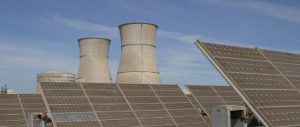
Through these initiatives and the plan for a "solar belt" on land salinised by the March tsunami, described in this article, Son has been instrumental in defining a new direction for Japan in the wake of Fukushima. Without Son putting renewable energy so squarely and credibly on the public agenda, Japan might have succumbed to the enormous pressure from Keidanren – Japan’s biggest economic development organisation – the Ministry of Economy Trade and Industry (METI), Tokyo Electric Power Company and other elements of the “nuclear village” to maintain the unsustainable status quo.
In fact, the fight over Japan's energy options is not at all over. The nuclear village's effort to portray Fukushima as merely a setback has failed in the face of the facts, of course. Among recent surveys results, we find those that indicate as much as 100 million cubic metres of Fukushima's topsoil has been irradiated by the meltdowns, an enormous quantity whose disposal, both its logistics and its cost, simply staggers the mind. In the meantime, METI is in a struggle with the financial institutions that lent trillions of yen to TEPCO and now want the state to ensure that they are completely reimbursed.
The nuclear village and its hired guns in the academic and administrative and political sectors have worked together to craft a mechanism through which compensation will almost inevitably be torn out of the public budget as well as the pockets of utility ratepayers. The ricketiness of the scheme suggests it can only hold together if the 10 regional monopolised utilities and their risky nuclear assets are maintained largely as is. It is thus easy to understand why the establishment is furious at Son's effort to apply “creative destruction” to their vested interests in Japan's power markets.
Softbank's role is of course not the only element that is driving Japan so rapidly towards fulfilling its longstanding commitment to be a green leader. Another is the fact that the region of Tohoku was so heavily devastated by the March 11 earthquake and tsunami. The rebuild gives Japan the opportunity to rebuild smart, which has become common sense within the committees devising the plans for reconstruction.
METI recently released the results of one of its own in-house academic studies showing that global renewable energy and associated infrastructure businesses already reached 30 trillion yen (US$392 billion) in 2010. The study also projects that the global industry will expand to about 80 trillion (US$105 billion) by 2020. The question of whether Japan plays a leading role in the process remains open.
A smart approach to rebuilding the devastated area could serve as a template for restructuring power markets within Japan. This needs to be done, as the International Energy Association argues, because Japan is balkanised into 10 regional and monopolised utilities that have very little interaction between each other as a power market. Son in fact proposed a 2 trillion yen (US$26 billion) plan for this kind of "supergid" at the inauguration of his Japan Renewable Energy Foundation.
The IEA also points to the opportunity for extending this power market throughout the East Asian region, something Son discussed with South Korean president Lee Myung-bak last May, as well as formally proposing it during his September 12 talk. In short, initial possibilities now exist for a region-wide energy transformation.
A few decades on, when the history of this stressful period in Japanese politics and business is written, Son will rank as a leader with vision and courage. By contrast, the costs of the nuclear village will still be burdening public health and public finance.
Andrew DeWit is professor of the political economy of public finance at Tokyo’s Rikkyo University and an Asia-Pacific Journal coordinator.
This article first appeared as part of Son Masayoshi and Andrew DeWit, “Creating a Solar Belt in East Japan: The Energy Future,” The Asia-Pacific Journal Vol 9, Issue 38 No 2, September 19, 2011. It is republished here with permission.
Read Son Masayoshi’s article about a solar belt for east Japan here.
Homepage image from 百度百科