Editor’s note: yesterday on chinadialogue, Chinese Academy of Sciences member He Zuoxiu attacked China’s “great leap forward” in nuclear energy in edited excerpts from a speech given at a seminar organised by the Heinrich Böll Foundation and the China Science Media Centre. At the same event, Mi Sen, deputy director of administration at China Nuclear Engineering Group, put forward an alternative view, defending nuclear power as the safest and cleanest source of energy, and an inevitable choice for both China and the world. This is an edited version of his presentation.
China must strive to become a major economic power, a developed nation and, as part of that, an even bigger manufacturer. To be any of these things, it must also be a major producer of energy or, more precisely, electricity.
In 2010, China generated 4.1413 trillion kilowatt hours of electricity, narrowly surpassing the United States by this measure for the first time. But in efficacy of that supply, it still lags behind. If China wants to reach the heights of US gross domestic product, it must generate 2.5 times as much electricity. This is a massive challenge for everyone working in China’s electricity-generation sector.
I believe energy should be divided into two categories: stable and unstable. Stable energy means that voltage and capacity are steady and supply to industry can be guaranteed. The first four months of 2011 saw a 12% rise in industrial energy use in mainland China on the same period last year. In those same four months, hydropower generation was down 20% due to lower water levels, and so we can hardly count hydropower as a stable energy source. Nor can we put wind and biofuels in this category. Strictly speaking, there are only two kinds of stable energy: thermal power and nuclear power. With both of these, we are able precisely to control the voltage and quantity of electricity generated.
If China wants its economy to keep expanding, it needs to make sure it has an effective and efficient energy supply. But how should that supply be generated? Let’s compare the merits of coal and nuclear, starting with their environmental impact.
A one-gigawatt nuclear-power plant needs only 20 to 30 tonnes of fuel a year, which can be easily moved by truck. A coal plant of the same generating capacity burns two to three million tonnes of coal annually – about 100 train-wagons worth a day. And that coal plant will produce 200,000 tonnes of coal ash a year, as well as releasing into the atmosphere large quantities of carbon dioxide, sulphur dioxide, nitrogen oxides, carbon monoxide and particulates, causing global warming and acid rain. The contribution of nuclear power to greenhouse-gas emissions, meanwhile, is very small: United Nations Environment Programme figures from 2000 estimate total emissions of carbon-dioxide equivalent for nuclear power are around 39 grams per kilowatt hour.
Two hundred thousand tonnes of coal ash contains 400 tonnes of heavy metals (such as lead, arsenic, cadmium and mercury) plus a small quantity of radioactive substances (such as uranium, thorium and radium). Although the radiation emitted by these is within the scope of background radiation, it is still higher than that produced by a nuclear power plant in normal operating circumstances.
Another important point of comparison is worker safety. Director of the State Administration of Work Safety Li Yizhong said in a report on labour conditions in China that the production of one million tonnes of coal results in three deaths – in the United States, the figure is 0.03, and in Poland and South Africa 0.3. Estimates for the number of deaths in Chinese coal-mining accidents between 2000 and 2005, cover a range between 5,700 and 6,900.
Since it started using nuclear as an energy source, the world has seen three major nuclear accidents: Three Mile Island, Chernobyl and Fukushima. Although the casualties of these events were much lower than those caused by mining disasters through the ages, the lessons and losses should not be underestimated. Even so, humanity has not, and should not halt the development of nuclear-power technology. The answer is rather to strive to improve standards.
We can also make an economic comparison between the different energy sources. The cost of constructing nuclear-power stations is indeed high. But operating costs are two thirds lower than those for coal. Generally speaking, nuclear-power plants earn back their construction costs after one decade, while they also have a longer lifespan than coal-burning plants.
The Daya Bay Phase 1 reactor in south China’s Guangdong province, for example, has a designed lifespan of 40 years: with construction costs recovered in the first decade, the money earned in the following 30 years will be largely profit. New reactors being built in China have a lifespan of 60 years, so have a further economic advantage.
I made a table comparing the costs of nuclear and coal power in 12 nations. On average, one kilowatt-hour of nuclear-generated electricity costs 5.13 US cents to generate, 2.6 US cents less than the same amount of power from burning coal. Over the 40-year lifespan of a reactor, that’s a total saving of more than US$7.8 billion (49.8 billion yuan), or US$11.7 billion (74.6 billion yuan) over a 60-year lifespan.
On the impact of construction and installation on nuclear-power costs, partly as a result of extra safety provisions and environmental-protection requirements placed on nuclear plants, construction costs are higher than in regular infrastructure schemes. Moreover, the 28 reactors that China is building now all started construction after 2005, when inflation began to rise again after a five-year flat period, and building costs are expected to be higher as a result.
Experience suggests that construction and reactor installation typically amount to around 30% of the total cost of a nuclear plant. Research by Geoffery Rothwell, senior lecturer in the Stanford Institute for Economic Policy Research indicates that, in the United States, the cost of nuclear-power construction is currently somewhere between US$3,318 (21,100 yuan) and US$5,000 (31,900 yuan) per kilowatt hour, and rising.
However, while rising construction costs are bound to increase the overall price tag of a reactor, in China, this is unlikely to be by too wide a margin. Chinese nuclear-power plants are now built entirely by domestic teams, and as working techniques, technology and management improve, construction costs will fall. In China, I believe construction costs of US$2,500 (15,900 yuan) per kilowatt hour are a reasonable expectation.
Gigawatt-scale reactors already completed or under construction in China are being built according to foreign-owned designs, and a large proportion of the equipment and materials are shipped in from overseas. There is nothing China can do to improve prices in these areas. The element that China has managed to gain expertise in is construction. Over the past 30 years, China’s nuclear-construction personnel have been steadily gaining experience, and the technical abilities fostered in that process guarantee that China can safely and efficiently develop its nuclear-power sector.
The cost of this labour is lower than in any other nation able to provide nuclear design, equipment and materials, reducing the capital required to build a plant, and helping to boost China’s nuclear development capabilities. In construction of the Taishan Phase Three plant in Guangdong province, for example, a China Nuclear Engineering Group subsidiary used experience gained in earlier phases to innovate in both management and technology, using advanced construction techniques and, remarkably, completing the project three months ahead of schedule, saving the project owner 1.17 billion yuan (US$183 million).
China is currently researching and developing its own proprietary nuclear-power plant designs, which will be complete in about five years. The country has invested heavily in the four major nuclear power manufacturing groups. If key equipment can be produced domestically, then the costs of construction could fall by a further US$100 from the US$2,500 per kilowatt hour I predicted earlier.
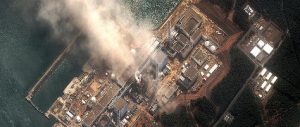
On March 11 this year, a natural disaster beyond all predictions triggered a radiation leak at the Fukushima Daiichi nuclear-power plant in eastern Japan, prompting nations worldwide to re-examine their own nuclear facilities.
China’s State Council called a temporary halt to approvals of new nuclear plants pending a safety review, demonstrating it recognises the great responsibility that comes with being a nuclear power. Germany and Switzerland, meanwhile, both announced plans to close all their nuclear plants in the next two decades.
But the fact remains that we need energy, and we need energy that’s clean and safe. If we can learn the lessons of previous nuclear disasters, continually improve the standard of design, manufacturing and construction, value safety and build secure nuclear plants, then nuclear energy is the inevitable choice for China and the world.
Mi Sen is deputy director of administration at China Nuclear Engineering Group and director of its Shanghai office. Mi has worked in the nuclear industry since 1997.
This article is adapted from a June 23 speech given at the conference Nuclear Energy and Climate Change: Solutions and Challenges.
Homepage image by frankartculinary shows the Brunsbüttel nuclear-power plant in Germany.