Business

Solar trade war with China will cost Europe “billions”

Banning cheap solar cells imported from China would cost Europe billions in lost economic growth and jobs, says report by German think-tank Prognos
English
Escalating the solar trade war with China would cost the EU billions in lost jobs and growth in the burgeoning renewable sector, says a report.
 
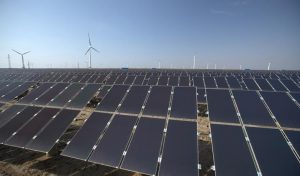
The solar photovoltaics (PV) industry has taken off over the last decade, with more solar PV capacity installed in the EU in 2010 than new wind power. Cheap solar cells imported from China have helped spur that growth by bringing costs down.
 
However, last year the EU Commission accused China of dumping cheap solar products on the market, damaging Europe’s own manufacturing industry, and talked of imposing trade duties to stop the imports.
 
If this action goes ahead, it would cause more harm than good, says a report from the German think-tank Prognos, commissioned by The Alliance for Affordable Solar Energy (AFASE) – a coalition of over 160 companies in the European PV industry.
 
The report predicts production of solar products within the EU may increase but that overall demand would fall because of the extra cost of solar products. This would hit the wider solar industry as a whole within Europe, as well as other export industries supplying China.
 
It predicts job losses of between 170,000 and 240,000 within the EU and a total economic loss of between US$24-36 billion over three years. Germany is expected to be worst hit, followed by Italy, Spain and the UK.
 
A spokesperson for the EU Commission told the New York Times it was still considering whether to take action against Chinese solar imports but that the "overall economic interests of the EU" would be taken into account.
Cookies Settings

Dialogue Earth uses cookies to provide you with the best user experience possible. Cookie information is stored in your browser. It allows us to recognise you when you return to Dialogue Earth and helps us to understand which sections of the website you find useful.

Required Cookies

Required Cookies should be enabled at all times so that we can save your preferences for cookie settings.

Dialogue Earth - Dialogue Earth is an independent organisation dedicated to promoting a common understanding of the world's urgent environmental challenges. Read our privacy policy.

Cloudflare - Cloudflare is a service used for the purposes of increasing the security and performance of web sites and services. Read Cloudflare's privacy policy and terms of service.

Functional Cookies

Dialogue Earth uses several functional cookies to collect anonymous information such as the number of site visitors and the most popular pages. Keeping these cookies enabled helps us to improve our website.

Google Analytics - The Google Analytics cookies are used to gather anonymous information about how you use our websites. We use this information to improve our sites and report on the reach of our content. Read Google's privacy policy and terms of service.

Advertising Cookies

This website uses the following additional cookies:

Google Inc. - Google operates Google Ads, Display & Video 360, and Google Ad Manager. These services allow advertisers to plan, execute and analyze marketing programs with greater ease and efficiency, while enabling publishers to maximize their returns from online advertising. Note that you may see cookies placed by Google for advertising, including the opt out cookie, under the Google.com or DoubleClick.net domains.

Twitter - Twitter is a real-time information network that connects you to the latest stories, ideas, opinions and news about what you find interesting. Simply find the accounts you find compelling and follow the conversations.

Facebook Inc. - Facebook is an online social networking service. China Dialogue aims to help guide our readers to content that they are interested in, so they can continue to read more of what they enjoy. If you are a social media user, then we are able to do this through a pixel provided by Facebook, which allows Facebook to place cookies on your web browser. For example, when a Facebook user returns to Facebook from our site, Facebook can identify them as part of a group of China Dialogue readers, and deliver them marketing messages from us, i.e. more of our content on biodiversity. Data that can be obtained through this is limited to the URL of the pages that have been visited and the limited information a browser might pass on, such as its IP address. In addition to the cookie controls that we mentioned above, if you are a Facebook user you can opt out by following this link.

Linkedin - LinkedIn is a business- and employment-oriented social networking service that operates via websites and mobile apps.