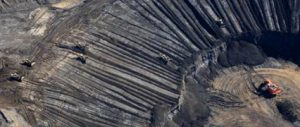
The oil sands of western Canada, a barren-looking expanse in the province of Alberta, possess an enormous amount of power. Locked away in the sand and sediment is the third-largest crude oil reserve in the world, with the capacity to produce hundreds of millions of barrels of oil.
Canada’s oil sands contain the majority of the world’s remaining oil reserves that are still open to private development. The fight over what should become of its crude is a microcosm of the battle for the few remaining unclaimed energy sources in an increasingly energy-hungry world.
Environmentalists are pointing to the dangers of climate change, pipeline supporters are pointing to billions of dollars in potential profits, and neither side can believe the other one could overlook something so massive.
It’s a scene China is watching very closely – especially since it has a stake in the matter.
In February, the state-owned Chinese National Offshore Oil Co. bought the small Canadian gas and oil company Nexen for US$15.1 billion. The purchase – China’s largest-ever overseas acquisition – gives China about a 7% stake in Alberta’s oil sands, said Stephen R. Kelly, a former US diplomat to Canada who is now at Duke University.
Getting the sands’ oil to places where it could be refined and exported, however, is no small task. At the moment, Alberta has an insufficient amount of infrastructure to transport the crude out of the province. Plans for a few different pipelines are currently on the table, but the proposals have been met with massive opposition from those concerned about their potential for oil spills and massive greenhouse gas emissions.
Tar sands oil comes to the US
Sometime this summer, US President Barack Obama is expected to announce his decision on the Keystone XL Pipeline Project, a 1,900-kilometre extension to an existing pipeline system that would link Alberta’s oil sands to refineries in the US.
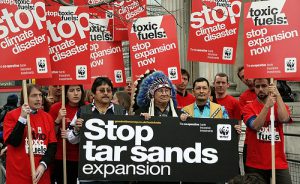
Though opponents have also voiced concern about the possibility of oil spills along the route, Keystone’s climate change implications are at the heart of environmentalists’ opposition. A barrel of oil produced from oil sands generates 5% to 20% more emissions than a barrel produced from conventional sources, thanks to the extra energy needed to extract crude from sand.
The environmental campaigner Bill McKibben has recounted a now-famous conversation he had with James Hansen of the US National Aeronautics and Space Administration, in which he asked the climate scientist what Keystone would mean for climate change. “Essentially, it’s game over for the planet,” said Hansen. Hansen has been arrested four times for protesting construction of the pipeline, which he has called “a 1,500-mile fuse to the biggest carbon bomb on the continent.”
“The high price of oil on the international market, largely driven by an increase in demand in Asia, is the only reason why these dirty fuels are commercially viable,” said Jamie Henn, communications director for 350.org, a US campaign group founded by McKibben and others.
The pipeline could also stymie China’s development if and when the global markets begin to price carbon more aggressively, he added. “The more carbon intensive projects like Keystone XL that are approved in the developed world, the less room the developing world will have to maneuver,” Henn said.
Proponents argue that the pipeline would create jobs, cash and energy security that Canada and the US can’t afford to pass up.
Keystone isn’t the only oil sands pipeline in question. In addition to discussions over its section of Keystone, Canada is embroiled in an equally vociferous debate over the proposed Northern Gateway project, a twin pipeline system linking Alberta to shipping outlets on the coast of British Columbia.
Though the company behind the project insists it will bring the province jobs and more than US$1 billion in tax revenue, British Columbia Premier Christy Clark says she will block the pipeline unless environmental concerns are addressed.
“There is no amount of money that could make up for an environmentally unsound proposal,” she told the Canadian broadcaster CTV News.
Can anything still stop Keystone?
Obama has pledged to combat climate change in this term, as has his new Secretary of State, John Kerry, whose agency is tasked with issuing the decision on the transnational pipeline. Yet Obama also said shortly after his election that he wouldn’t put climate ahead of jobs.
In the US, there is a creeping sense that Keystone’s approval is inevitable. Earlier this month, the US Senate voted in a non-binding measure to go ahead with construction. The State Department’s environmental impact statement carried no substantial argument for why the pipeline should not be approved. A six-week public comment period on that statement ends in mid-April, after which the president will act.
If the Keystone XL pipeline is built, climate advocates will have to move their fight against dirty fuel to the places where it will be purchased.
“Here in the United States, we’ll have a voice in determining the outcome of Keystone XL, but the real fate of the tar sands rests to some extent in the hands of Asian consumers, especially in countries like China,” said Henn. “Their decisions about the type of economy they want to see, and the type of planet they want to pass on to their children and grandchildren, will determine all of our fates.”