Business

EU trade bodies attack plans for tariffs on cheap Chinese solar panels

Solar prices will soar and demand will plummet if the EU presses ahead with tariffs on cheap PV panels from China, warn industry groups
English

Europe’s leaders face an industry backlash over plans to impose duties on Chinese solar products, with critics arguing the move will push up prices for consumers and drive down demand.

The EU commission reportedly agreed last week to press ahead with controversial plans to impose duties of up to 67.9% on Chinese-made solar panels in response to so-called “dumping” of cheap Chinese solar products in the European market, though no formal announcement has been made. More than 100 Chinese companies are expected to be affected, according to Bloomberg

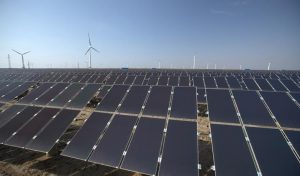
The number of Chinese solar panels manufactured each year quadrupled between 2009 and 2011, pushing down prices and posing a serious challenge to manufacturers in Europe, the world’s largest solar market. EU suppliers have blamed unfairly priced Chinese imports, fuelled by massive government subsidies, for the collapse of dozens of solar companies. 

But the EU’s move to limit the influx of cheap Chinese panels and protect local manufacturers has triggered outrage from trade groups, who argue the European solar industry and energy customers will also be damaged by the punitive tariffs placed on Chinese goods.

The duties will “result in a net reduction in solar jobs, restrict growth of the solar market and damage Europe’s chances of meeting its 2020 renewable targets,” said Paul Barwell, chief executive of the UK’s Solar Trade Association (STA), which issued a statement saying it was “very disappointed” with the EU’s decision.

Solar panels across the board will become more expensive as companies are no longer forced to compete on price with China, the STA said, punishing consumers and suppressing demand. The claims appear to be supported by a February study from economic consultancy Prognos, which concluded a duty of 5% would cause demand to drop by 10%.

The Chinese Ministry of Commerce has also responded angrily, saying it strongly opposes the duties and will seek to protect the interests of Chinese solar companies, who have a strong interest in the EU market. In 2011, the value of solar panel equipment exported by China to the EU was reportedly worth 21 billion Euros, or about 7% of China’s total exports to Europe. China has previously suggested it may retaliate with its own probe into European suppliers.

Jian Xie, chief operating officer of Chinese solar manufacturer JA Solar meanwhile told PV Magazine that uncertainty over the nature, scope and timing of potential European tariffs was proving an obstacle to business development.

The latest round of attacks on the EU policy follows a letter sent by nine solar trade bodies to the European Trade Commission in April, which said “irreparable harm” had already been caused by the EU investigation into Chinese-made solar panels.

Existing orders have been cancelled, while negotiations of contracts for the construction of new photovoltaic installations have been suspended or terminated, said signatories from countries including Italy, Sweden and the UK.
Tom Jamieson is an intern at chinadialogue
Cookies Settings

Dialogue Earth uses cookies to provide you with the best user experience possible. Cookie information is stored in your browser. It allows us to recognise you when you return to Dialogue Earth and helps us to understand which sections of the website you find useful.

Required Cookies

Required Cookies should be enabled at all times so that we can save your preferences for cookie settings.

Dialogue Earth - Dialogue Earth is an independent organisation dedicated to promoting a common understanding of the world's urgent environmental challenges. Read our privacy policy.

Cloudflare - Cloudflare is a service used for the purposes of increasing the security and performance of web sites and services. Read Cloudflare's privacy policy and terms of service.

Functional Cookies

Dialogue Earth uses several functional cookies to collect anonymous information such as the number of site visitors and the most popular pages. Keeping these cookies enabled helps us to improve our website.

Google Analytics - The Google Analytics cookies are used to gather anonymous information about how you use our websites. We use this information to improve our sites and report on the reach of our content. Read Google's privacy policy and terms of service.

Advertising Cookies

This website uses the following additional cookies:

Google Inc. - Google operates Google Ads, Display & Video 360, and Google Ad Manager. These services allow advertisers to plan, execute and analyze marketing programs with greater ease and efficiency, while enabling publishers to maximize their returns from online advertising. Note that you may see cookies placed by Google for advertising, including the opt out cookie, under the Google.com or DoubleClick.net domains.

Twitter - Twitter is a real-time information network that connects you to the latest stories, ideas, opinions and news about what you find interesting. Simply find the accounts you find compelling and follow the conversations.

Facebook Inc. - Facebook is an online social networking service. China Dialogue aims to help guide our readers to content that they are interested in, so they can continue to read more of what they enjoy. If you are a social media user, then we are able to do this through a pixel provided by Facebook, which allows Facebook to place cookies on your web browser. For example, when a Facebook user returns to Facebook from our site, Facebook can identify them as part of a group of China Dialogue readers, and deliver them marketing messages from us, i.e. more of our content on biodiversity. Data that can be obtained through this is limited to the URL of the pages that have been visited and the limited information a browser might pass on, such as its IP address. In addition to the cookie controls that we mentioned above, if you are a Facebook user you can opt out by following this link.

Linkedin - LinkedIn is a business- and employment-oriented social networking service that operates via websites and mobile apps.