Energy

Kunming oil refinery environmental report “invalid” say NGOs

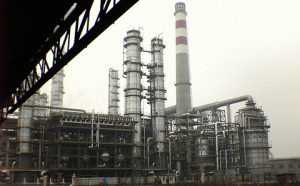
PetroChina’s long-awaited EIA report for the oil refinery part of the Myanmar-China pipeline said there would be almost no damage to the environment
English

The release of the environmental impact assessment (EIA) report for Kunming’s controversial oil refinery project has led to fresh calls for the project to be reconsidered. Environmental pressure groups, including Friends of Nature, Nature University, Institute of Public & Environmental Affaires (IPE) and Yunnan’s local green NGO Green Watershed, jointly submitted a request to the Ministry of Environmental Protection, citing omissions in the project’s EIA report.

Also read Do not blame the people for demonising PX chemical proucts

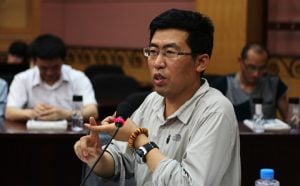
According to Ma Jun, IPE’s founder, “There isn’t any proof of public participation in the EIA report or its appendix … Also, the conclusion section of the report lacks a summary of public attitudes towards the project.”

The current temporary regulation for public participation in environmental impact assessment requires all EIA reports to include sections on public participation. Green Watershed’s director Yu Xiaogang said that the lack of this section means the approval given by the Ministry of Environmental Protection does not accord with the existing regulation. “Therefore, approval should be revoked,” he said.  

According to the 26-page report, the refinery project, which has the capacity to process 10 million tonnes of crude oil a year, would have almost no harmful impact on the local environment.

Though the release of the EIA report itself could be seen as progress – a government official said in May that the EIA report of the refinery project was listed as an official secret – environmentalists were unimpressed.

“Given the great public environmental interest in this project, PetroChina’s Kunming refinery has disclosed very limited information at this early stage,” said Li Bo from Friends of Nature.

The Kunming oil refinery project was a matching project for the China-Myanmar pipeline which when completed in two years would supply 53% of Yunnan province’s oil consumption, relieving the province from its current oil scarcity.

However, the public has been more worried about the potential production of paraxylene (PX), a carcinogenic chemical used in manufacturing fabrics and plastic bottles. Despite great public concern, and several demonstrations against the Kunming oil refinery project, there was no mention of PX production in the new EIA report.

According to Arthur Mol, director of Wageningen School of Social Sciences, “the absence of transparency and participation generate a lack of trust in design, siting and decision-making of these industrial facilities.”

Cookies Settings

Dialogue Earth uses cookies to provide you with the best user experience possible. Cookie information is stored in your browser. It allows us to recognise you when you return to Dialogue Earth and helps us to understand which sections of the website you find useful.

Required Cookies

Required Cookies should be enabled at all times so that we can save your preferences for cookie settings.

Dialogue Earth - Dialogue Earth is an independent organisation dedicated to promoting a common understanding of the world's urgent environmental challenges. Read our privacy policy.

Cloudflare - Cloudflare is a service used for the purposes of increasing the security and performance of web sites and services. Read Cloudflare's privacy policy and terms of service.

Functional Cookies

Dialogue Earth uses several functional cookies to collect anonymous information such as the number of site visitors and the most popular pages. Keeping these cookies enabled helps us to improve our website.

Google Analytics - The Google Analytics cookies are used to gather anonymous information about how you use our websites. We use this information to improve our sites and report on the reach of our content. Read Google's privacy policy and terms of service.

Advertising Cookies

This website uses the following additional cookies:

Google Inc. - Google operates Google Ads, Display & Video 360, and Google Ad Manager. These services allow advertisers to plan, execute and analyze marketing programs with greater ease and efficiency, while enabling publishers to maximize their returns from online advertising. Note that you may see cookies placed by Google for advertising, including the opt out cookie, under the Google.com or DoubleClick.net domains.

Twitter - Twitter is a real-time information network that connects you to the latest stories, ideas, opinions and news about what you find interesting. Simply find the accounts you find compelling and follow the conversations.

Facebook Inc. - Facebook is an online social networking service. China Dialogue aims to help guide our readers to content that they are interested in, so they can continue to read more of what they enjoy. If you are a social media user, then we are able to do this through a pixel provided by Facebook, which allows Facebook to place cookies on your web browser. For example, when a Facebook user returns to Facebook from our site, Facebook can identify them as part of a group of China Dialogue readers, and deliver them marketing messages from us, i.e. more of our content on biodiversity. Data that can be obtained through this is limited to the URL of the pages that have been visited and the limited information a browser might pass on, such as its IP address. In addition to the cookie controls that we mentioned above, if you are a Facebook user you can opt out by following this link.

Linkedin - LinkedIn is a business- and employment-oriented social networking service that operates via websites and mobile apps.