Gal Luft works as an advisor to The United States Energy Security Council, an NGO based in the US. This is an edited version of an interview first published by 21st Century Business Herald
Question: Can you explain what energy security is?
Gal Luft: Energy security is two things – energy availability and energy affordability. You can have all the energy in the world, but if it is highly priced, you do not have energy security. You can also have cheap energy but if it is easily disrupted you also do not have energy security. In 2005, many in the United States were talking about a ‘natural gas crisis’, so they subsequently built 14 terminals to import natural gas. Within seven years, there was a technological breakthrough and the United States had the opposite problem. It has too much natural gas, the price was too cheap and everybody was losing money. The US now exports natural gas.
When everybody talks about ‘running out of this or that’ it reminds me of Thomas Malthus who once said the world was running out of food – but that was 300 years ago. There is enough energy on the planet to bring prosperity to everyone on the planet.
Q: You spoke about energy affordability as one of the aspects of achieving energy security. How do we bring the price of oil under control?
GL: The key for energy security is to have fuels that can compete against each other. In 2008, for the first time in Brazil, less gasoline was sold than ethanol (many cars used in Brazil are multi fuel efficient). The economy is then much more resilient. With competition over price, the pricing will then eventually reach equilibrium. There are many other options to create competition for the running of transportation, such as electric vehicles, bio fuels, CNG. Both China and the US are able to reduce their reliance on oil. China is the largest producer of methanol, while the US is the largest producer of ethanol – this would however, require flexible fuel vehicles.
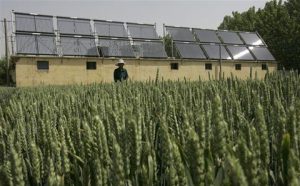
Cheap energy is critical for global prosperity. Electricity needs to be widespread and come from a range of sources. The US has been very good at keeping the energy mix diversified. Many people ask me what is the ‘right’ mix of energy sources? The answer is that there is no ‘correct mix’. Often it is regional, for example, solar energy in a tropical region may have a wider renewable mix. It is important that the energy obtained is reliable. However, renewable energy is not always reliable and the biggest problem lies in storing and wiring it to the national grid. This proves a problem for energy security. We need smarter grids but we are lacking technology, investment and information.
Q: China’s dependence on foreign oil is now close to 60%, and for natural gas it is close to one-third. It is also the world’s largest net importer of coal. What are your suggestions for China’s energy security?
GL: First China needs to diversify its energy sources, promote more natural gas and nuclear power to reduce the dependence on coal. The reason is simple – coal is basically suicidal. Pollution levels in China are too high and it has been this way for quite some time.
China also needs to build a 21st century smart grid, which will require both investment and technology. This would be a wise choice and will reap greater benefits in the future.
Q: But the public in China are scared that an accident like the Fukishima Nuclear power plant meltdown in Japan will occur. For example, Hainan is in a coastal region.
GL: But how can there be such an incident when there are no tsunamis here? As for Hainan, you don’t have to build there. I feel there will be enough places to build safely. A lot of it has to do with perception, all these people are concerned; but they do not know that they are living reduced life expectancies with all the pollution here. All options are problematic; the question is which of all the bad options is the most acceptable.
Q: Do you think the shale gas development boom in the United States will last? Will future returns in shale gas prove profitable?
GL: In this industry there are still many unknown problems. We have yet to determine the amount of methane released in the hydraulic shale development process. The greenhouse effect of methane is about 17 times that of carbon dioxide. However, we know that if the overflow ratio exceeds 2% methane, the greenhouse effect of shale gas mining may be more severe than coal. Current measurements have recorded 2.5%, 3% and 10%. Currently, we are still unclear of the exact measurements; many basic problems of shale gas development have yet to be solved.
Every country’s situation for shale development is different. This is largely due to differences in geological structure. In recent years, the US has experienced sudden earthquakes and these have often occurred in places that have not had previous episodes. Many people are now suspecting it is related to the use of hydraulic fracturing. But who knows? We are still in the midst of learning and solving problems.
Q: Is the US considering exporting natural gas to Asia, and in particular, China?
GL: The US will export some of the natural gas but I do not think it will hold a monopoly over it. In terms of exports, South Korea and Singapore are in the lead due to free trade agreements. There is a possibility that the US will also export to Japan, as Japan’s natural gas prices are very attractive. Natural gas prices in Japan are about 19-20 USD per MMBTU (Million British Thermal Units). For China, it’s around 17 USD per MMBTU. Of course, this is not to say that the US will not export to China, but it will not be very much. Despite this, I am sceptical about the trade in Japan. Once they restart the nuclear power plants, this market will be defunct.
Q: China and the United States have very different geological conditions, land policy and energy markets. What prospect is there of China developing shale gas?
GL: I think that shale gas may not the best choice for China – there are a lot of natural gases that are more affordable than shale gas. One of these is methane, which is the output of coalmine gas, because methane is stored deep within. When the coal is mined, natural gas can also be simultaneously drawn out.
Another problem with shale is that China is gradually pushing its natural gas exports to its neighbouring countries, such as Pakistan, Russia and Myanmar. There is an abundance of natural gas sources to choose from and the price will most likely be lower than shale gas. China does not need to be the greatest exploiter of shale gas.
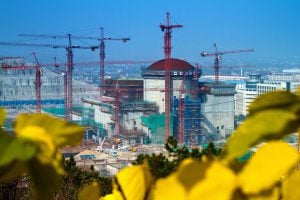
In addition, what I want to say is (this may provoke some attacks) – China’s future lies in nuclear energy. Firstly nuclear energy emits little carbon dioxide and pollution and is comparable to the amounts that natural gas emits. Secondly, nuclear energy is actually quite safe. Nuclear accidents have caused some fatal accidents previously, but every day thousands of people die because of respiratory diseases related with pollution from coal burning. And in China in 1975, 171,000 people died overnight because of a dam failure.
I believe that in ten years time, the views and discussion on nuclear energy will be very different from today. Within the next five years, China will build at least ten nuclear power plants.