Energy

Concerns over China’s nuclear power expansion

Observers worry China’s nuclear safety regulatory regime lags behind the country’s ambitious expansion plan
English

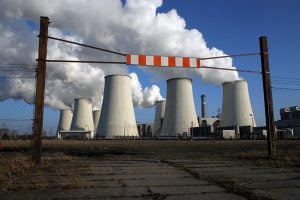
China has announced its intention to build a new wave of nuclear power plants to “ensure stable economic growth” and “safeguard energy security”, but there are concerns that the country’s current regulatory regime may be unable to cope with the magnitude of the task.

Speaking at a meeting of the National Energy Commission last Friday, Chinese premier and chair of the commission Li Keqiang said China would "embark on new major nuclear power plant projects in the eastern coastal area at an appropriate time.” He stressed that the projects would need to meet the highest safety standards.

Li’s remark is widely seen as a signal that the Chinese government will expedite the approval of nuclear power plants. China suspended the building of new nuclear schemes shortly after Japan’s Fukushima disaster in 2011 and recommenced the approval process in late 2012. Only three nuclear power plant projects were given the green light in 2013, but the number is expected to double this year. State media Securities Daily reported that China is likely to start building six to eight new nuclear power plants in 2014.

According to the World Nuclear Association, China now has 20 nuclear plants in operation and another 28 under construction.

Frustration over the country’s worsening pollution problems may be behind the new push, according to Lin Boqiang, director of the Center for Energy Economics Research at Xiamen University. “The incentive for China to restart pursuing nuclear power plants is likely to be related to the country’s growing pressure to combat bad air quality," he told chinadialogue.

Jiang Kejun, the leading energy researcher at China’s economic planning body the National Development and Reform Commission, told National Business Daily it was the perfect time for nuclear power plant expansion, as the country pushes the development of clean energy.

However, Yang Fuqiang, from the US-based National Resources Defence Council, said the current nuclear safety regulatory regime was inadequate. “It lacks authority and capability,” he said.

Others also expressed concern. “Society as a whole has a very low level of understanding of nuclear science and our technology backup is far from sufficient. If we want to improve the nuclear safety regulatory regime, these problems deserve great attention,” said Wang Yi, chief scientist of the Sustainable Development Strategy Study Group at the Chinese Academy of Sciences.


Cookies Settings

Dialogue Earth uses cookies to provide you with the best user experience possible. Cookie information is stored in your browser. It allows us to recognise you when you return to Dialogue Earth and helps us to understand which sections of the website you find useful.

Required Cookies

Required Cookies should be enabled at all times so that we can save your preferences for cookie settings.

Dialogue Earth - Dialogue Earth is an independent organisation dedicated to promoting a common understanding of the world's urgent environmental challenges. Read our privacy policy.

Cloudflare - Cloudflare is a service used for the purposes of increasing the security and performance of web sites and services. Read Cloudflare's privacy policy and terms of service.

Functional Cookies

Dialogue Earth uses several functional cookies to collect anonymous information such as the number of site visitors and the most popular pages. Keeping these cookies enabled helps us to improve our website.

Google Analytics - The Google Analytics cookies are used to gather anonymous information about how you use our websites. We use this information to improve our sites and report on the reach of our content. Read Google's privacy policy and terms of service.

Advertising Cookies

This website uses the following additional cookies:

Google Inc. - Google operates Google Ads, Display & Video 360, and Google Ad Manager. These services allow advertisers to plan, execute and analyze marketing programs with greater ease and efficiency, while enabling publishers to maximize their returns from online advertising. Note that you may see cookies placed by Google for advertising, including the opt out cookie, under the Google.com or DoubleClick.net domains.

Twitter - Twitter is a real-time information network that connects you to the latest stories, ideas, opinions and news about what you find interesting. Simply find the accounts you find compelling and follow the conversations.

Facebook Inc. - Facebook is an online social networking service. China Dialogue aims to help guide our readers to content that they are interested in, so they can continue to read more of what they enjoy. If you are a social media user, then we are able to do this through a pixel provided by Facebook, which allows Facebook to place cookies on your web browser. For example, when a Facebook user returns to Facebook from our site, Facebook can identify them as part of a group of China Dialogue readers, and deliver them marketing messages from us, i.e. more of our content on biodiversity. Data that can be obtained through this is limited to the URL of the pages that have been visited and the limited information a browser might pass on, such as its IP address. In addition to the cookie controls that we mentioned above, if you are a Facebook user you can opt out by following this link.

Linkedin - LinkedIn is a business- and employment-oriented social networking service that operates via websites and mobile apps.