China leads the world in installed wind power by a wide margin, but last year, when it came to actual generation, China produced 20% less electricity from wind than the United States.
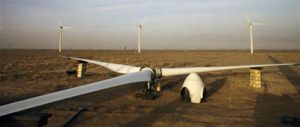
China is a country of superlatives and contradictions, especially when it comes to energy – it is not only the largest producer and consumer of coal, but also the largest investor in renewable energy. Since 2010, China has been the world’s biggest and fastest growing market for wind power, which the government has prioritised for its cleaner energy and job-creation potential. But waste and poor planning have left many new wind farms idle or disconnected from power grids.
A period of rapid expansion of wind power has been set back by fragmented transmission, distribution and administration. Many wind farms are located in remote areas far from major electricity grids. In 2010, more than 30% of the country’s wind farms were not connected to a power grid, leading Chinese energy experts to coin the phrase “garbage wind”.
Curtailment occurs most often in northern China, which has cold and windy winters that create a high, stable base-load demand for heating. To meet this demand on a consistent basis, coal-fired power plants which produce both heat and electricity must remain in operation. This naturally caps the amount of energy wind farms can contribute, regardless of grid connectivity, since most are only capable of providing electricity. In Inner Mongolia, Jilin and Gansu provinces, wind power curtailment has been as high as 20%.

Infographic: Siqi Han/Wilson Center’s China Environment Forum (click on the image to see an enlarged version)
There has been some recent progress towards better integrating these new power sources. The national plan is for 11% of the country’s energy consumption to come from renewable resources this year, and many more wind farms have been connected to power grids, with the number of disconnected turbines dropping to 19% in 2012 and 15% in 2013. A number of wind-powered electric heating projects have also been piloted in northern China, which has significantly reduced curtailment as well as coal usage. Last year, the national average for overall curtailment dropped to 11%.
The United States, notably, has also struggled with underutilisation of wind power. In 2009, up to 17% of US wind power was curtailed, though this dropped to only 4% in 2012 and as low as 1% in 2013.
“China’s current wind bases can serve as a laboratory for global learning, with many countries standing to benefit from the lessons of China’s rapid wind-power expansion,” said Joanna Lewis, a former Wilson Center fellow who wrote a book on China’s wind industry. Still, if China is ever to reach the clean energy future it wants – and others have urged it to towards – these lessons will need to be learned quickly.
Infographic Sources: China Electricity Council, China National Renewable Energy Center, Climate Central, The Energy Collective, Forbes, Global Wind Energy Council, National Energy Administration (China), National Renewable Energy Laboratory (U.S.), U.S. Energy Information Administration. Special thanks to Michael Davidson and Joanna Lewis.
This article was first posted on the China Environment Forum’s column on New Security Beat, the blog of the Environmental Change and Security Program.