US President Barack Obama’s newest push on climate change was greeted with applause around the world. He was praised for bringing China into the global climate-change regime when he and China’s President Xi Jinping announced their future emission-reduction targets after their meeting during the APEC summit in Beijing. Only a few days later, the Obama administration pledged to pay US$3 billion into the United Nations’ Green Climate Fund at this week’s donor conference in Berlin – another important step to increase the chances of a new international agreement in Paris late next year.
But as the president returns to Washington, he will face questions about how he intends to deliver on his promises in the face of fierce opposition to his plans. Republicans won strongly in the US mid-term elections on November 4, and will control Congress starting in January. Republican leaders have voiced strong disapproval of the latest climate-change announcements and vowed to thwart them wherever possible.
Obama’s opponents already let him know that they have no appetite to release US $3 billion should he come to Congress to ask for the money. “I think it would be hard to get that authorised right now,” said Republican senator Lindsey Graham, who is expected to chair the Senate Appropriations Subcommittee on Foreign Operations.
There will be even less appetite for climate-change legislation after the defeat of a cap-and-trade bill in 2009. Instead, Congressional Republicans are looking for ways to fight Obama’s executive implementation of his climate-change agenda through the Environmental Protection Agency (EPA).
Battlefield moves to EPA
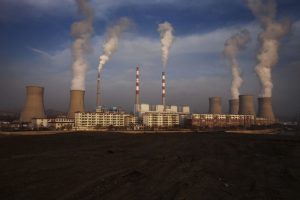
In the coming weeks, the EPA will publish a number of measures, ranging from a proposal to tighten limits on ozone concentration — a major cause of smog — to new rules that demand emissions cuts from states that cause their neighbours to exceed federal pollution standards (downwind pollution). The main target of the Republican attacks is the EPA’s Clean Power Plan that will limit the emissions of coal-burning power plants. The rules for new power plants are to be finalised next January, and regulations for existing plants will follow in June.
“As we enter a new Congress, I will do everything in my power to rein in and shed light on the EPA’s unchecked regulations,” vowed Republican senator James Inhofe, a climate-change denier who is slated to chair the Senate’s Environment and Public Works Committee. The future Senate majority leader Mitch McConnell, a Republican from Kentucky, a major coal-producing state, said Republicans would combat the White House “in any way that we can”.
He vowed: “I’m going to go to war with him over coal.”
The best bet for Congressional opponents of Obama’s climate-change agenda would be to use the appropriations process. Congress has the power of the purse and the Republican majority could try to attach conditions — so called riders — to its approval of the EPA’s budget, preventing it from being used for specific activities such as regulating power-plant emissions. “The money doesn’t get out if Congress doesn’t want it to,” says Christine Todd Whitman, a moderate Republican who led the EPA under George W. Bush and resigned in 2003 in protest against White House demands to ease air pollution controls. “They will try to use the appropriations process to starve the agency to death.”
Others are less certain that this strategy has a chance of succeeding. “Defunding typically doesn’t work,” says Paul Bledsoe, a climate and energy expert with the German Marshall Fund who formerly worked on President Bill Clinton’s Climate Change Task Force. “The president is usually able to face down such attempts.” Obama has veto power over every bill that reaches his desk. In the case of the budget, failure to reach compromise can trigger a government shutdown – something the Republican leadership in Congress has professed it wants to avoid.
At the conservative Heritage Foundation, Nick Loris, a staunch opponent of Obama’s agenda, predicts that “there won’t be any stones unturned” when it comes to derailing the EPA, even if it just means slowing the agency down by holding hearings. But he agrees that prohibiting funding would be a “heavy lift”.
Both he and Bledsoe agree that court cases present the most serious challenges to the EPA’s authority. The administration won some important victories against the agency’s opponents in recent years. In 2007, the Supreme Court validated its authority to regulate greenhouse-gas emissions if it considers them a danger to public health. In April 2014 the highest court upheld a directive to protect downwind states from pollution generated in other states.
Legal challenges?
But lawyers and experts expect that the Clean Power Plan is more vulnerable to court challenges. Nine coal-producing states have joined a lawsuit against the proposed regulation by coal-mining company Murray Energy Corp and more suits are likely after the rules are finalised next year. The plaintiffs argue that the president’s plan to cut coal power plant emissions by 30% before 2030, compared to 2005 levels, exceeds the EPA’s regulatory authority. Specifically, the coal lobby says Obama’s plan would not only regulate emissions of individual plants, but also force investments in gas or renewable energy sources to offset emissions from coal-fired plants.
The coal lobby says that Obama’s plan would not only regulate emissions of individual plants but require states to meet their overall emissions standards by across-the-board measures which could include shifting to other sources of energy like natural gas. Meant to give states flexibility to meat their goals, it opened the door to critics who say that setting state-wide emission rates would exceed the EPA’s regulatory powers under the Clean Air Act.
“It is likely that the Supreme Court will take up this case,” expects Jeff Holmstead, a lawyer with Bracewell & Guiliani, a lobby group for the energy industry. The power plant rule is part of the calculation to reach the administration’s current goal of a 17% emissions reduction between 2005 and 2020. So far, the country is on track to meet this goal or at least come close to it, “but if the president’s Clean Power Plant regulation gets struck down, the goal is in trouble,” Holmstead says.
Even if the power-plant regulations can withstand the legal onslaught over the next two years, activists and opponents agree that more action will be needed to meet the even more ambitious goal to cut emissions by 26% to 28% by 2025. The administration claims this target can be achieved with regulatory tools, but critics complain that the calculations behind this have not been made transparent.
Nor has the White House addressed the question of what might happen should a Republican win the next Presidential election in 2016. A new president could try to overturn his predecessor’s executive orders – or at least refuse to build on them.
With his recent announcements, Obama made it clear that he sees climate change as a legacy issue. His bet is that public opinion on this issue is moving in his direction – much like it did on gay marriage and immigration. It is true that a majority of Americans see climate change as a serious issue in polls. But it is also true that the issue usually ranks far behind concerns such as jobs and the economy in the priorities of US voters.
“Once the power-plant regulations go into effect in 2016, people will see their energy prices go up,” predicts Loris. Todd Whitman on the other hand thinks there is a better case to be made for a transition to clean energy – which in her opinion has to include new nuclear-power plants. She hopes that more of her fellow Republicans will have the courage to challenge the climate-change deniers within their ranks – reminding them that the EPA was created by Richard Nixon and that the party’s idol Ronald Reagan was the first president to include climate change in his daily national security briefing.
“Climate change will play a big role in the next Presidential election,” says Bledsoe. And the next president — Democrat or Republican — will ultimately decide what the US contributions to an international climate-change agreement will be worth.