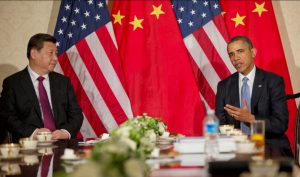
The G20, which meets in China for the first time this weekend, represents the majority of the world’s population, economy and greenhouse gas emissions. In the past, it has shown it can act fast and decisively on global matters, most prominently on financial stability. In the modern era, we believe the G20 is the right forum to lead the crucially important mainstreaming of climate policy in the global economy.
The direction of the G20’s leadership is captured by the title of international environmental consortium Climate Transparency’s new report, Brown to Green: Assessing the G20 transition to a low-carbon economy. The world has to turn its back on unsustainable fossil fuels and is already moving towards clean energy. It is not enough just to invest in clean energy, we must leave fossil fuels behind and move together towards low-carbon, sustainable development.
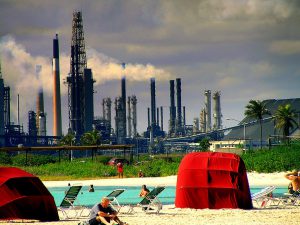
Fossil fuel subsidies are the single biggest obstacle to this mission, and the G20 are the main culprits. Indeed, the subsidies paid to the fossil fuel industry by the developed countries still far outweighs the money they have promised to finance the world’s poorest countries to adapt to – and act on – climate change. This has to change.
For years the G20 has talked about reducing subsidies. Now is the time to go beyond announcements and into action, to dump these brown subsidies and move instead towards green investment.
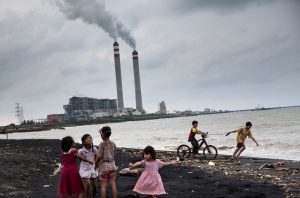
Our report, in its assessment of global emissions, shows how far away we still are from reaching that goal. Global emissions are far too high to keep global warming “well below” 2 degrees Celsius (above pre-industrial levels), as the Paris Agreement mandates. On average, per capita emissions in the G20 countries are 5.7 tonnes of carbon dioxide equivalent per year, when they need to be closer to 1-3 tonnes by 2050.
We need to better monitor emissions in order to estimate their effect on global warming. But emissions alone are not a good indicator when it comes to judging whether we are turning the tide and moving towards a low carbon economy.
Other indicators we have looked at, such as the energy intensity of economies, the carbon intensity of power supply, and the energy demand per GDP, give rise to careful optimism. We are using energy more efficiently and we are doing so by emitting relatively less carbon. But this is not enough, as population and economic growth outweigh the efficiency gains.
These improvements are to some extent due to the strong growth in renewable energy, a worldwide success story, which few would have considered possible 30 years ago. This success is owed to technological progress but equally to groundbreaking policy innovations in particular in Germany and China. The Energiewende, as new energy system that is phasing out coal-fired power generation and Germany’s fleet of nuclear reactors; and China looks set to beat its pledge to peak its carbon emissions by 2030.
We find there is a need to double renewable energy investment to improve the situation of the poorest, who have no access to energy, and to boost economic growth.
Some countries are doing very well in creating a good investment environment for renewable energy, with China and India as standouts. At the same time, they are the world’s largest users of coal. The fact that investors consider these two countries worth investing in – and indeed are making those investments – gives us all hope. Following are Germany, France, the UK and the US. Every country must strive for more and deeper change if progress is to be made.