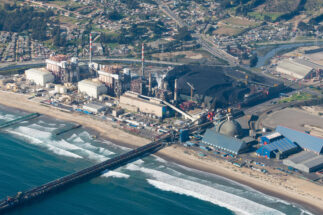
A Chinese-backed coal power plant is being built in Bangladesh allegedly by evicting locals from their land and grabbing a riverbed. There has been opposition, including a directive by the government’s own National River Conservation Commission (NRCC) to local authorities to evict the company from the plot where the plant is being built. However, construction continues.
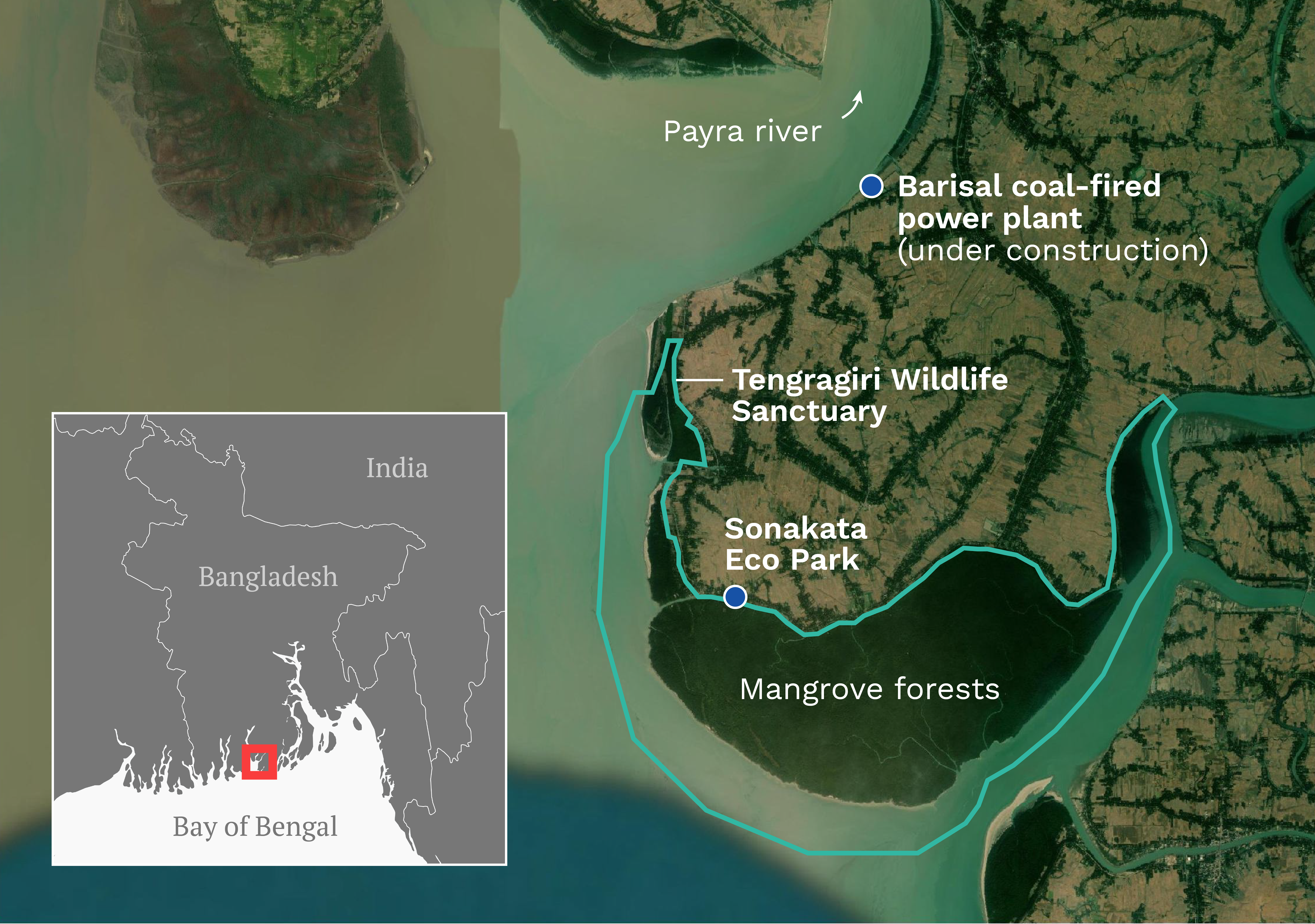
In 2017, Barisal Electric Power Company Limited (BEPCL) started building the 307-megawatt (MW) plant at Khottar Char in Taltoli, a sub-district of Barguna district in coastal Bangladesh. BEPCL is a joint venture between Chinese state-owned company PowerChina and Bangladeshi company ISO Tech Electrification Company Limited. PowerChina owns 96% of the shares.
The site is on the bank of the Payra river, which is one of the major fishing grounds for Bangladesh’s iconic hilsa fish and close to a hilsa sanctuary. Since 2017, some residents have been alleging they were evicted from the site on the basis of documents they describe as “fake”.
On 28 September 2020, Mohammad Muzibur Rahman Howlader, then chair of the NRCC, asked the district’s top administrator to evict the company from the site. This was because the plant was being built illegally by encroaching on the Payra riverbed, according to a media report.
Howlader also asked the district authorities to cancel the land rights of the company in case any document mentioning the riverbed as private land had been issued.
The Bangladesh Environment Conservation Act 2010 (Amendment) says no project can fill up or grab land from water bodies to build any infrastructure that hinders the water flow. The site is within the coastal region, where the Payra and other rivers rise at every high tide.
Land grab charges
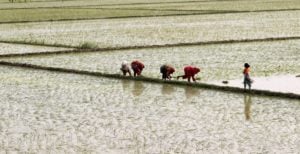
The plant needs 125 hectares of land, of which 63 hectares has been acquired so far. A media report claimed that the original residents had been evicted without being given prior notice or compensation. They included members of the indigenous Rakhine community.
A study conducted by civil society organisation the Bangladesh Working Group on External Debt (BWGED) says 153 families are directly impacted by the construction of the coal power plant. Of them, 142 have been evicted by force.
Jasim Kholifa, 38, was evicted from his one-acre plot that used to be a vegetable garden and his family’s homestead. “ISO Tech gave me BDT 150,000 (USD 1,770) as compensation. That is nothing compared to what I possessed,” Kholifa told The Third Pole. He now works as a fisher.
Other former residents had similar complaints.
Habibur Rahman, deputy commissioner of Barguna district, said: “The power plant is being constructed on purchased land and for that reason we [can’t] intervene about victims and their compensation. If this was in government-acquired land [land which is acquired by the government for any project] we could take measures.”
Asked about the directive from the NRCC, Rahman said: “We did not get any formal instruction from the NRCC. If we had received any instruction, we would have acted on that.”
The Third Pole’s correspondent tried several times to talk with ISO Tech and PowerChina over the phone, but to no avail. A security officer barred this correspondent when he tried to visit the companies’ Dhaka offices. On 8 April 2021, the correspondent sent emails to the addresses provided on the websites of ISO Tech and PowerChina seeking answers to the questions raised by residents, the NRCC and the BWGED study. There has been no response so far. This report will be updated if a response is received.
Beginning of the end for coal power?
According to PowerChina Resources Limited, the project is the first independent power producer (not a public utility) coal-fired project built with Chinese investment in Bangladesh. When complete, the project will be able to address the power shortage in Bangladesh, it adds.
According to data from the Power Division of the Bangladesh government, about 94% of the population has access to electricity, and the country produces around 10,000 MW every day. Bangladesh has stopped a number of coal-fired power plant projects, but allowed five that had already started work to be built. The BEPCL project is one of the five.
There has been recent controversy around another Chinese-backed coal power plant in Bangladesh. On 17 April, violence broke out at a plant under construction in Chattogram (the country’s second-largest city, previously called Chittagong), where workers were protesting a delay in wages and lack of labour rights.
A media report claimed that five workers were killed when police fired at the protesters. Authorities accused the workers of setting parts of the plant on fire. Four people had been killed during an earlier protest against the setting up of the power plant.
Ecological concerns around coal plant
The BWGED study says that, when operational, the BEPCL coal power plant in the Taltoli will emit 7,081 tonnes of carbon a day and will damage several rich ecological zones nearby, including Tengragiri Wildlife Sanctuary, Sonakata Eco Park, Laldia mangrove forest and Fatrar Char mangrove forest.
The study raised the fear that boiling hot water released from the plant into the Payra river would have negative effects on the hilsa population. Barges carrying coal to the plant will also move through a hilsa breeding ground.
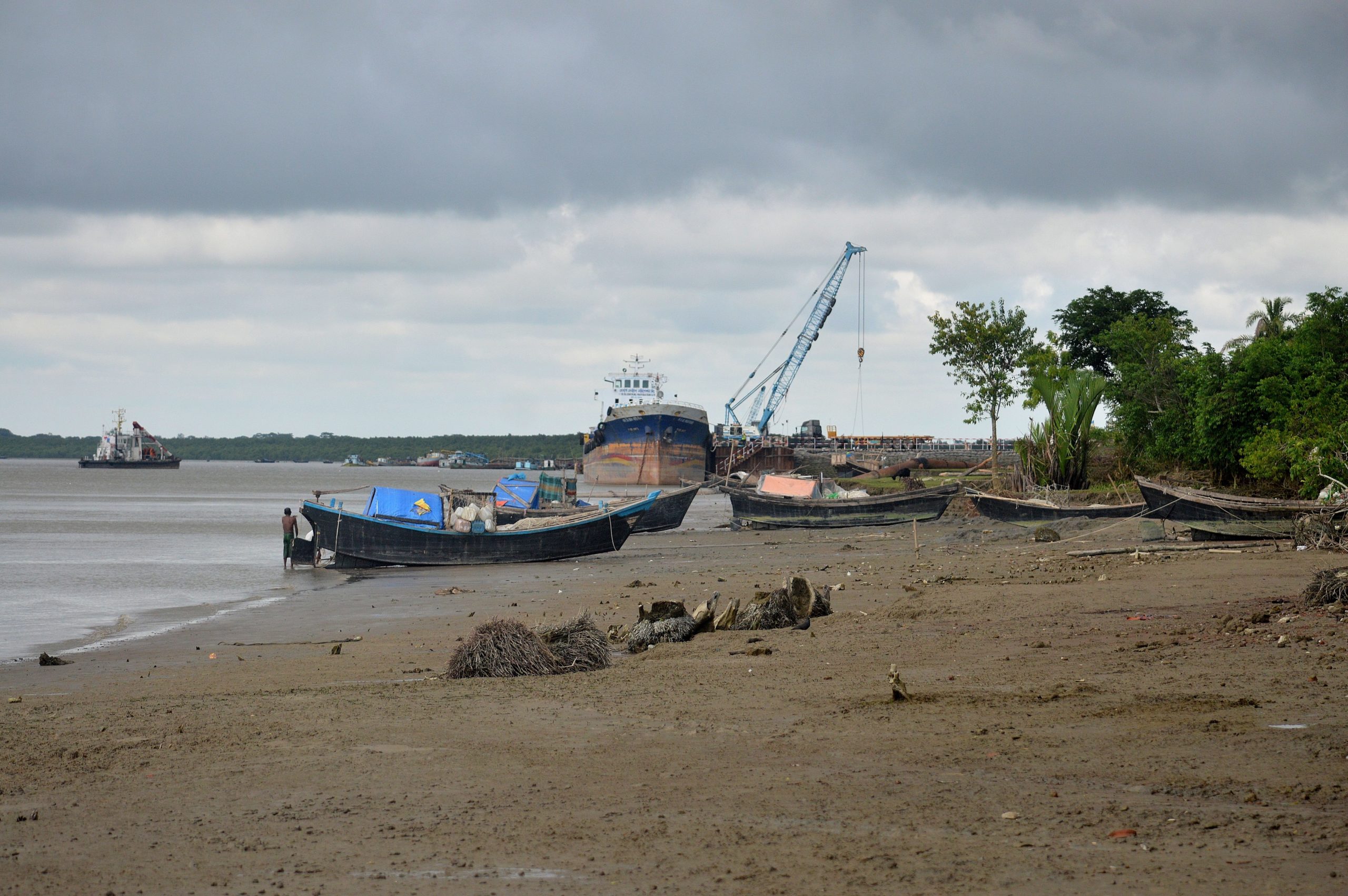
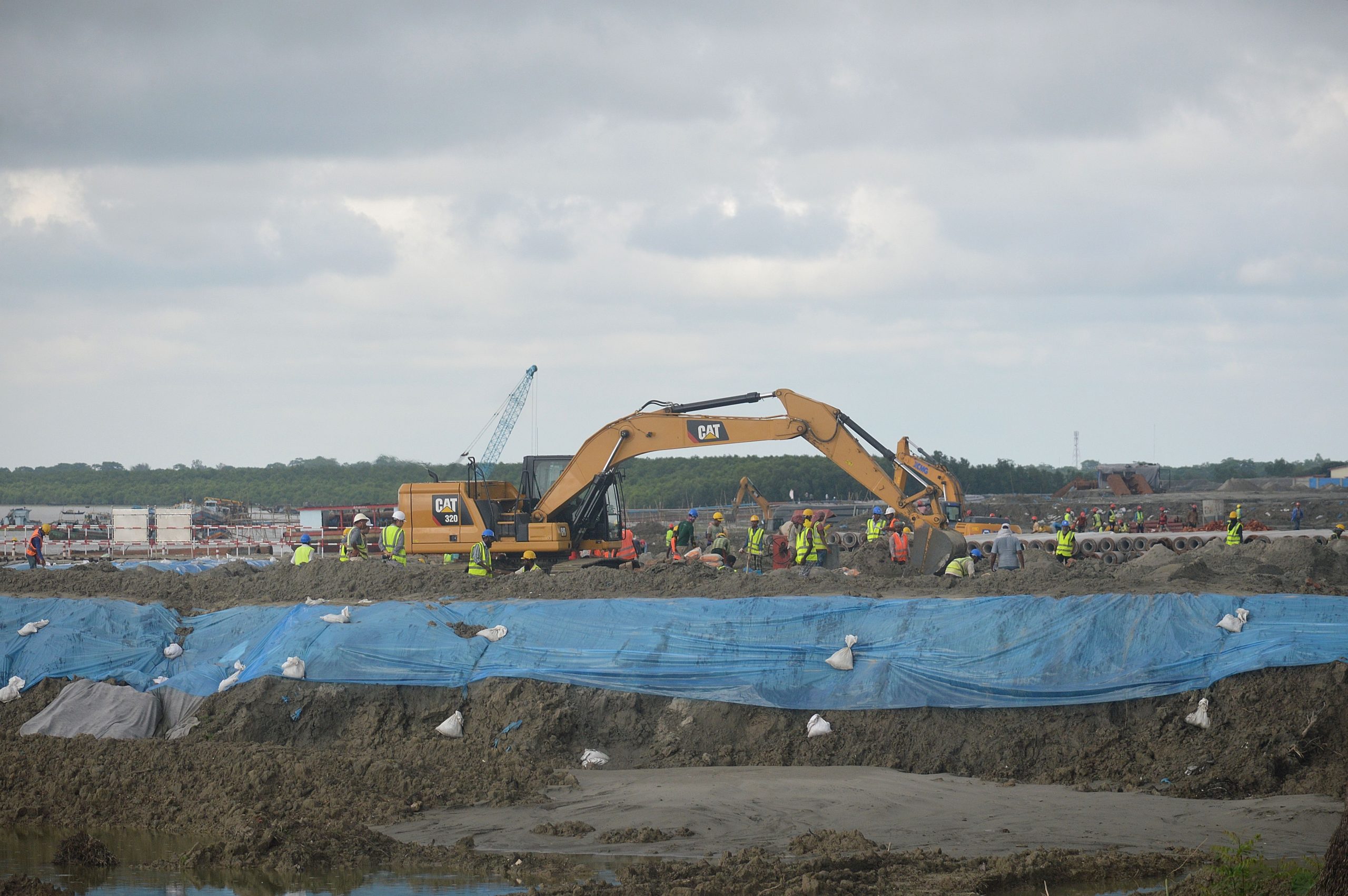
Hilsa is not only the favourite fish of Bangladesh but also a major revenue earner through exports. The livelihoods of around a million fishers depend on it.
Syeda Rizwana Hasan, chief executive of Bangladesh Environmental Lawyers Association, said under the law the landscape of a wetland cannot be changed by landfilling or other means, “unless there is national interest”. “We learned from different sources including government data that the current power production plan of the country will lead to overproduction in the near future,” Hasan told The Third Pole. “So, we can easily say that setting up a power plant by changing land patterns is not essential for the country.”

![Indian father riding on at electric three wheeler with his child [image: Suman Kumar / Alamy]](https://dialogue.earth/content/uploads/2021/05/2BHEFB6-300x200.jpg)