There are no laws governing the humble electric rickshaw, or e-rickshaw, in Bangladesh. Yet, they are everywhere, and their presence has become highly contentious.
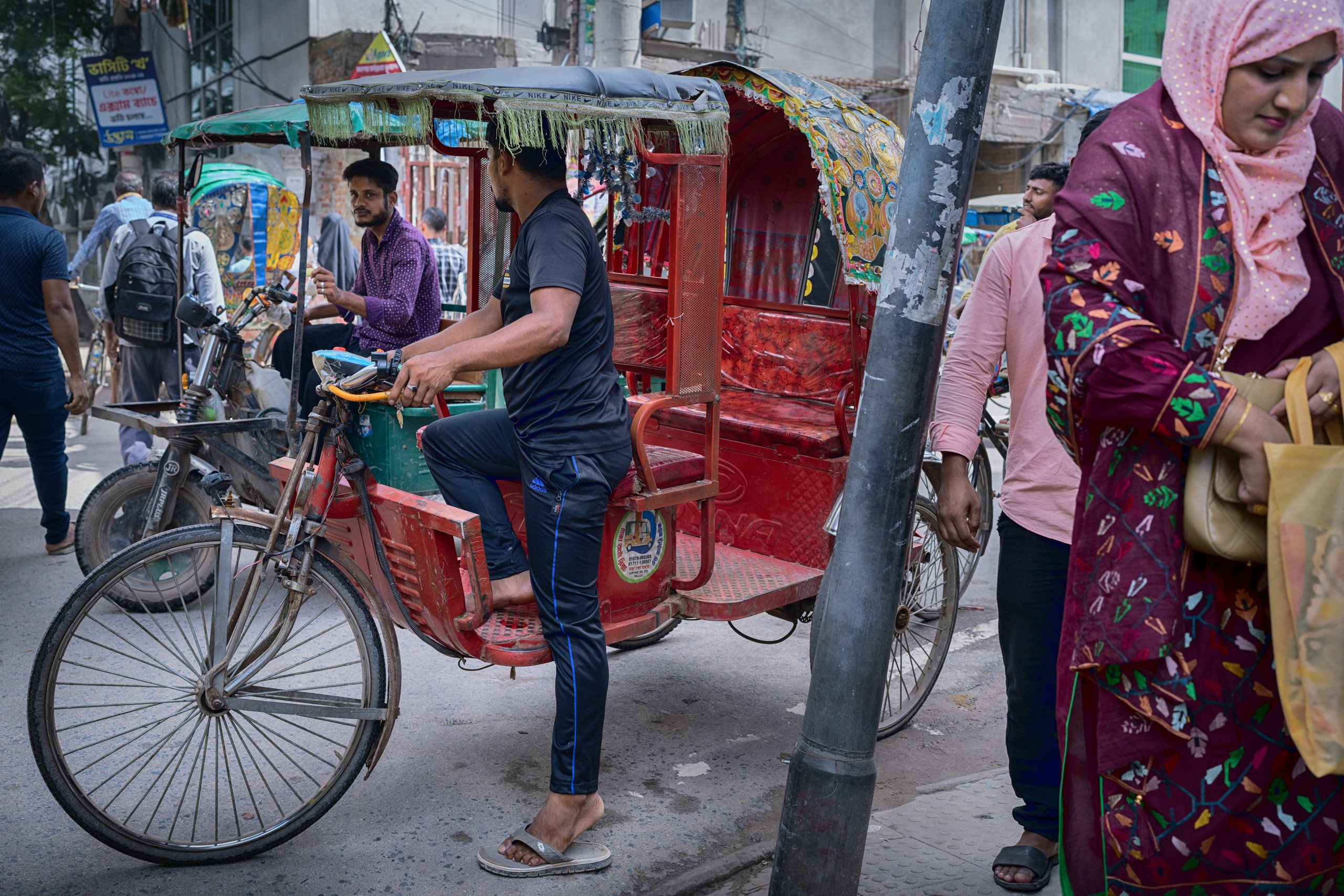
E-rickshaws began appearing in the country in the late-2000s, when local innovators retrofitted conventional cycle rickshaws with imported Chinese electric motors and lead-acid batteries. In one key respect, they follow the legacy of traditional pedal-powered rickshaws, which reportedly first appeared in Bangladesh as early as 1919, and have been a leading form of transport since the 1960s. Like their predecessors, most e-rickshaws are not officially registered.
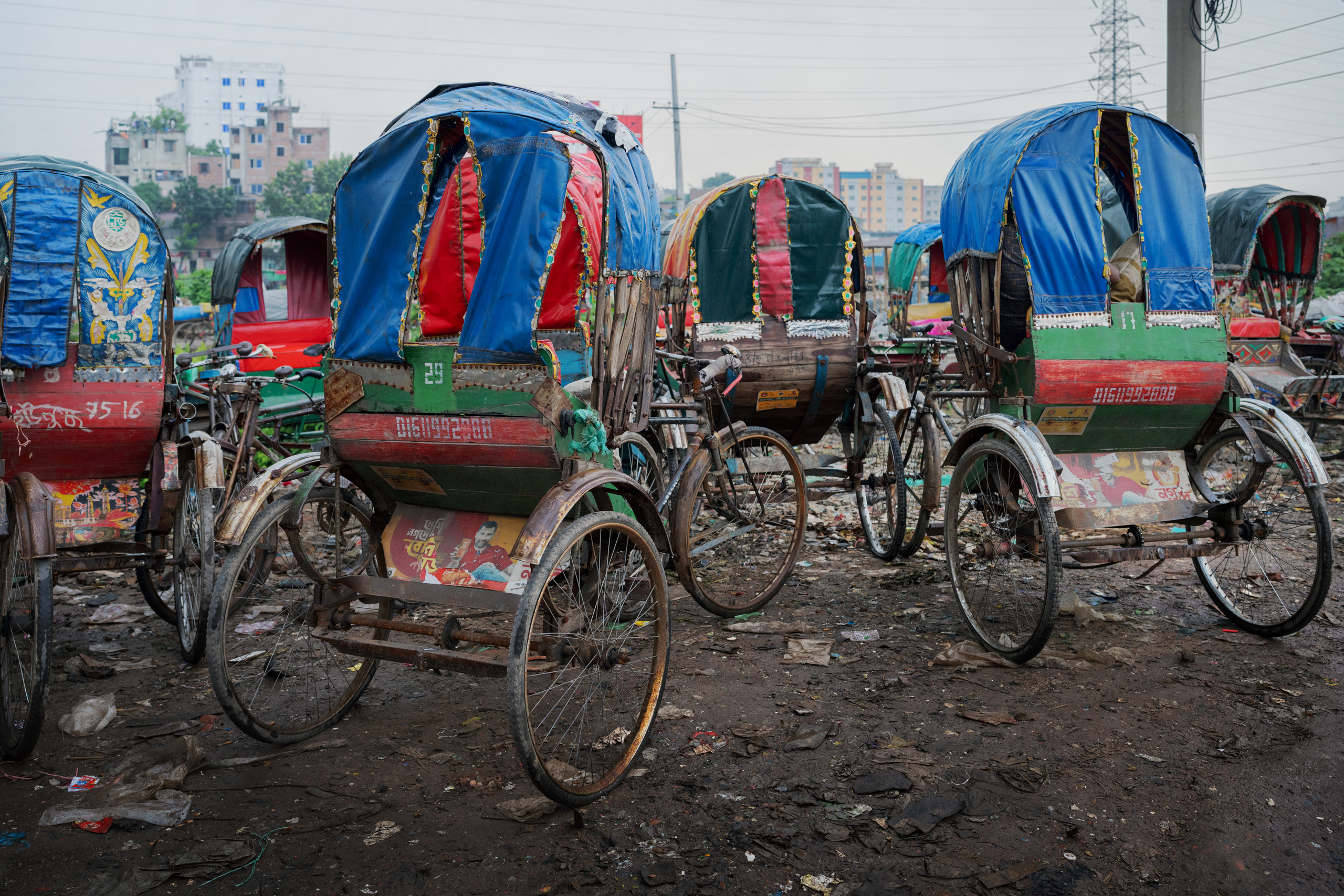
This lack of official status puts e-rickshaws in a precarious position, but attempts to change things have backfired. In 2014, the High Court rejected petitions from five rickshaw owner associations to legalise their vehicles, effectively banning their use in two major cities. This did little to deter their spread. In 2021, the government issued a nationwide ban to improve road safety, but it was quickly abandoned after protests by rickshaw associations.
The same thing happened in May 2024, when the then minister for road transport and bridges, Obiadul Quader, ordered the removal of all e-rickshaws from the capital Dhaka, citing safety concerns. Facing widespread protests, the decision was reversed within days, although e-rickshaws remain banned from state highways.
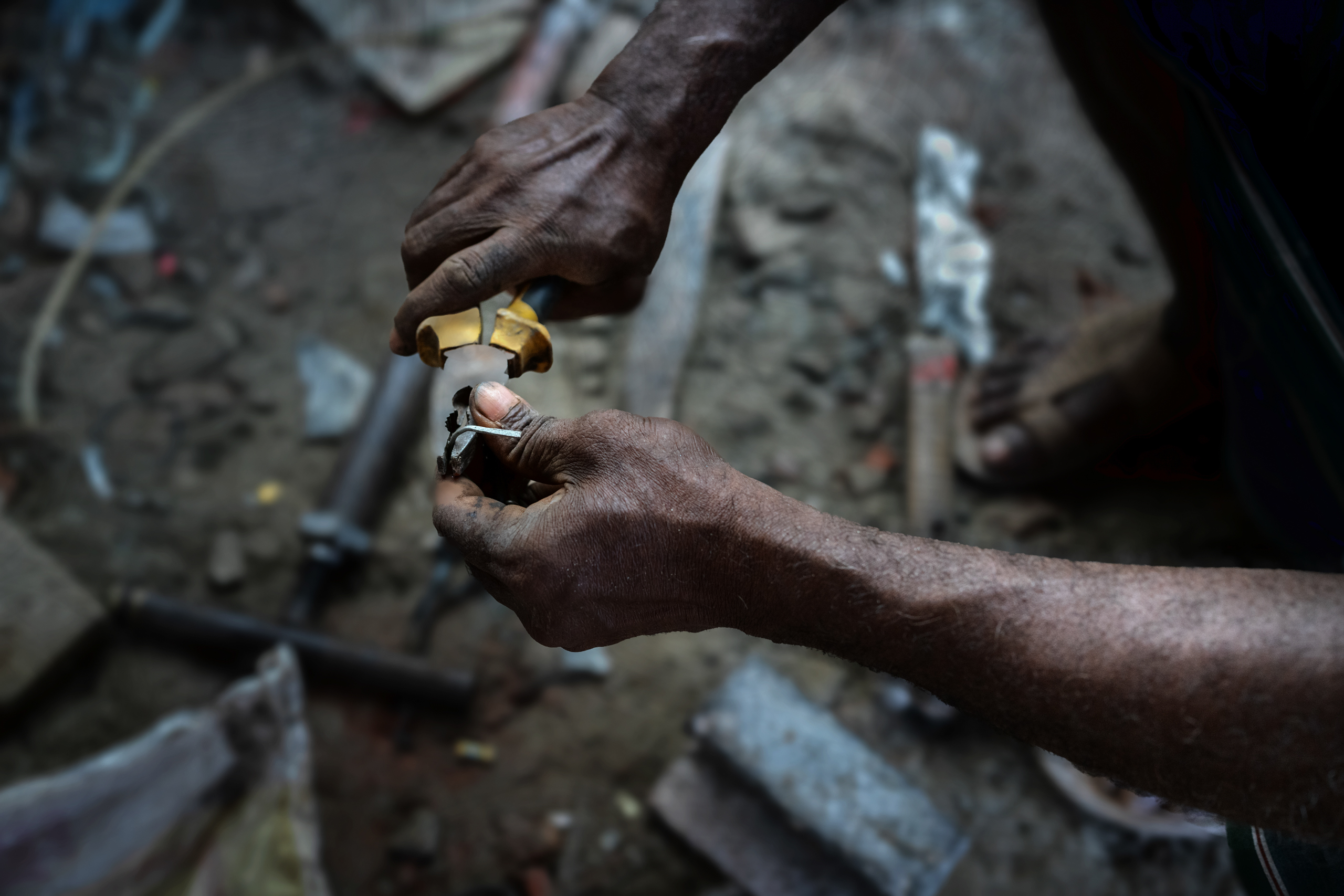
Despite these regular attempts to ban e-rickshaws, the government stance has not been consistent. In February 2024, Nasrul Hamid, then state minister for power, energy and mineral resources, called the e-rickshaw the “Tesla of Bangladesh”. He praised the ingenuity of those making the vehicles, suggesting there were 4 million e-rickshaws in the country. In comparison, the United States, with twice the population, had only 3.5 million electric vehicles in 2023.
The matter of e-rickshaws remains unresolved following the collapse of Prime Minister Sheikh Hasina’s government in August 2024. On November 21, the High Court gave the authorities three days to stop the operation of e-rickshaws in Dhaka, leading to renewed protests until the Supreme Court stayed the order four days later.
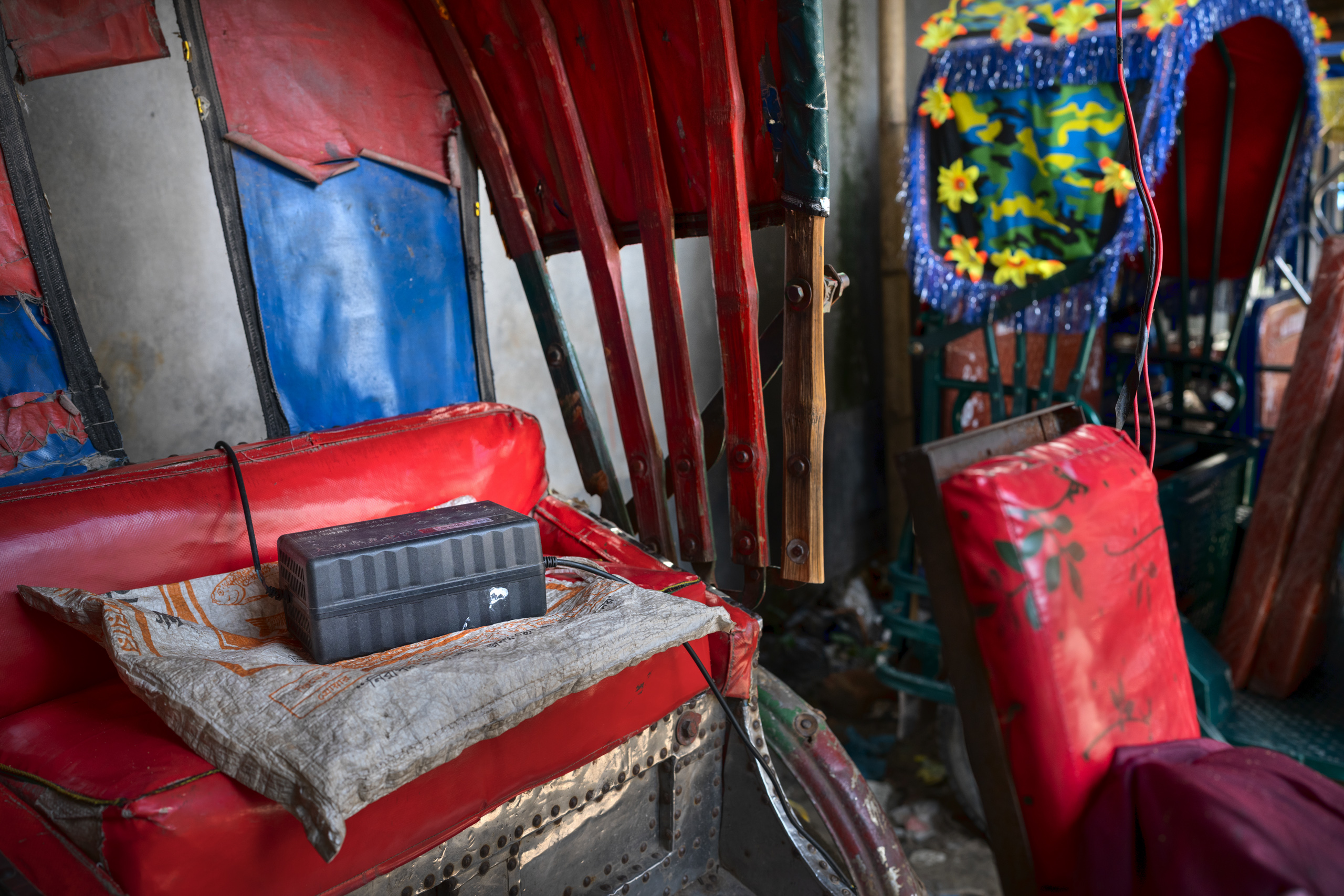
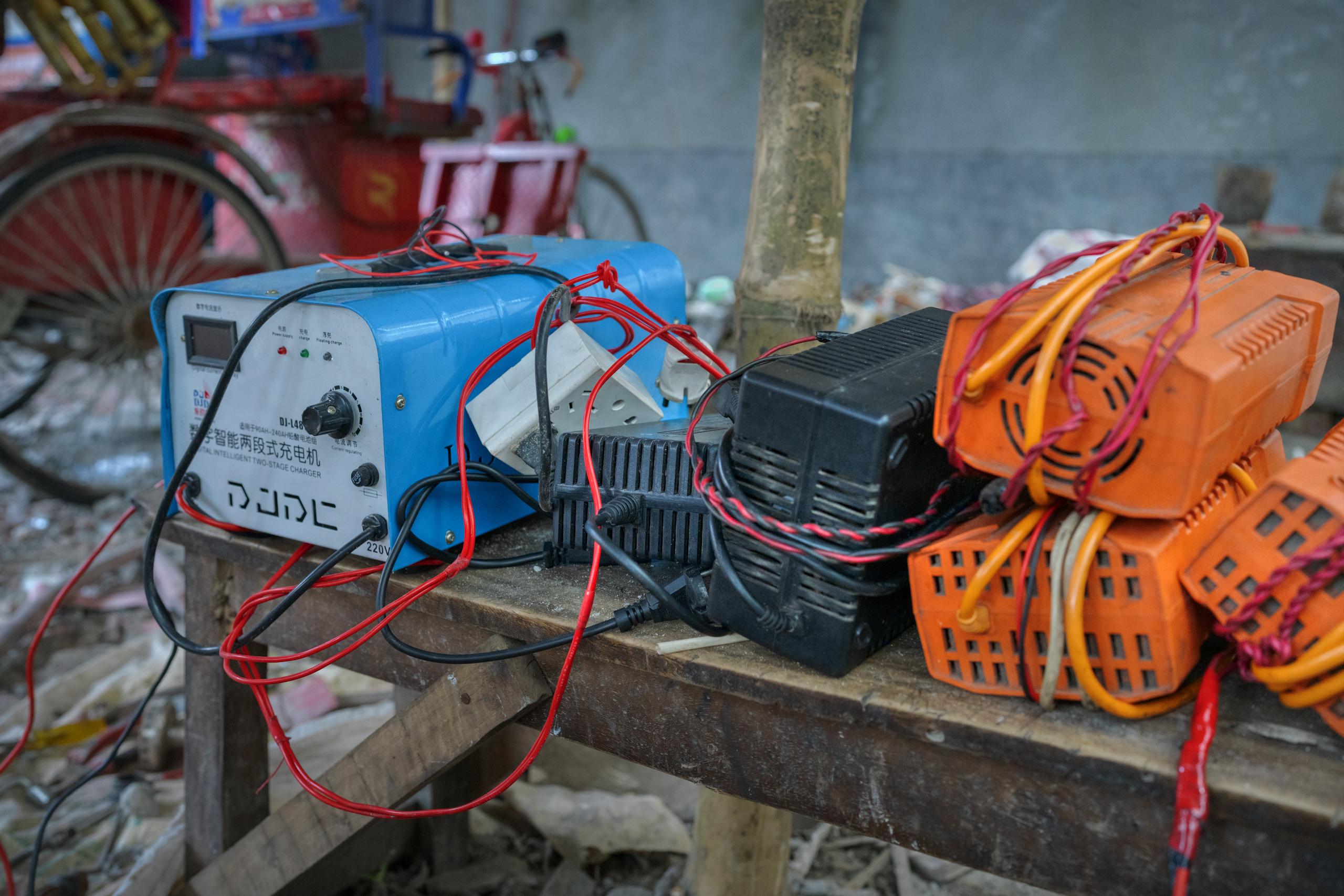
The heated debate over e-rickshaws touches on critical issues of mobility, dignity, livelihoods, safety and pollution, all central to the climate justice movement. A 2018 research paper, which looked at the cycle rickshaw as the principal mode of transport in Dhaka, estimated that this form of non-motorised transport accounted for 7.6 million trips a day in 2009, almost double the highest equivalent figure for the London underground in 2012.
Raju, an 18-year-old e-rickshaw driver in Dhaka told Dialogue Earth: “We do not want to struggle with pedal rickshaws as they are very hard to drive and require physical strength, [especially] during storms and heatwaves.” He added, “three people can’t sit on a pedal rickshaw, but they can comfortably ride in an electric rickshaw. I have my parents and siblings in my family… I pay 500 taka [USD 4] each day as the rent [and] earn 700-800 taka [USD 5.8-6.6] daily after paying the rent.”
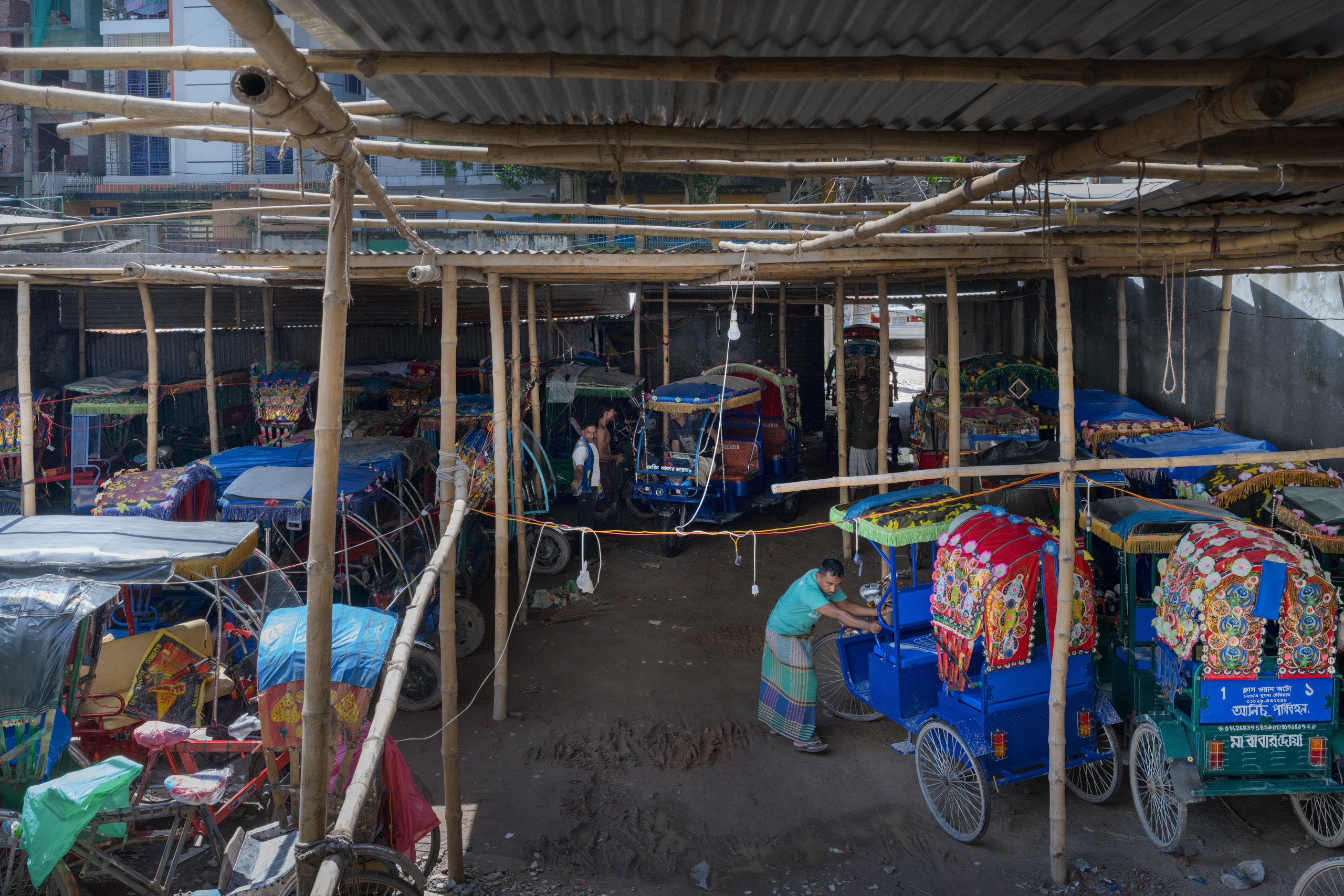
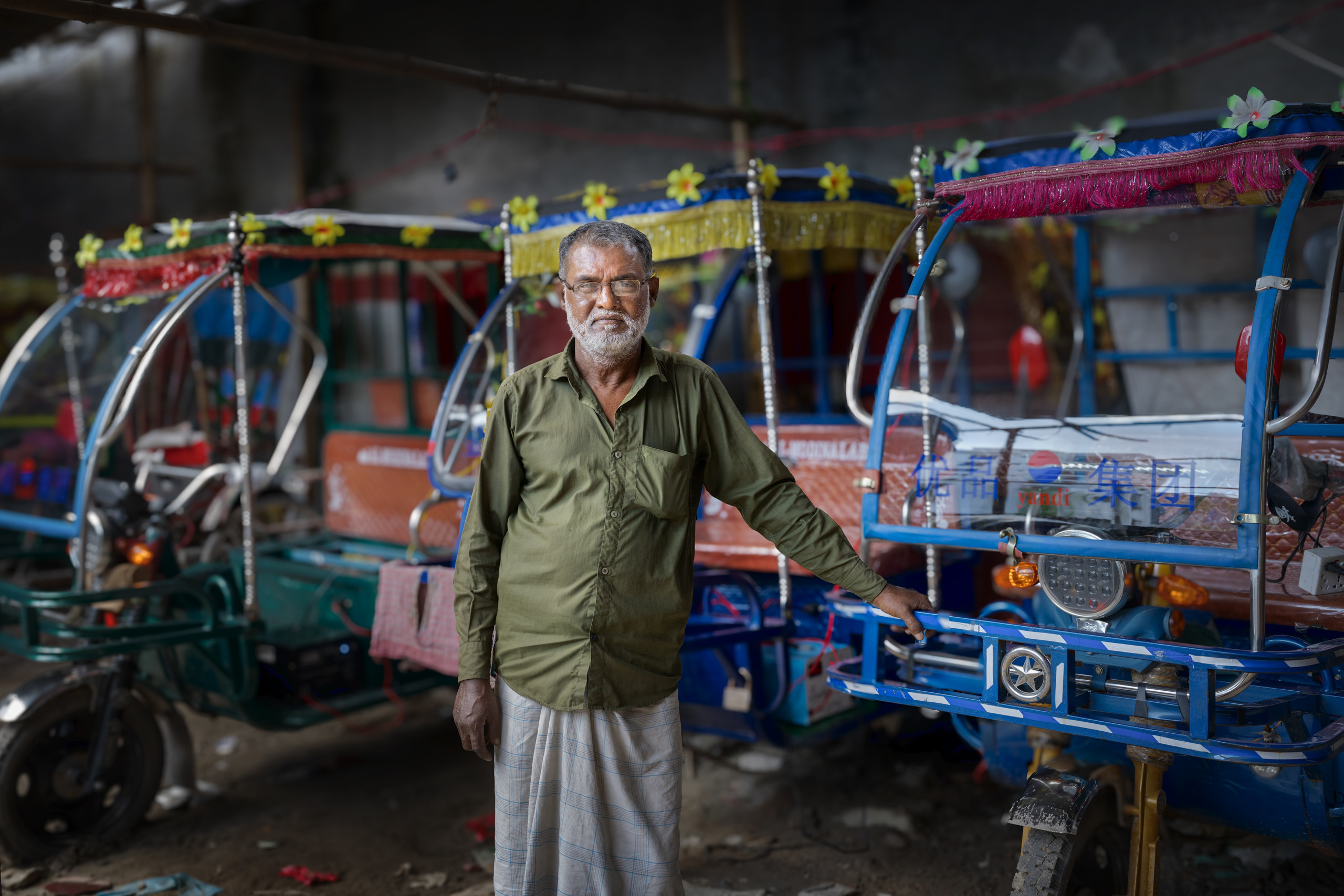
Mohammad Milon Sarkar is on the other end of the spectrum. The 57-year-old owns a rickshaw garage with 25 rickshaws and 40-50 e-rickshaws, which he rents out. “Most of the drivers are young,” he told Dialogue Earth. “Previously these youths used to wander around the streets. They were unable to drive pedal rickshaws as it was hard [and] they used to get involved in drugs and did not listen to their parents. Their life changed when they started to earn by driving [e-rickshaws, and] these youths are [now] helping their family with these earnings.”
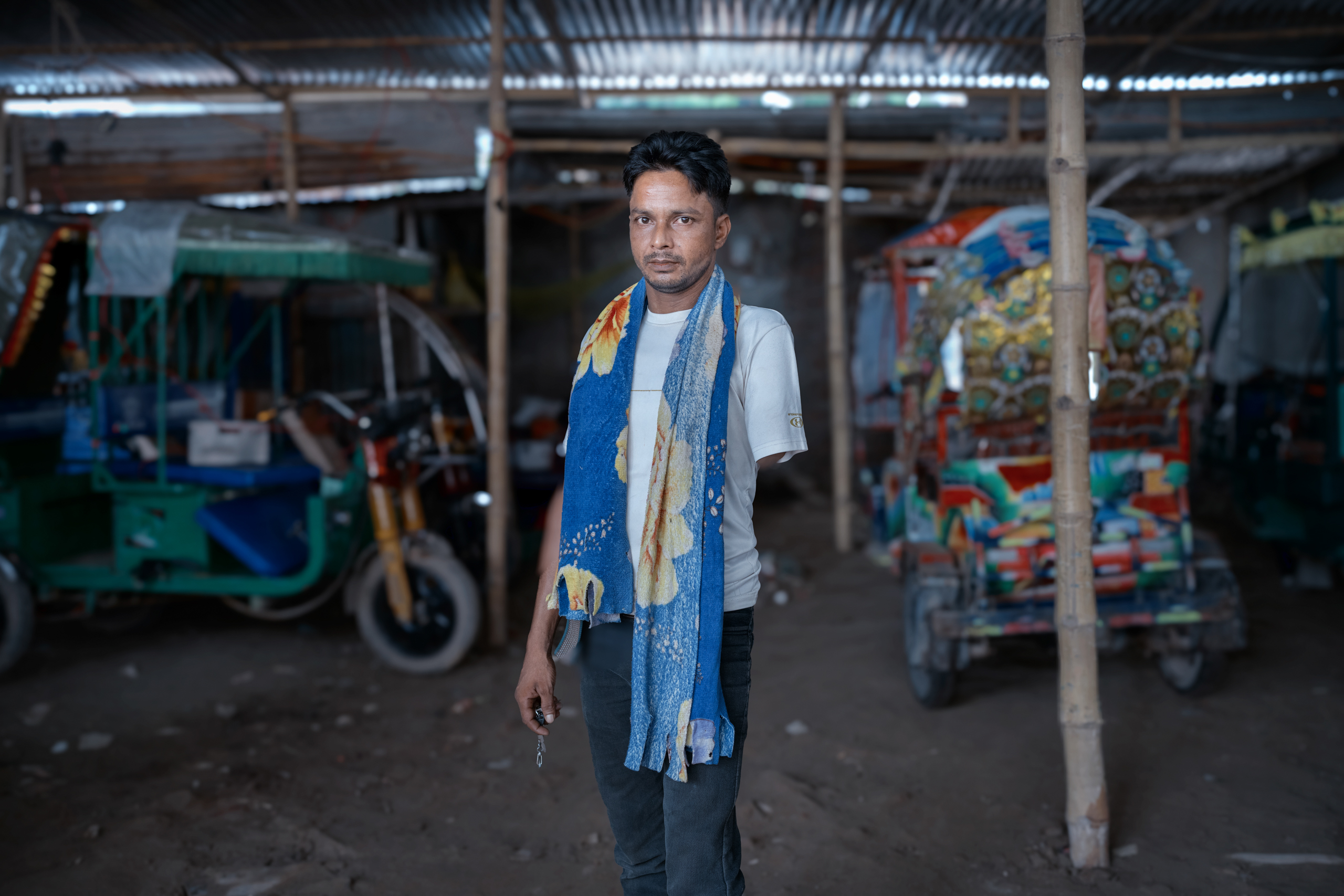
The ease of use is of critical importance to Abul Hossain, who used to work as a ceramic tile-maker until a machine accident injured his hand in 2022. “They sacked me from the factory [and] only provided some treatment, but doctors had to cut my whole hand [off]. Then I sold the little piece of land I had in my village for better treatment,” he recalled. The 43-year-old has a wife and three children to support, and told Dialogue Earth he was “very upset and thought about what to do after the accident. [Finally,] I took a loan from an NGO and bought this e-rickshaw… It requires [much more] hard work to drive a pedal rickshaw.”
Despite these advantages, there are significant challenges as well. Although Sarkar, the garage owner, insists that new e-rickshaws with hydraulic brakes are safer, the basic design of an e-rickshaw is still merely a cycle in the front and seating in the back. Lightweight and unstable, they lack safety equipment such as seatbelts, making the higher speeds they can achieve particularly dangerous.
Furthermore, most e-rickshaws are powered by lead-acid batteries, and Bangladesh has the fourth-highest levels of lead pollution impact in the world. The informal nature of the e-rickshaw economy means battery management and disposal has little oversight, adding a critical health burden to the country. While battery-swapping using lithium-ion batteries offers a potential solution, without a regulatory framework many e-rickshaw owners are likely to continue choosing the cheaper lead-acid option.