In late 2024, some of the largest Chinese-owned solar factories in Vietnam paused production. They were responding to preliminary rulings by the US on anti-dumping and countervailing duties. The pause exposed the risk of countries relying too heavily on foreign investment in factory operations alone.
What had been missing was technology transfer. In other words, foreign firms sharing knowledge and technical capabilities with local firms and workers, enabling them to use and eventually develop technologies themselves.
Also limited was the connected provision of value addition, meaning the creation of solid local jobs and industries, and movement up the value chain from product assembly or raw material export.
The situation could have alarmed any country looking to capitalise on China’s growing overseas clean-tech investment.
There is no doubting the importance of the huge and growing investment by Chinese companies in overseas solar, electric vehicles, batteries, wind and green hydrogen.
It already presents one of the largest private “climate finance” cash flows into the Global South. Such finance will be key to achieving the goals of the Paris Agreement, which require USD 1.3 trillion in annual climate finance by 2035, as laid out in the recent Baku to Belém roadmap.
In this context, Global South countries need to be strategic in translating private finance, which is driven primarily by the profit motive, into real technology transfer and value addition.
If successful, countries partnering with Chinese enterprises can establish clean tech as major pillars of their own economies, setting them up for their own just transitions. The alternative is that when investment ends, governments have little to show for it, and little longlasting effect.
The Vietnam case
Southeast Asia was the major early destination of China’s overseas manufacturing overall. And before the preliminary duty rulings, Vietnam was the top overseas destination for China’s investment in solar manufacturing. But as Chinese companies paused solar assembly lines in 2024, it revealed how little had been transferred to their Vietnamese counterparts.
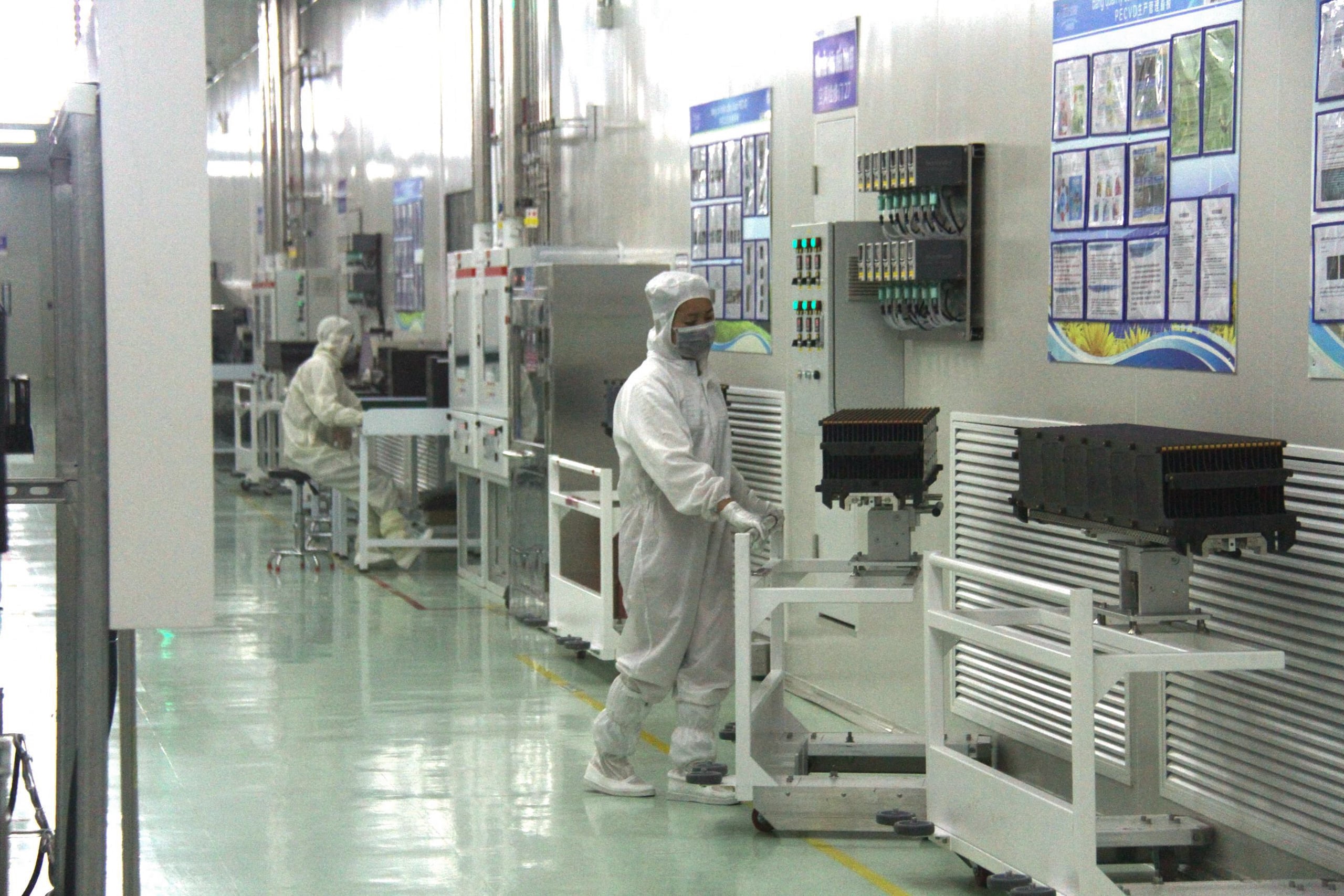
Today, there are few Vietnamese companies in the solar manufacturing value chain. IREX is the only Vietnamese-owned panel manufacturer. Roughly 90% of all equipment for renewable energy projects is imported.
The government is working to improve the situation, notably through a new decree offering a bid bonus to foreign investors who commit to technology transfer, directly influencing the allocation of prime land-use rights.
China’s overseas clean-tech manufacturing investment is massive – a projected USD 227-250 billion across 461 projects since 2011. This is according to a report I wrote last year with Mathias Larsen for Net Zero Industrial Policy Lab. And it is just getting started. Roughly 88% of this capital came after 2022, our report showed.
Such investment is rewiring clean-tech supply chains in the Global South. Though solar was the main sector to see Chinese overseas investment, the footprint is expanding to include wind, batteries, EVs and green hydrogen.
The regional footprint is also expanding. Chinese clean-tech companies had focused on Southeast Asia early on, but new ventures in the Middle East, Africa and South America are expanding rapidly.
For recipient countries, the appeal is likely more economic than environmental. Clean-tech investment provides an opportunity to make economies competitive during the global transition to clean energy.
Interestingly, at China’s Shanghai Cooperation Organization summit last September, recipient countries emphasised technology transfer and “experience exchange” in their announcements of new clean-tech agreements more than their Chinese counterparts did in their statements, according to a review by Li Yuxiao of Greenpeace East Asia.
In that light, Vietnam’s experience offers what to many governments in the Global South could be an alarming tableau. After over a decade of intensive investment and booming manufacturing, the recipient country had secured little long-term development within its solar industry.
The new trend and opportunity
Globally, the current trends in Chinese overseas clean-tech investment slant away from bricks-and-mortar developments and towards lighter-asset models.
These include licensing, where companies sell technological “recipes” to local partners, as seen in Ford’s use of CATL’s battery chemistry in Michigan. Another is contract manufacturing, where a company engages a third-party factory to build its products. The Astana Motors plant in Kazakhstan, which assembles cars for multiple Chinese rivals, is a good example.
It is difficult to foresee when this trend may change because it stems in part from geopolitical trends and stricter rules-of-origin laws. Such laws are used to determine a product’s economic nationality and ensure it qualifies for tariff exemptions or local contracts.
But the risks of outsourcing capacity without physical roots in the recipient country can also provide openings for such countries. They can leverage the situation by demanding more collaboration-friendly deal structures with more room to hardwire local upgrades.
Asset-light models can open the door to partnerships with local co-manufacturing, supplier-upgrade funds and joint design labs. For example, the localised manufacautring deal between Chinese company JA Solar and South African company ARTsolar includes a published plan to train local employees and partner with local institutions to advance workforce development. The aim is to grow manufacturing capacity along with output, offering a more promising potential for host countries to advance their energy transitions compared to the Vietnamese example.
Ultimately, it is still important to understand why Chinese firms do build factories overseas. The main reason, as noted in the Net Zero Industrial Policy Lab report, is access; to the market of the host country, to the markets of other countries, or to raw materials.
When a Chinese firm builds overseas factories mainly to export to third-country markets, there is a higher risk that local industries will not benefit much. As investment into these export hubs grows, this makes it more important for governments to put clear policies in place to ensure real local industrial development.
The bottom line for how to turn capital investment into transformational gains lies in a few best practices. Chinese firms and host governments should co-sign strict, practical standards that tie market access to incentives for measurable upgrading of local capacity, strengthening local supply chains, skills, transparency and resource reuse.
Upstream manufacturing should be linked with downstream clean-tech deployment, in order to amplify system-wide impacts on the energy transition. If policymakers embrace these fundamentals, host countries can better turn Chinese investments into durable capacity upgrades and achieve faster, more just transitions.
In many ways, 2025 proved to be a pivotal year for China’s clean-tech investment overseas. But for host countries, it is important to see investments not just increasing, but also impacting their markets more deeply.