![<p>An electric bus run by the Bangalore Metropolitan Transport Corporation [image by: Ramesh M.G.]</p>](https://dialogue.earth/content/uploads/2018/09/Electric-768x440.jpg)
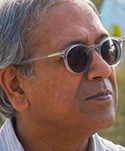
“The problem with India is that we don’t talk about our achievements in the fields of clean energy and clean mobility,” Ajay Mathur, Director General of the Energy and Resources Institute (TERI), told thethirdpole.net. “We have done so much, we’re doing so much more, but the world seems unaware of it.”
On the eve of the Global Climate Action Summit (GCAS) in San Francisco, Mathur was chatting before going on to moderate a panel of politicians and bureaucrats on what various state and city governments have done in the area of clean mobility.
His point was borne out almost at once, as the Natural Resources Defence Council (NRDC) – whose India branch had organised the event – declared that the panel discussion would be closed to the media, and that journalists would be called in later for a press conference. This announcement came after inviting journalists to the entire session. Two of the three journalists who had planned to cover the discussions left.
As it happened, the panel discussions were entirely innocuous, with the politicians and bureaucrats listing the steps they had taken to introduce electric vehicles (EV) to their states and cities. At the press conference, they repeated – in brief – what they had said earlier.
From what they said, it appeared that India’s youngest state Telangana was moving fastest towards EVs. Arvind Kumar, Principal Secretary, Municipal Administration and Urban Development, Telangana, talked about how even the small garbage collecting vans that get into the narrow lanes of Hyderabad were now going to be all EVs, and the plan to do the same in the hundred plus municipalities of the state. Telangana has already turned much of its three-wheeler fleet into EVs.
Mukta Tilak, Mayor of Pune, spoke of the imminent introduction of electric buses, in a city already known for waste segregation and generating energy from waste. Sujata Saunik, Principal Secretary, Financial Reforms, Maharashtra, described how the government had obtained the initial private sector sponsorship to install solar panels atop some of the primary health centres in the state, and how that had prompted other firms to come forward as well.
Bijalben Patel, Mayor of Ahmedabad, talked about the recent tenders to buy electric buses. Now that the city has a bus rapid transport (BRT) corridor, it will perhaps be easier to run large electric buses. M.R. Vijaybhaskar, Transport Minister of Tamil Nadu, spoke of the plans to introduce electric buses on long distance routes. Experts have said the logistics of running electric buses are easier than electric cars, since buses go to specific depots at the end of a trip and their batteries can be charged there.
India’s climate action
The event on September 12 had been billed as a Forum on India Climate Action, held on the eve of the largest gathering so far of state and city governments, private firms and think tanks – the Global Climate Action Summit. Over 4,500 delegates are attending the two-day GCAS, hosted by California Governor Jerry Brown, a Democrat. Perhaps inevitably, it has taken on at least a mild anti-Donald Trump hue.
Arunabha Ghosh, CEO of the Council on Energy, Environment and Water (CEEW) said, “The Global Climate Action Summit, with its focus on sub-national and non-state climate actors, is critical to maintain the momentum when the US federal government is shirking its responsibility and commitment to the world. We must assess the impact of this summit by monitoring if it helps to increase ambitions or showcases innovations that can be taken to scale. Moreover, India must use this opportunity to demonstrate its climate actions, by virtue of its power of resistance to inequities in climate politics, its power of example set through domestic policies and actions, and its power of leadership at the international level, such as the International Solar Alliance.”
Many of those who attended the Forum on India Climate Action were from think tanks working in this field and already knew about most of the activities listed by the speakers. To that extent, Mathur’s point was borne out. What may make a bigger splash is the announcement a day earlier, that large Indian manufacturers including UltraTech Cement, Mahindra Vehicle Manufacturers, Mahindra Heavy Engines, and Godrej Industries Limited and Associate Companies (GILAC) had joined EP100 – a global collaborative initiative on energy efficiency. Anand Mahindra, Chair of the Mahindra Group, is a co-chair of GCAS.
Jarnail Singh, India Director of the Climate Group – the think tank that coordinates EP 100 – said, “As we optimise our energy use, the business case for renewables becomes even more evident. This paves the way for India’s long-term transition towards a cleaner and prosperous energy future.” EP100 showcases the world’s most influential businesses committed to doubling their energy productivity.