


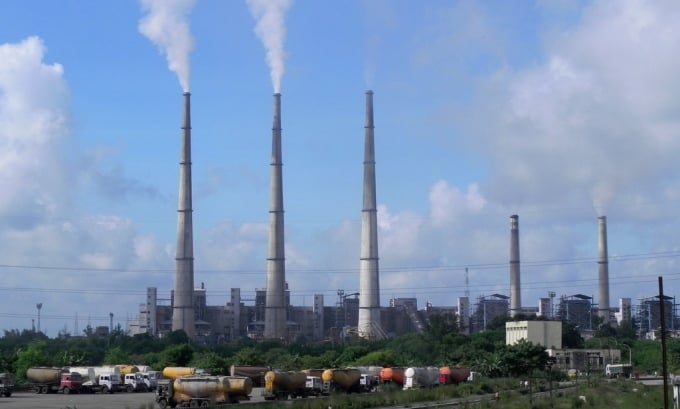
India has the world’s third largest coal reserves, and its power generation is primarily dependent on burning coal, both now and in the future. But the coal-based thermal power plants in India are the least efficient and therefore the most polluting in the world, says a new study.
Called the Green Rating Project, the two-year study by the New Delhi-based think tank Centre for Science and Environment (CSE) gives the country’s first environmental rating of coal-based power plants and shows the sector’s performance to be way below global benchmarks.
The study covered 47 plants across 16 states, accounting for half the coal-based thermal power plants in India. It found that the sector performed poorly on all environmental and energy parametres, getting a score of 23%. As many as 40% of the plants scored below 20%. Globally, a thermal plant following all the best practices can get a score of 80%.
The average efficiency of the Indian plants was 32.8%, one of the lowest among the major power producing countries. Their average carbon dioxide emissions were 14% higher than the average in China. Carbon dioxide is the principal greenhouse gas that is causing climate change, which in turn is reducing farm output worldwide, raising sea levels and making droughts, storms and floods more frequent and more severe.
The study also found that in a country that faces regular power outages, thermal plants are operating at only 60-70% capacity. If capacity utilisation is improved, the sector can meet additional power requirement without building new plants.
Sunita Narain, director general at CSE, said, “The objective of the study was to give a clear picture of the environmental performance of the sector. Given the rapid increase in coal-based power projected by the government, stress on precious resources like water and land will increase and air and water pollution will worsen, unless corrective measures are taken by the industry and policy-makers.” India’s latest official plan envisages 110 GW more will be produced through coal-based thermal power by 2022.
Huge water wastage
The study blamed the sector for huge water wastage as well. It found that the thermal plants withdraw around 22 billion cubic metres of water every year – more than half of India’s domestic water needs. Even the plants with cooling towers use an average of 4 m3/MWh (cubic metres per megawatt-hour) while the average water consumption in Chinese plants is 2.5 m3/MWh.
There are other serious environmental impacts as well. 55% of the units analysed were found to be violating air pollution standards, even when India’s air pollution standards are extremely lax. Particulate matter norms in India are 150-350 mg/Nm3 (milligram per normal metre cube) compared to Chinese norms of 30 mg/Nm3.
The thermal plants have generated 170 million tonnes of fly ash of which only 50-60% have been utilised. Currently, about a billion tonnes of this toxic ash, a by-product, lies in dumps, polluting land, air and water. It is estimated that by 2021-22, the sector will produce 300 million tonnes of fly ash every year.
The rating analysis also found that the poorest performing, most polluting power plant is Delhi’s Badarpur plant. And public sector National Thermal Power Corporation (NTPC) – the largest coal-power producing company in India – was performing below par. The six plants of NTPC – including Badarpur – scored between 16 and 28%.
Chandra Bhushan, CSE’s deputy director general, said, “The Green Rating Project is one of the very few public-disclosure projects in the world in which a non-governmental, non-industry organization rates the environmental performance of industries and makes the results public. We follow a robust and transparent process and the outcomes of our ratings have been used by companies as well as policymakers to improve policies and practices.”
However, NTPC did not share any data for the study. So its rating was based on primary surveys and information available in the public domain.
Each plant studied was monitored for two years. Only four of the 47 plants scored between 40 and 60%. The top performer was the Calcutta Electric Supply Corporation’s (CESC) Budge Budge plant near Kolkata (West Bengal), followed JSEWL-Toranagallu (Karnataka), Tata-Trombay (Maharashtra) and JSW-Ratnagiri (Maharashtra).
“Most of the thermal power stations a few years back were in reactive mode where we were mainly trying to remain within the norms. But a few years back we decided, we will change our mind-set and act proactively and we have seen that things have changed from that time. Earlier we were only concerned with pollution control boards and wanted to keep things under the carpet,” said Sanjoy Chakraborti, executive director, CESC.
Priyavrat Bhati, programme director of CSE’s sustainable industrialisation team, said, “The most striking part of the ranking is that 20 plants had particularly poor environmental performance. Some of the plants did not want to participate. We assessed them on the basis of field-level surveys and publicly available data. But we were encouraged by the transparency showed by a number of state-owned plants that voluntarily disclosed data despite being inefficient and highly polluting.”
The project selected a diverse group of plants from all regions, of various vintages, sizes and technologies and owned by all major companies, including state and central ones. The plants were rated on 60 parameters from coal and water use and plant efficiency to air and water pollution and ash management. Local community views and impacts on them were given weightage.
The report should come as a wake-up call for India’s thermal power sector. Based on the analysis, CSE recommended that India needs to put stringent air quality norms in place at par with global standards, water tariffs should be increased to check excess water use by the industries, old inefficient plants should be closed and stiff penalties should be imposed wherever the companies are not complying with the pollution norms.
See also: Electricity for all in India: Why coal is not always king
“The good news is that environmental damage can be limited – technologies exist to cut air pollutants, while ash generated from burning coal can be gainfully used. We found some of the plants implementing these technologies. However, a concerted effort by the industry and regulators is urgently required,” added Bhushan.