Energy

Indonesia’s pipeline of coal plants undermines pledge to only build renewables

Although the country has said it will go all renewable from 2023, its current construction of lignite power plants will generate emissions for decades
English
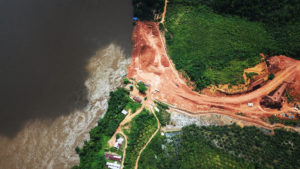
<p>An aerial view of the construction site of the Sumsel-1 mine-mouth coal-fired power plant in Indonesia’s South Sumatra, taken in November last year (Image: China Dialogue)</p>

An aerial view of the construction site of the Sumsel-1 mine-mouth coal-fired power plant in Indonesia’s South Sumatra, taken in November last year (Image: China Dialogue)

Coal currently makes up nearly 40% of Indonesia’s energy mix. Despite green rhetoric from the government, the situation is not likely to improve soon. That’s because, of the 41 gigawatts (GW) of new generation capacity expected to come online in the country by 2030, 14-16GW is due to come from coal. And 3.5GW of that is likely to come from coal-fired power plants built immediately next to mines. Such “mine-mouth” plants often use lignite – the lowest quality and least efficient type of coal.

Indonesia has vast reserves of coal. South Sumatra holds 25% of those, or 9.45 billion tons. The province’s reserves are mostly lignite and subbituminous coal, according to a report from Indonesian NGO Aksi Ekologi dan Emansipasi Rakyat (AEER), which translates as Ecological Action and People’s Emancipation.

Such low-quality coal leaves a heavy environmental footprint. More is needed to produce the same amount of energy compared with higher calorific coal, requiring more land for mining, and creating more air pollution per unit of energy produced.

“The impact of emissions is high, but not much energy is produced,” said Pius Ginting, executive coordinator of AEER.

According to AEER’s report, readings of several air pollutants, such as SO2, NO2 and PM10, are higher near mine-mouth coal power plants than in settlements outside mining areas. For residents living near these plants, this means a higher risk of upper respiratory tract infections.

Coal, energy goals and the climate

Nearly half of Indonesia’s electricity is generated by coal power plants, and South Sumatra’s coal plays a crucial role.

Indonesia’s government looks at coal as the cheapest energy source, but ignores the fact that continuing to build these coal plants – and in particular mine-mouth plants – clashes with the country’s commitments under the Paris Agreement. In 2015, Indonesia set itself the target of reducing emissions by up to 41% by 2030 with international assistance.

In what sounds like a tall promise, Indonesia’s state-owned electricity company Perusahaan Listrik Negara said earlier this year it would build only renewable energy plants after 2023. First, it will complete the construction of the 35 gigawatts of power projects still in the pipeline. This will include more than 100 new coal-fired plants, including the South Sumatra mine-mouth plants, which will generate greenhouse gases for decades to come.
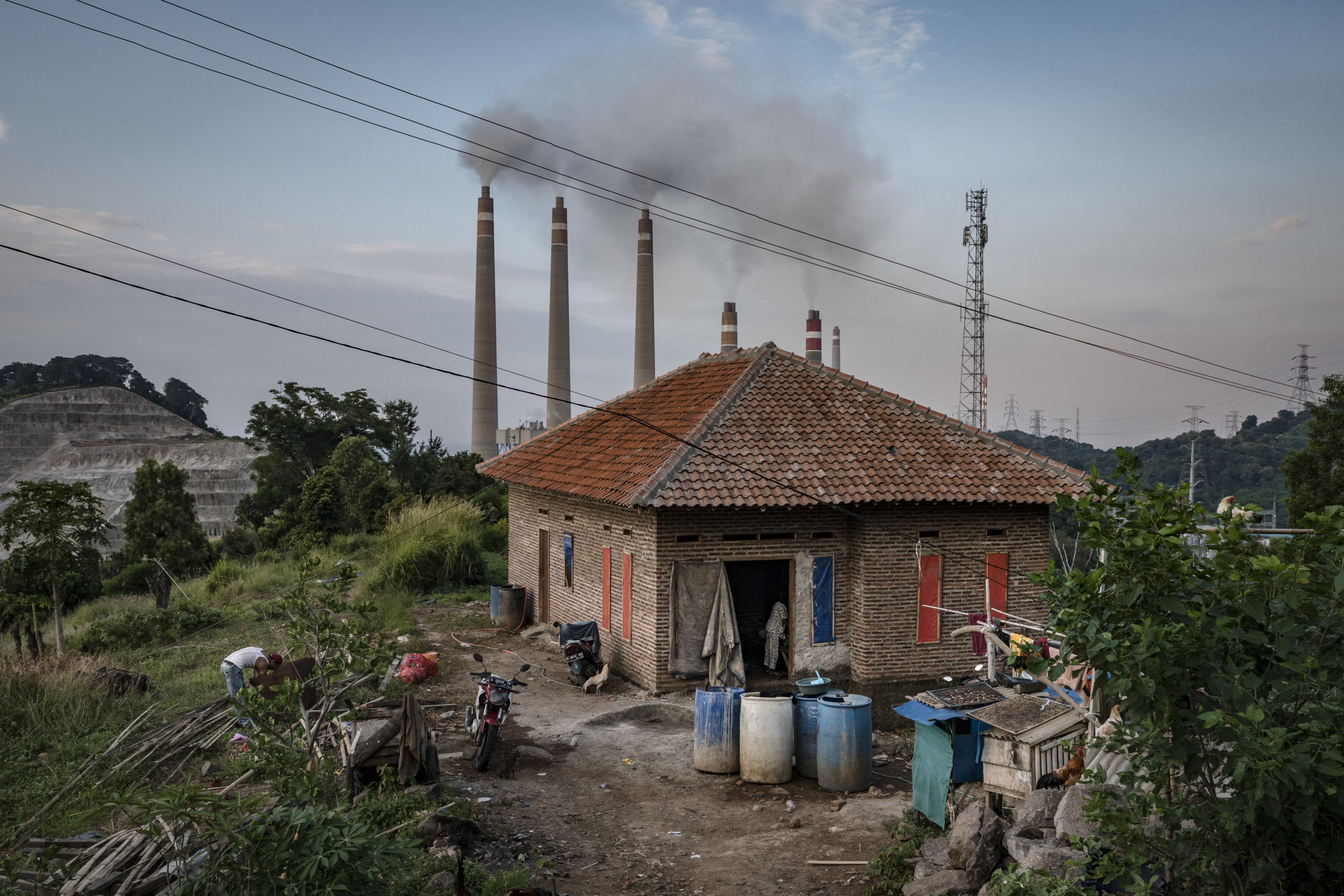
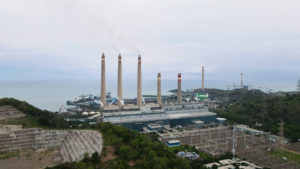
Air pollution and emissions from coal are problems across Indonesia.
Air pollution and emissions from coal are problems across Indonesia. These residents of the island of Java live just metres from the Suralaya coal-fired power plant, which is currently being expanded. (Image © Ulet Ifansasti / Greenpeace)

“Practices that destroy nature and cause climate change must be resisted,” Faisal Basri, an economist from the University of Indonesia, told China Dialogue. “We as citizens have the right to express concern because the government and banks are ignorant.”

He added that the Indonesian government has not fully calculated the damage caused by coal. One possible solution would be for the government to prioritise transformation by producing a more focused energy roadmap, Basri said.

“The banks should finance projects that are environmentally friendly and have a long future by applying the principles of sustainable development, without causing harm to the public at large,” said Basri.

“There are barriers to marketing coal [from] South Sumatra, which is low quality, and transportation routes have difficult access to the sea. These two obstacles could become opportunities for the development of non-coal energy such as geothermal. The direction of energy policy should be towards developing renewable energy,” Ginting said.
Cookies Settings

Dialogue Earth uses cookies to provide you with the best user experience possible. Cookie information is stored in your browser. It allows us to recognise you when you return to Dialogue Earth and helps us to understand which sections of the website you find useful.

Required Cookies

Required Cookies should be enabled at all times so that we can save your preferences for cookie settings.

Dialogue Earth - Dialogue Earth is an independent organisation dedicated to promoting a common understanding of the world's urgent environmental challenges. Read our privacy policy.

Cloudflare - Cloudflare is a service used for the purposes of increasing the security and performance of web sites and services. Read Cloudflare's privacy policy and terms of service.

Functional Cookies

Dialogue Earth uses several functional cookies to collect anonymous information such as the number of site visitors and the most popular pages. Keeping these cookies enabled helps us to improve our website.

Google Analytics - The Google Analytics cookies are used to gather anonymous information about how you use our websites. We use this information to improve our sites and report on the reach of our content. Read Google's privacy policy and terms of service.

Advertising Cookies

This website uses the following additional cookies:

Google Inc. - Google operates Google Ads, Display & Video 360, and Google Ad Manager. These services allow advertisers to plan, execute and analyze marketing programs with greater ease and efficiency, while enabling publishers to maximize their returns from online advertising. Note that you may see cookies placed by Google for advertising, including the opt out cookie, under the Google.com or DoubleClick.net domains.

Twitter - Twitter is a real-time information network that connects you to the latest stories, ideas, opinions and news about what you find interesting. Simply find the accounts you find compelling and follow the conversations.

Facebook Inc. - Facebook is an online social networking service. China Dialogue aims to help guide our readers to content that they are interested in, so they can continue to read more of what they enjoy. If you are a social media user, then we are able to do this through a pixel provided by Facebook, which allows Facebook to place cookies on your web browser. For example, when a Facebook user returns to Facebook from our site, Facebook can identify them as part of a group of China Dialogue readers, and deliver them marketing messages from us, i.e. more of our content on biodiversity. Data that can be obtained through this is limited to the URL of the pages that have been visited and the limited information a browser might pass on, such as its IP address. In addition to the cookie controls that we mentioned above, if you are a Facebook user you can opt out by following this link.

Linkedin - LinkedIn is a business- and employment-oriented social networking service that operates via websites and mobile apps.