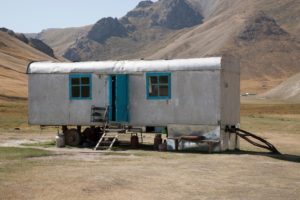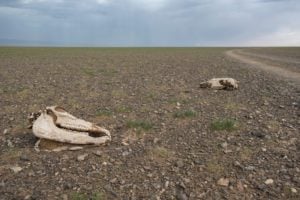
When oil was discovered in 1979 near the village of Sarykamys, in northwest Kazakhstan, the Soviet Union immediately considered relocating the population. These plans did not materialise, and the village remained for the next 23 years.
By the early 2000s, doctors said 90% of the people of Sarykamys were ill, and the average life expectancy was 46. Out of a population of 3,450, 189 people aged 24-53 died in Sarykamys between the start of development at the Tengiz oil field and the village’s relocation in 2002. This was 5.5% of the population.
Too often, the extraction of natural resources comes at great cost to workers and local communities. Human rights issues, such as hazardous working conditions, labour rights abuses, effects on the health of local populations and severe environmental impacts, are rampant in the extractives sector. Kazakhstan is no exception.
In 2021, the Business & Human Rights Resource Centre (BHRRC) set out to shine a light on these issues. Our report, Digging in the Shadows: Eastern Europe and Central Asia’s Opaque Extractives Industry, looked at 30 extractives companies in Eastern Europe and Central Asia, with a focus on Armenia, Georgia and Kazakhstan. We studied the 10 largest companies extracting resources from the earth in each country; in Kazakhstan, these were all in the oil industry. In Armenia and Georgia, they were mostly mining and cement projects.
We recorded the highest number of allegations of human rights abuses in Kazakhstan. Many of these were accusations of serious abuse, including violence, killings, mass poisoning due to toxic gas emissions, and unpaid wages.
This information came from a variety of sources, such as journalists and NGOs, which the BHRRC compiled and analysed.
Corruption enables human rights violations
Journalists and activists who informed our findings repeatedly raised concerns about corruption in Kazakhstan’s oil sector. Corruption has significant negative impacts on human rights, particularly in relation to business and commercial interests. Businesses engaging in corruption are less likely to face accountability and justice for human rights violations, with relevant state parties often ‘dissuaded’ from investigating, punishing and preventing abuses. As a result, human rights abuses are often allowed to continue.
In the infamous ‘Kazakhgate’ case, in 2010 a US court found Mobil – a parent company of Tengizchevroil and now part of US energy giant ExxonMobil – had paid millions of dollars in bribes to Nursultan Nazarbayev, Kazakhstan’s former president. Activists claim these strong connections helped Tengizchevroil escape serious consequences for illegal activity, including human rights abuses.
A joint venture between the Kazakh state and French, US and Russian multinational oil companies formed in 1993 to explore the Tengiz oil field.
Human rights advocates working on business-related issues have also faced mounting pressure and opposition from the authorities. According to activist Sergey Solyanik, the Kazakh government makes statements in support of human rights, “but when people face problems, the authorities often support perpetrators (companies), and not their own citizens and human rights defenders who raise these problems”.
The interconnections in Kazakhstan’s oil sector
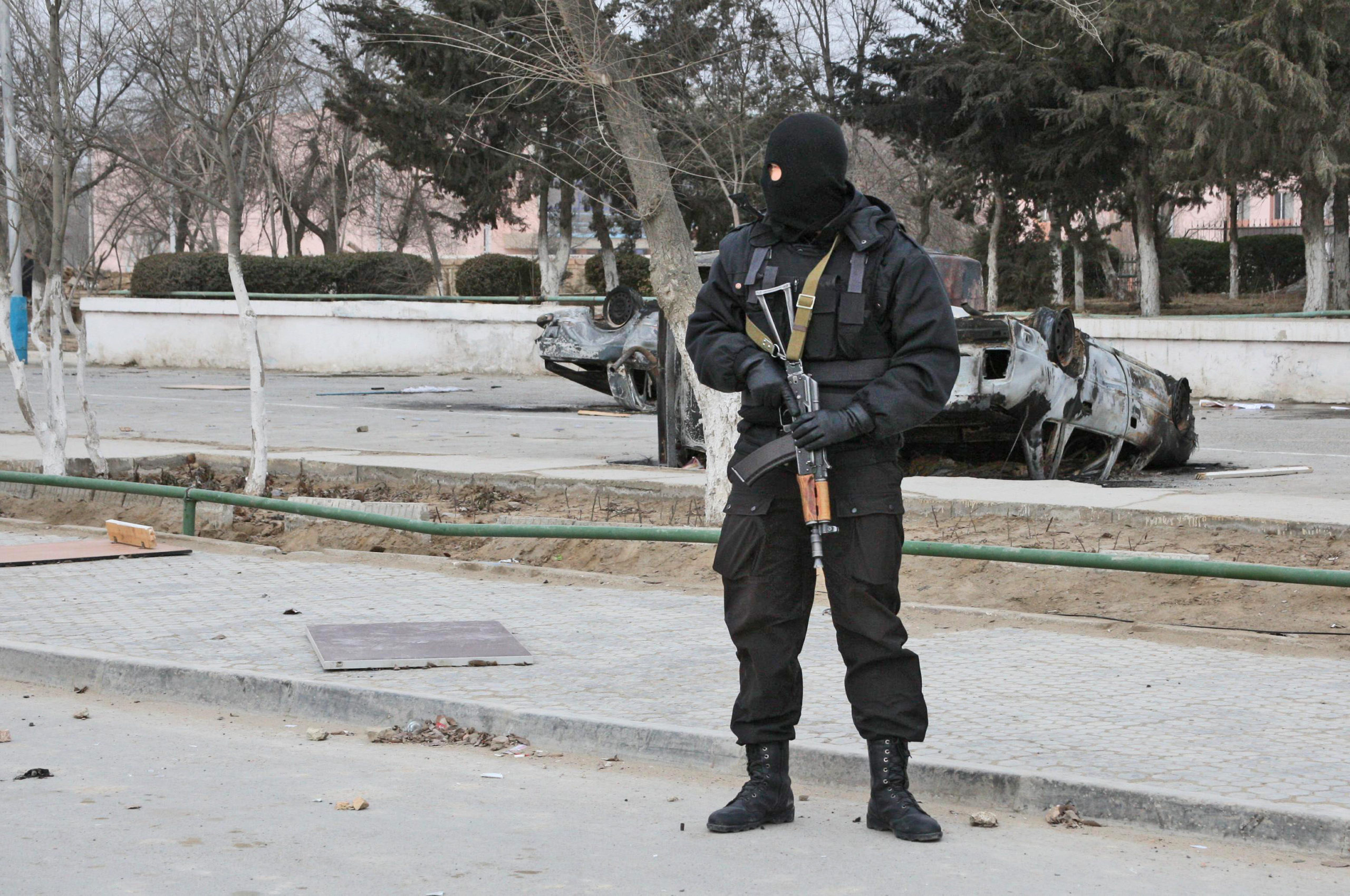
The top 10 extractives companies in Kazakhstan are interconnected, and nine are under partial or full government control. KazMunaiGas, a state-owned oil and gas company, has an interest in nearly all major oil projects in the country. In the case of its direct subsidiaries, KazMunaiGas exerts strong control over them, and has the power to prevent and address the human rights impacts its subsidiaries cause or contribute to. Most notably, Ozenmunaigaz was the subject of striking workers’ complaints in 2011 in the industrial city of Zhanaozen; the strikes were met with violence by authorities. Another subsidiary, Embamunaygas, has also been accused of corruption and violating union workers’ rights.

In addition to its direct subsidiaries, KazMunaiGas holds shares in almost every major oil project in Kazakhstan. It exerts control over these companies both through its shares and its status as an operative arm of Kazakhstan’s government. As such, the company has significant power to prevent and address human rights issues, even when it is not the sole owner.
Major allegations against extractives companies have included: the mass poisoning of children due to toxic gas emissions in the village of Berezovka (Karachaganak Petroleum Operating); hundreds of deaths and thousands of illnesses related to Tengiz oil field (Tengizchevroil); risks that tens of thousands of residents in Atyrau region could be exposed to mass poisoning (North Caspian Operating Company); criminal charges against labour activists (Mangistaumunaigaz); violations of union rights and retaliation against protesting workers (Karazhanbasmunai); and severe contamination of the environment (Kazgermunai).
BHRRC contacted all the extractives companies multiple times for comment. Karachaganak Petroleum Operating and North Caspian Operating Company responded to BHRRC’s request for comment; KPO denied the allegations, and NCOC explained its policies related to health, water and the environment.

However, KazMunaiGas is not the only company involved; Western companies such as ExxonMobil, Chevron, Eni, Shell and Total hold significant control and ownership over many of the largest oil companies in the country. Western investors, such as the European Bank for Reconstruction and Development, have also invested significantly in oil projects and supporting infrastructure.
The push for corporate accountability
This is not to say that everything in Kazakhstan is completely dire. Human rights defenders and NGOs such as Crude Accountability have worked tirelessly to bring international attention to these issues. Although pressure from the government and oil companies on these groups is growing, their activities have become increasingly well-known in Kazakhstani society. And although they may not always be upheld, corporate policies around human rights and the environment are widespread and robust – all 10 of the top extractives companies in the country now have some form of human rights policy.
When asked what the international community can do to help protect human rights defenders in Kazakhstan, Solyanik told BHRRC: “First of all, to attract attention, raise issues and keep the state bodies of the Republic of Kazakhstan in good shape, stimulate them to solve problems. At the same time, it is very important that attention from international organisations helps specific citizens of the Republic of Kazakhstan to solve specific problems, and not just be limited to another report [saying] ‘how bad everything is’ in the country. This also applies to human rights defenders, who are at the forefront of protecting the rights of citizens.”
While economic development is important, growth without human rights inherently undermines the stated purpose of development: to improve the lives and wellbeing of the individuals and communities within a society. Although companies and business activities can be key drivers of sustainable development, they can also fundamentally undermine human rights through abuses and unintended impacts. Extractives companies in Kazakhstan have a long way to go to prove they are part of sustainable development, as opposed to undermining it.