


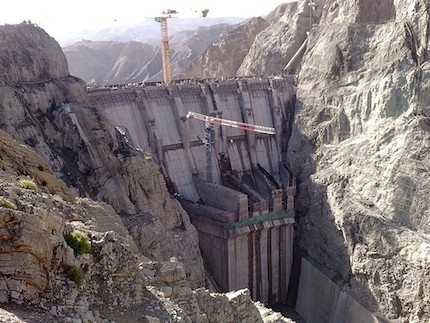

Pakistani experts fear energy shortages will worsen due to the recent verdict of the International Court of Arbitration which upheld India’s right to divert water of an Indus tributary to generate electricity
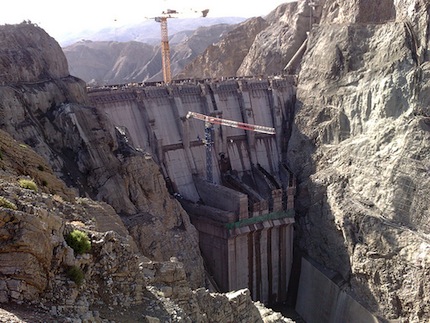
Energy supply is a pressing concern in Pakistan as frequent crippling power outages are not only stunting its economic activities, but have caused a constant public outcry in recent years.
The issue was one of the core agendas in the general elections held last year in the violence-hit country.
The December 2013 verdict of the International Court of Arbitration (ICA) in favour of the 330 megawatt (MW) hydroelectricity project being built by India over Kishanganga River in the picturesque Gurez valley of the Himalayas caused further consternation in energy-stressed Pakistan.
Downstream, Pakistan is also building a 969 MW project which it calls the Neelum-Jhelum project as the river is called Neelum when it enters the part of Kashmir controlled by Pakistan.
Pakistan began challenging India’s construction upstream by saying that India’s diversion of water from Kishanganga would not only curtail power generation of the Neelum-Jhelum project, but would also damage a large part of the Neelum valley ecosystem.
When bilateral negotiations collapsed in April 2010, Pakistan took the case to ICA with the assertion that India had violated the norms of Indus Water Treaty (IWT), which provides the ICA mechanism for dispute resolution over water-sharing between India and Pakistan.
The treaty, signed by the two countries in 1960, is famed for its survival despite extremely cold relations between the south Asian neighbours who have fought three wars since their independence in 1947.
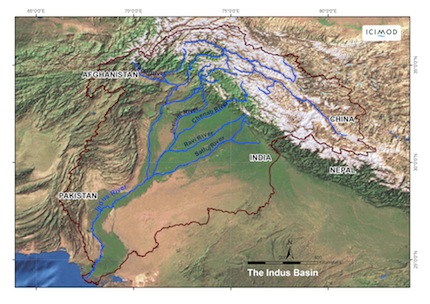
Following two partial awards in September 2011 – which stayed construction of the dam on the project – and in February 2013 which allowed India to change the direction of the flow of Kishanganga into another tributary for power generation, the ICA gave its final judgement in December 2013, allowing India to go ahead with the project as long as it released a minimum flow of nine cubic metres per second into the Neelum river downstream at all times.
While the Pakistan government has shown its satisfaction over the verdict, saying it has secured its rights, independent experts in Pakistan view it as a “defeat” for the country.
“The 43-page judgement appears as a charge-sheet of sorts against Pakistan considering the lack of cogent arguments on its side, which resulted from a poor background work,” fumed Arshad Abbasi, advisor to Islamabad-based think-tank Sustainable Development Policy Institute.
Quoting the judgement on “fixed minimum flow” and agricultural significance of Neelum’s water for Pakistan, he said that the judgement “clearly shows the inefficiency” of the concerned Pakistani departments and its legal team.
Asked about the provision in the IWT which says that the country which first starts building a project on a river gets priority over the other, he said that Pakistan had completed the design of the Neelum-Jhelum project in 1996, “but we did not start the construction work and waited for India to start working on the Kishanganga project.”
Abbasi claimed the December 2013 judgement will hurt Pakistan badly as decreased flow of water to Pakistan will cause a considerable decrease in power generation from the Neelum-Jhelum project.
Pervaiz Amir, an economist who focuses on water and agricultural economy, said that providing relevant data by Pakistan to ICA for strengthening its case “was a far cry as we have no data to provide. When we study the judgment we feel that our country made no preparations to win this case.”
But the legal team which represented Pakistan at ICA holds a contrary view. “Nobody appreciates that we have actually won the case. As far as the issue of providing related data to the ICA is concerned, at present the agricultural usage of this controversial water in this valley is next to negligible,” officials of the legal team told Pakistani media after coming under criticism of experts.
Energy shortage is a critical issue in Pakistan. One of the major reasons for Pakistan’s struggling economy is said to be its insufficient and unreliable energy supply.
Shortly after forming the government following the May 2013 general elections which featured the promise of reliable energy supply as one of the major planks, Pakistan’s Prime Minister Nawaz Sharif visited China to strike a deal on a 2,200 MW nuclear power plant in Karachi. Sharif has also expressed his desire to import energy from India, though that conversation has not really progressed yet.