For three centuries, southern right whales were known as “the right whales” to hunt. Their docility, slow speed and floating carcasses made them easy prey for whalers. By the 1920s, the species’ estimated global population of more than 70,000 had been all but eliminated, with around 300 remaining. The hunt was banned in 1935.
Since then, various initiatives have sought to reverse the trend, such as the International Whaling Commission. This intergovernmental organisation is charged with regulating whaling and conserving all species of these animals. The commission celebrates its 80th anniversary this year. These days, southern right whale populations off the coast of Argentine Patagonia are showing signs of recovery. Here, the “Blue Gulf” of San Matías has emerged as a key site for their reproduction and breeding. But a new threat is looming.
The San Matías Gulf, alongside Argentina’s central Río Negro province, has become a key site in national plans to export liquefied natural gas (LNG). As extraction operations ramp up inland at the Vaca Muerta oil and gas field (one of the world’s biggest shale oil and gas deposits), exportation is being galvanised under the pro-extraction presidency of Javier Milei. He has described Argentine LNG as “the largest investment in the history of Argentina”.
Argentina is eyeing LNG markets including Europe, India, China, South Korea, Japan and Brazil. There are still no firm agreements with any of these countries, although there are signs of interest from some.
However, the San Matías Gulf is an area of enormous ecological value, home to five national and provincial marine reserves. It has been internationally recognised for around 20 years as one of the richest ecosystems in Argentina. The gulf concentrates phytoplankton and captures large amounts of CO2. It is also one of the few places in the world where southern right whales can be observed from land.
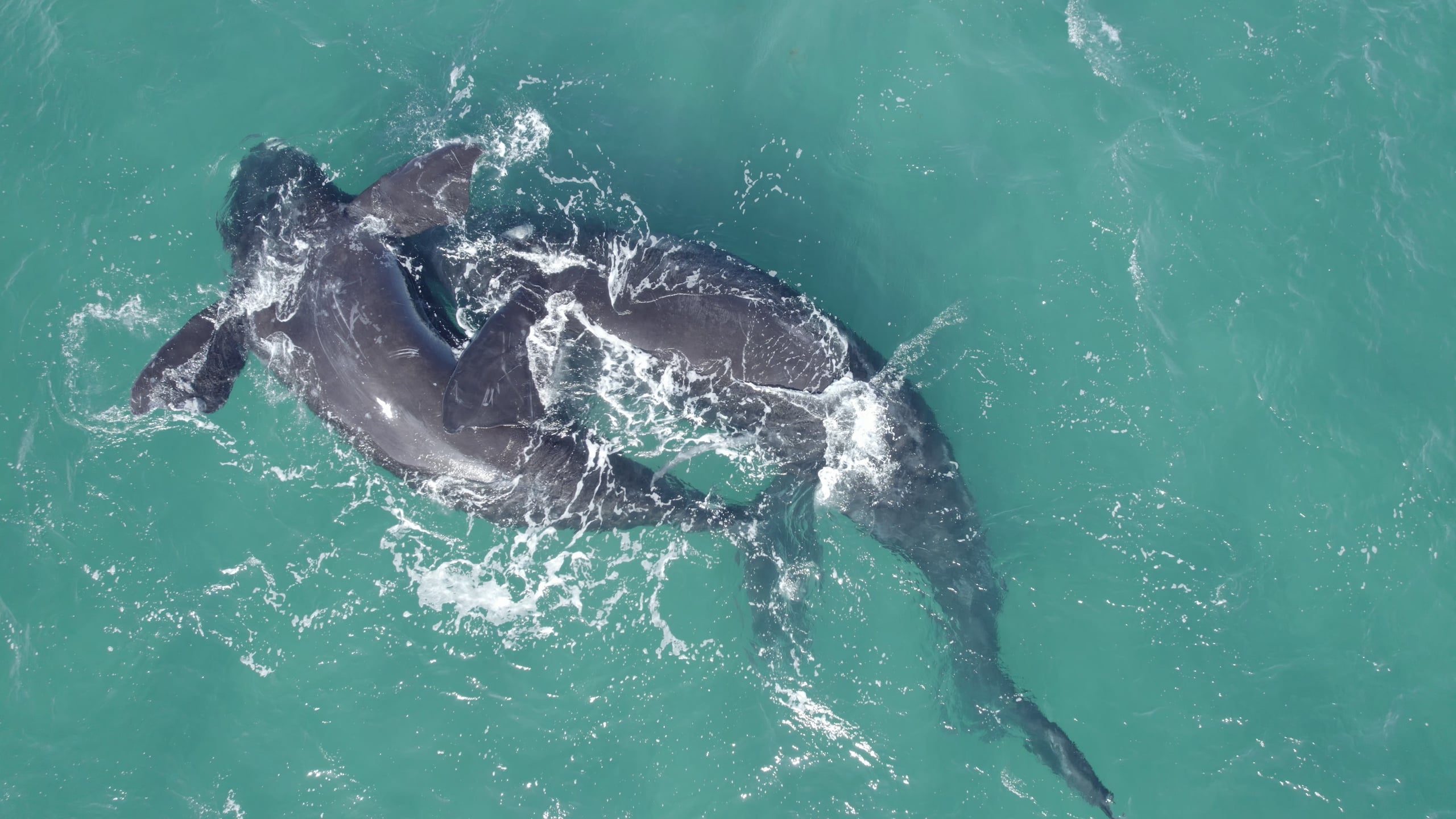
Biologists and oceanographers have told Dialogue Earth that the installation of oil and gas projects in the area poses a critical risk to these whales, as well as the rest of the ecosystem.
Until a little over three years ago, such activity was prohibited by law. In 2022, the government of Alberto Fernández reformed Río Negro province’s law number 3308, which had prohibited hydrocarbon activities in the area. The reform has paved the way for a new port to enable LNG exports and other strategic projects.
The San Matías Gulf was chosen because it is one of the few points on Argentina’s Atlantic coast with sufficient depth and a direct connection to Vaca Muerta.
Four key projects – a pipeline, a port and two floating LNG plants – are currently at different stages of development, with plans for four more. These are opposed by several environmentalists and scientists who are raising concerns about their cumulative impact.
Ship collisions and oil spills
Critics claim this development will heighten the risk of oil spills, and could change ocean dynamics. It will also lead to a wider increase in greenhouse gas emissions.
There are multiple risks for whales and other animals living in the San Matías Gulf, warns the ecologist Belén Braga, a member of the multinational, non-profit Whale Conservation Institute (ICB). One of the most significant is ship collisions, which Braga says will increase. This is in addition to the entanglement risks they face from the fishing industry. And greater numbers of gas liquefaction vessels could cause more seaweed to grow, bringing a heightened risk of disease, she adds.
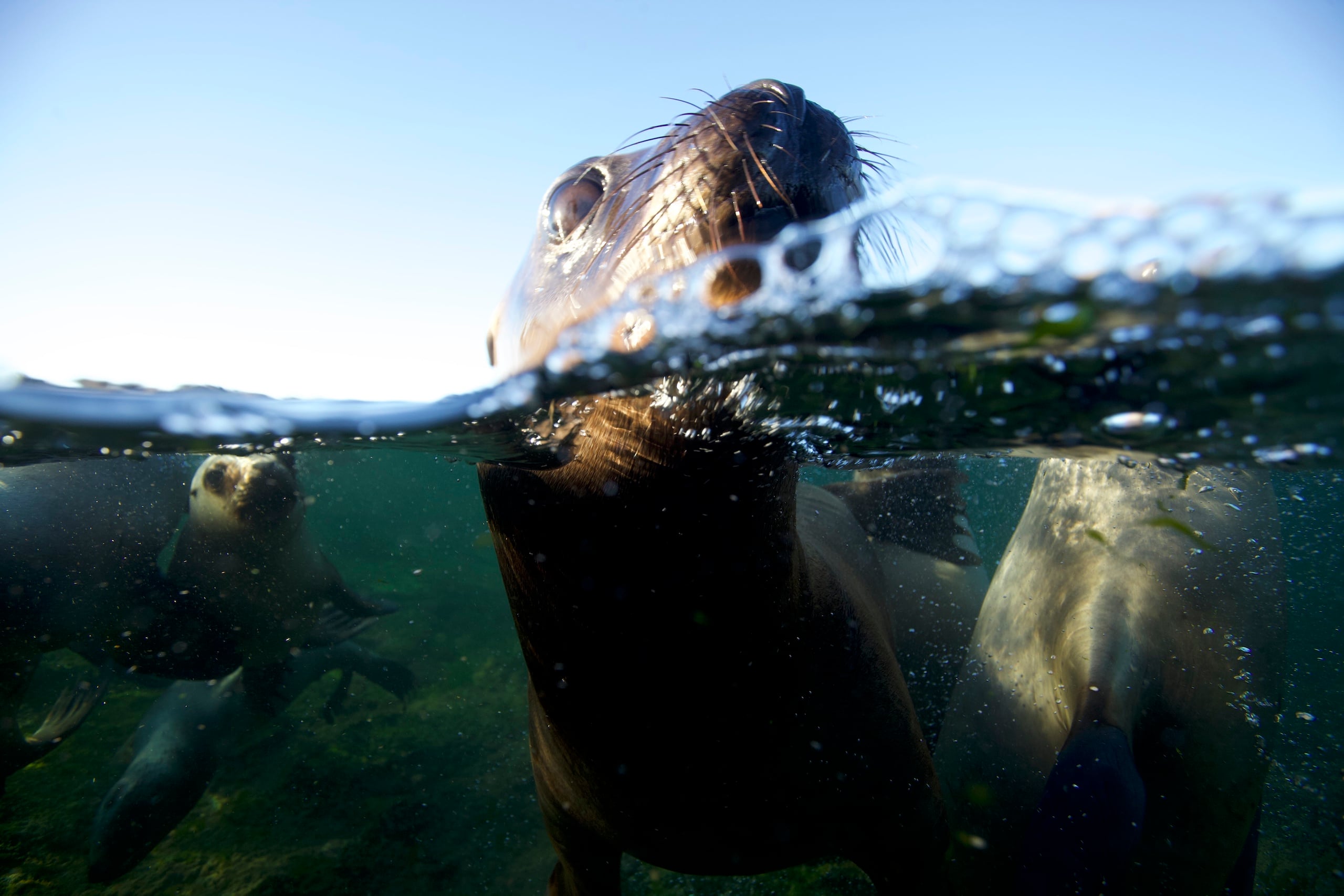
“We are talking about collisions, noise pollution, spills and chronic micro-spills. All these warnings are on the table,” says Braga. The impacts would not only compromise wildlife, she adds, but also the regional economy, which is based on fishing and tourism.
In its environmental impact assessment, the national energy company YPF acknowledges that the necessary pipeline and two huge, floating platforms used for loading tankers (known as “monobuoys”) all represent spill risks. The operators have designed a “safe operation management” plan in the event of a spill.
However, a 2025 study concluded that, in several scenarios, the oil could spread further across 30 hours than YPF has calculated for. The study was coordinated by the Forum for the Conservation of the Patagonian Sea (FMP), a network of civil society organisations that includes the ICB.
Several sources consulted by Dialogue Earth have pointed out that environmental assessments of fossil fuel projects in the San Matías Gulf are fragmented. As a result, they say, there has not yet been a comprehensive analysis of the cumulative impacts of these developments in this area.
Cristian Fernández, legal coordinator for the Environment and Natural Resources Foundation (Farn), an Argentine NGO, raises issues with the potential for increased emissions: “The environmental impact study omits a serious analysis of emissions, including carbon dioxide, methane and volatile organic compounds such as benzene.”
Fernández claims the San Matías Gulf is being treated as a “sacrifice zone” in the name of economic development.
Argentina’s LNG vision
Four projects linked to the LNG export plan have been approved by the national government so far. The most significant is a nearly 500-kilometre-long oil pipeline called Vaca Muerta Oil Sur. YPF’s president and CEO, Horacio Marín, has described it as “the largest infrastructure project in the country”. The shareholder companies are YPF, Vista Energy, Pampa Energía, all Latin American, and Pan American Energy, headquartered in Canada.
The pipeline begins in Loma Campana, Neuquén, in the heart of Vaca Muerta. It runs to Punta Colorada, a town located between two protected areas in the San Matías Gulf. The pipeline will carry LNG to the port and its two monobuoys.
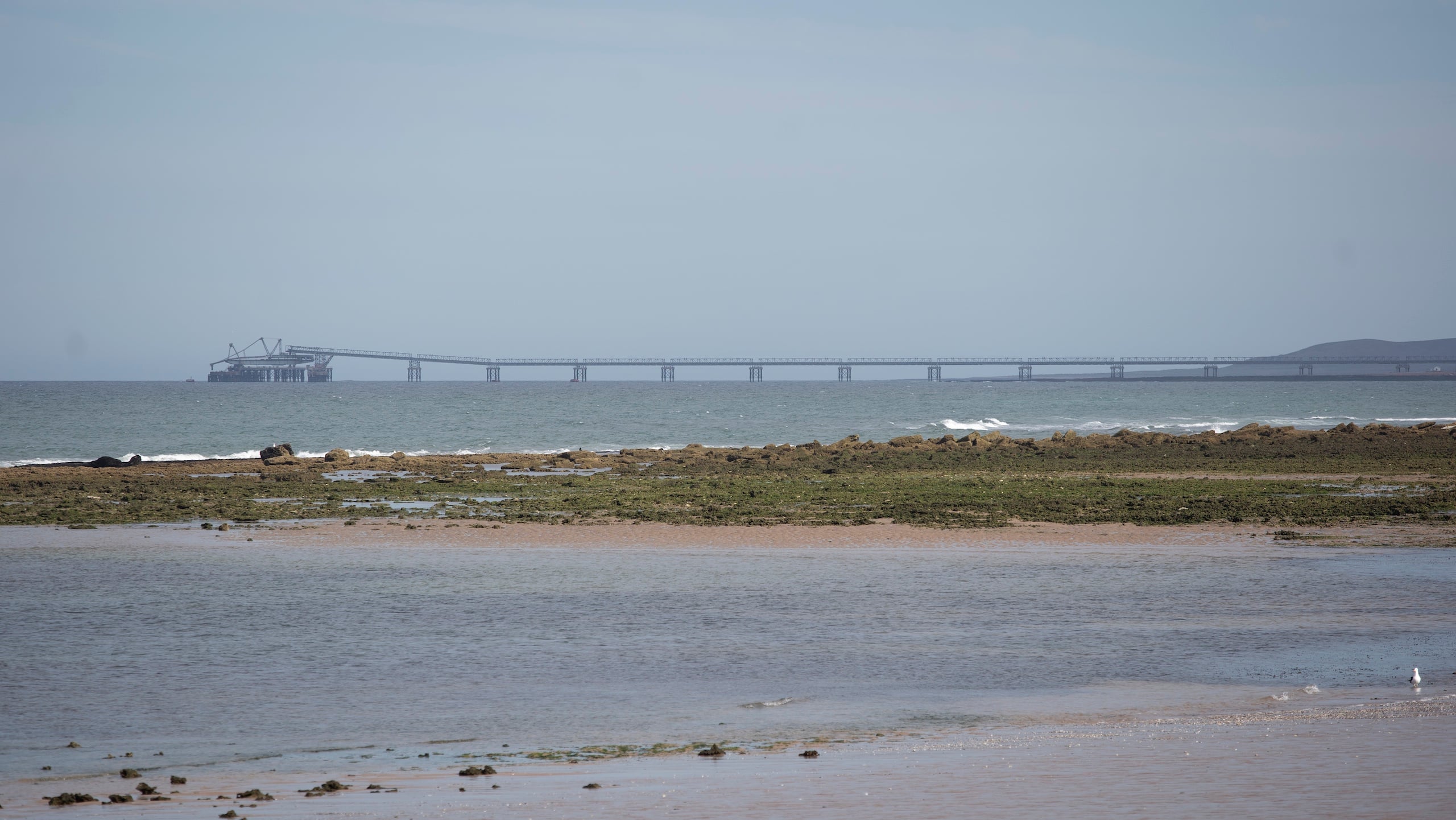
In addition, two floating vessels from the Norwegian company Golar LNG, named the Hilli Epiceyo and the MK II, are expected to be deployed off the coast of Argentina to liquefy the gas. An alternative to permanent, onshore facilities, the vessels are ship-based units, 300-400 metres long and 112 metres high. This project is being handled by the consortium Southern Energy, comprising Pan American Energy, YPF, Pampa Energía, Golar LNG and Harbour Energy, headquartered in London.
According to Southern Energy, the first ship would begin operating in 2027, the second in 2028. They will eventually process around 17% of Argentina’s current gas production.
A separate gas pipeline is currently out for tender with the Italian-Argentine manufacturer Techint. The firm is facing competition from a number of unidentified Chinese companies.
The MK II is currently being repurposed by a Chinese company. Philip Andrews-Speed, a researcher at the Oxford Institute for Energy Studies in the United Kingdom, explains that China’s status as one of the world’s largest shipbuilders gives it a key role in the LNG market.
Despite strong support from the government, however, Argentine LNG has yet to gain commercial traction. In April 2025, YPF signed a memorandum of understanding with Eni, an Italian oil major. The following November, YPF signed another similar agreement with Abu Dhabi’s state oil company, ADNOC. But in early December, the London-based oil giant Shell withdrew from the project before it began; Shell itself had been a replacement for another company that also withdrew, Malaysia’s PETRONAS. Meanwhile, China – the country with the highest LNG import figures globally – has been reducing its purchases of foreign gas due to “excess demand” and higher than expected prices.
Despite these troubles, the government of Río Negro has continued to support the projects’ progress.
The reform that made it possible
Critics say the September 2022 reform of Río Negro’s law 3308 was hurried through and failed to fulfil consultation requirements.
Pablo Barreno, a regional legislator, tells Dialogue Earth the bill arrived without prior notice – and with strong support from the then-governor, Arabela Carreras. “We found out about it through a WhatsApp group.” Barreno adds that the meeting took place just one day later. He was the only legislator who voted against it, citing insufficient information.
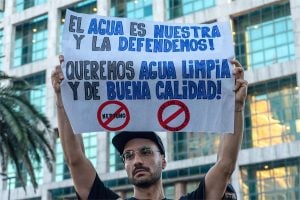
The session was targeted by protestors including Fabrizio di Giacomo, a member of Multisectoral Gulf of San Matías (MGSM). This collective brings together local residents, coastal communities and other organisations. Di Giacomo claims the government sought to prevent any form of social participation by holding the session behind closed doors and reinforcing police control.
Several campaigners and scientific institutions argue the reform was unconstitutional, and violates the Escazú Agreement. The treaty, which entered into force in 2021, guarantees civic participation in decision-making. An appeal against the reform was rejected by Río Negro’s superior court of justice in 2023. Another appeal has been lodged at the supreme court.
Dialogue Earth contacted the current Secretary of the Environment of Río Negro, Judith Jiménez. A response had not been received at the time of publishing.