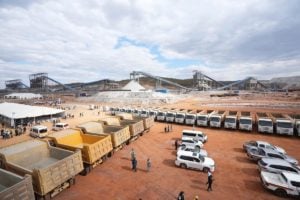
In 2017, the Malawian government granted a mining licence to Chinese mining firm Mawei for Makanjira, a village in the country’s southern district of Mangochi. Having explored the area since 2009, Mawei had confirmed the presence of 354 million tonnes of ore containing the minerals ilmenite, magnetite, zircon, rutile and monazite.
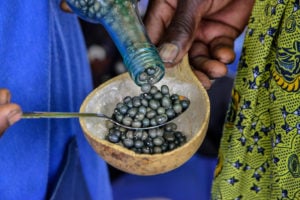
Zircon, for example, is used to manufacture ceramic products including tiles. Rutile is an ingredient in paints, pharmaceuticals and cosmetics, while ilmenite is found in toothpaste, sunscreen and food colouring. By 2018, it was reported that the mine is projected to operate for 23 years and generate about US$29 million annually.
Mawei has now had its licence for seven years but is yet to begin work, because the site is still not connected to the national grid. Amidst growing delays, locals say their hopes for higher living standards catalysed by the new mine are fading.
Malawi’s burgeoning sector
Since Malawi achieved independence in 1964, agriculture has been the primary driver of its economy. Tobacco used to be a major GDP contributor, but returns on Malawi’s “green gold” have dwindled over the past decade alongside declining global demand.
The government now sees huge potential in mining. Malawi’s 2022 national economic report noted that the sector has been contributing nearly 1% to annual GDP since 2020. The report also noted that mining “has tremendous potential to support industrialization” and “one area of realistic economic diversification”: through mining, Malawi hopes to increase exports, attract foreign investment and diversify its revenue base.
Following the release of that report, China Dialogue spoke to the then-secretary to the treasury, MacDonald Mafuta Mwale. He said plans were underway to scale up mining’s GDP contribution to between 10% and 15% by 2030.
Malawi has been mining coal and small mineral stones on a limited scale for decades, but the potential of the sector remained untapped until 2009, when the Kayelekera uranium mine opened. Operated by Paladin Energy in the northern district of Karonga, the mine’s revenues contributed 2.6% to GDP in 2013. However, the mine has been inactive since 2014; Paladin cited declining profits due to falling international uranium prices and sold the mine to an Australian uranium developer in 2020.
Chronic electricity shortages
Mawei requires approximately three megawatts (MW) of electricity capacity to rollout the first phase of the Makanjira mine and will eventually need 10 MW. The Electricity Supply Corporation of Malawi (Escom) says plans are underway to connect Makanjira to the national grid, and that Mawei will soon be able to tap energy from it.
“Escom is ready to provide the much-needed power as the arrangement would see an economic boost for Malawi,” said the company’s CEO, Kamkwamba Kumwenda, although his company did not share a timeline with China Dialogue.
China Dialogue spoke to the Ministry of Mining’s director of mines, Samuel Sakhuta. He said the ministry is aware of the problem and has been trying to help Mawei: “We have had several meetings with stakeholders regarding possible power deals that would see different companies roll out [power supplies]. Mawei is on the list of companies that will benefit [from] such an arrangement.”
A 2023 World Bank report ranks Malawi as among the countries with the lowest levels of electricity access in Africa. The rate stands at 19% – an improvement on the 11% recorded during 2018’s “Population and Housing” census.
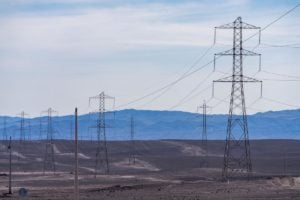
The electricity generated in Malawi is insufficient to meet the needs of a population of 20 million. There is a goal to bring capacity up to 1000 MW. Currently, the country’s electricity generator Egenco has a total installed capacity of just 441.95 MW (390.55 MW of hydropower and 51.4 MW of thermal power). Furthermore, the electricity supply is unreliable and susceptible to climatic shocks. For example, 2023’s Cyclone Freddy struck power generation and left the country with intermittent supply for days.
Electricity scarcity forces Escom to prioritise connectivity based on an area’s economic activity; being a rural village with a population of around 67,000 and a fishing-based economy, Makanjira has historically not been a priority.
Similarly, the Mkango Mining Firm was granted an exploration licence in the Phalombe district of southern Malawi in 2015, in anticipation of discovering rare-earth elements. Mining authorisation was granted in 2017, but the absence of grid connectivity has halted progress here, too.
Alternative energy sources
In the meantime, Mawei is considering alternative power sources to kickstart operations at the Makanjira mine.
Charles Kaphwiyo, an advisor to the company and a former director of the Ministry of Mining, said diesel generators are only a short-term alternative due to their cost and environmental harm.
At a parliamentary committee on natural resources attended by China Dialogue in October 2023, Paladin Energy said it would have needed an estimated one million litres of diesel per month to run its uranium mining operations.
Kaphwiyo said Mawei anticipated the commencement of diesel-powered mining in December, but operations have been delayed since the rainy season rendered roads to the mine impassable.
Development hopes on hold
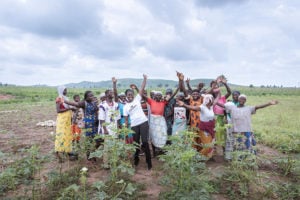
Local people in Makanjira told China Dialogue their hopes for the development were high in 2013, when they saw workers taking samples, followed by the confirmation of the presence of critical minerals. They envisioned the mining works transforming the area, which remains underdeveloped. Some claim the mining companies engaged with the community, pledging to supply electricity, water, employment opportunities and educational facilities via corporate social responsibility projects.
“Poverty is evident here,” said Lucy Milaji, a community member. “I hoped that the coming in of the mining company would allow some of my children work and I would also do some business.”
Her sentiments were echoed by Makanjira’s group village headman, Maulana. “Roads here are in a bad state, and information that a mining company was set to start its works here gave us hope of good roads, on top of access to electricity,” he told China Dialogue. Accessing clean water in the area is also challenging, he added.
Gabriel Jeremiah, the head teacher of Makanjira’s Chitedze primary school, says he had hoped it would benefit from the opening of a mine in the area. Consisting of one building, Chitedze teaches approximately 300 students – and the senior primary school is approximately 8km away.
Were the mine operational, the government would have assumed responsibilities for the repair and upkeep of the 100km-long road between Makanjira and Mangochi district’s administrative centre.
Werani Chilenga, a member of parliament and the chair of Malawi’s parliamentary committee on natural resources, finds it worrying that investors have been waiting so long for these mining opportunities. “It’s time we put our house in order,” says the legislator.
This article was produced as a result of a grant and workshop programme organised by China Dialogue Trust and the Africa-China Reporting Project at the Wits Centre for Journalism, University of the Witwatersrand, Johannesburg