Over 50 African heads of state gathered in Beijing on 4-6 September for the 9th Forum on China Africa Cooperation (FOCAC). As per tradition, the triennial meeting concluded with an action plan and a declaration.
The plan covered issues ranging from infrastructure and health to trade and security, reflecting the ever-broadening scope of the relationship. Present throughout were pledges to strengthen cooperation on climate change and, in particular, renewable and clean energy, themes prominent in the relationship since the last Forum in Dakar in 2021.
We asked four experts what signals they think the FOCAC sent for cooperation on energy, decarbonisation and “green” industries – and what we can expect to see from the relationship over the coming three years.

Fikayo Akeredolu
Doctoral researcher in politics at Oxford University, focusing on China-Africa relations
The Beijing Action Plan and Xi Jinping’s keynote speech suggest a strategic shift in China-Africa energy cooperation. Unlike the 2021 Dakar Action Plan, which explicitly mentioned oil and gas exploration, the Beijing plan focuses on renewable-energy cooperation, upgrading coal-fired power stations, and implementing a “special project of clean-energy power supply.” This signals a move away from traditional fossil-fuel projects toward ones based on sustainable energy sources.
Over the next three years, we will likely see a stronger emphasis on renewables projects, such as solar, wind, and hydropower, with China increasing investments in infrastructure and providing technical expertise to African countries. Xi Jinping’s announcement in his keynote that “China is ready to launch 30 new clean-energy projects in Africa” reflects a concrete commitment to expanding the use of green energy in Africa. This could involve diverse initiatives, from local solar and wind projects to regional power grids. Additionally, exploring cooperation on nuclear technology, as mentioned in the action plan, presents an opportunity for Africa to diversify its energy mix, offering a reliable, low-carbon alternative, depending on local regulatory environments and political acceptance.
This pivot towards renewable energy strengthens China’s role as a key partner in Africa’s sustainable development and supports global climate goals. The expected developments include increased Chinese investments, technology transfer, capacity building, and potential pilot projects in nuclear energy, all of which would enhance energy security and reduce emissions. This strategic shift aligns with China’s international climate commitments as well as Africa’s energy-transition needs.

Eliud Kibii
Foreign affairs analyst and journalist from Kenya
In the 24 years since the first FOCAC, China and African states have met regularly to raise their priorities and follow up on commitments made at previous meetings. This year, 53 African states attended the FOCAC, as well as the chairperson of the African Union Commission, Moussa Faki.
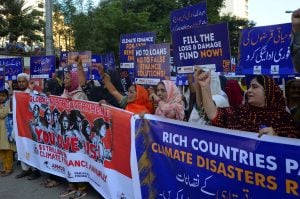
While that there was no specific declaration on climate change, as there was at the last FOCAC in Dakar, I believe China and Africa will and have to continue building on cooperation in climate-change mitigation, adaptation, financing and loss and damage – multilaterally and bilaterally.
FOCAC is itself premised on supporting economy and development. And the impacts of climate change in Africa are hurting economic growth, development, agriculture, blue economy, health, and leading to resource conflicts.
The joint declaration saw China and the African states commit to the Global Development Initiative (GDI), a multilateral development initiative introduced by President Xi in 2021 to build on the UN sustainable development goals and achieve “stronger, greener and healthier global development”.
In Kenya, the Export-Import Bank of China has financed east and central Africa’s largest grid-connected solar power plant – the 55 MW Garissa Solar Power Plant – built by a Chinese company. I expect such investments and cooperation to continue with other African states.
Indeed, in the joint declaration, China committed to supporting African countries in better utilising renewable energy and promised to further expand investment in Africa in “energy-efficient technologies, new and high-tech industries, green and low-carbon industries and other low-emission projects”.
I also expect further cooperation through the African Union’s Agenda 2063: Second Ten-Year Implementation Plan (2024-2033). One of its seven objectives is to “strengthen resilience of economies and communities against the effects of climate change”.
Notably, the FOCAC joint declaration condemned the European Union’s carbon tariff known as the Carbon Border Adjustment Mechanism. It cited CBAM as an example of “unilateralism and protectionism” adopted by some developed countries “under the pretext of addressing climate change and protecting the environment”. Such measures “infringe on the right to sustainable development of developing countries”, it stated.
While the CBAM negatively impacts China’s terms of trade, the president of the African Development Bank had warned at last year’s COP28 that it could also see Africa lose USD 25 billion per year. China and Africa’s convergence on this injustice provides a platform for collaboration to protect their respective interests.

Lina Benabdallah
Associate professor of politics and international affairs, Wake Forest University
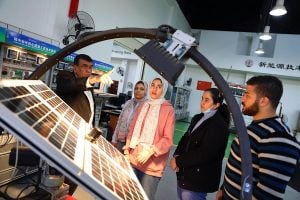
The announcement to launch 30 laboratories for clean-energy research is notable. If successful, the labs are poised to contribute to technology and skills transfers in the clean-energy sector, which is something African leaders have been negotiating with various partners.
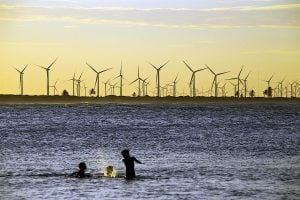
Green energy cooperation is in the interests of both the African and Chinese sides. We are likely to see more green-energy cooperation including in developing hydro and wind energy sources. We also expect to see more investments in energy-efficient technology, low-carbon-emission projects, solar-panel production, green-mineral processing, and so on.

Christian-Geraud Neema Byamungua
Africa editor, China-Global South Project
The Beijing Action Plan is not short on commitments related to climate change. There is the promise to “implement 30 clean energy and green development projects”, and to set up a “special fund for China-Africa green industrial chain”.
There is another to strengthen the China-Africa Environmental Cooperation Centre, established in 2020, and the China-Africa Marine Science and Blue Economy Cooperation Center.
So we have a lot to hope for, but it will depend on Africa and China’s determination to make sure the commitments are respected. The question is, how serious is Africa about making sure that China follows through on them?
In 2023, there was USD 290 million worth of Chinese loans to green-energy projects in Africa – a hydro power plant in Madagascar and a solar power plant in Burkina Faso. There was also a loan for electrification of an industrial park in Uganda.
We should be expecting more of those kinds of green projects to take shape.
I believe that the next three years should be really interesting for the continent in terms of climate-change initiatives and investment coming from China.