Energy

US, China, India have world’s dirtiest old coal-fired power plants

The old ‘subcritical’ coal-fired power plants are the least efficient, guzzle the most water and are the worst polluters. The trouble is, they still form 77% of all coal-fired power plants, with a preponderance in China, the US and India

As the world grapples with the pursuit of clean energy, the global dependence on coal is under increasing scrutiny.

Thanks to subsidies, coal remains the cheapest energy source in many cases. It provides 40% of the world’s electricity, with 1,627 GW of global capacity, and its use continues to grow. Adverse impacts of this use grow in tandem – greenhouse gas (GHG) emissions, rising air pollution and impact on human health.

A recent study by the Stranded Assets Programme at the University of Oxford’s Smith School of Enterprise and the Environment has found that around the world, the maximum pollution occurs from the least efficient and most polluting ‘subcritical’ coal-fired power stations, which are 77% of all coal-fired power stations.

These plants need more fuel and water to generate the same amount of power. In effect, a subcritical plant generates 75% more carbon pollution as the most up-to-date type of coal-fired power station. It also uses 67% more water, and releases significant amounts of other dangerous air pollutants such as sulphur dioxide and oxides of nitrogen.
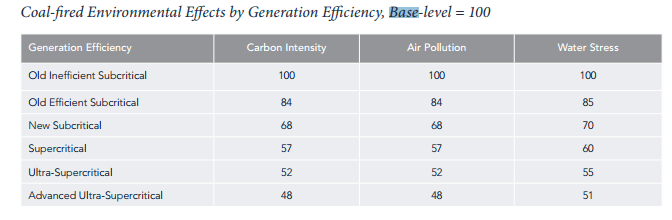
table2arti

The study also shows which companies own these assets and ranks companies by exposure. The authors analysed the world’s 100 largest corporate subcritical power station (SCPS) fleets by total generation capacity. Globally, Chinese and US enterprises dominate in terms of size, with seven out of the ten largest SCPS fleets being Chinese, and eight of the top 20 in the US.

India should worry

Although Indian policymakers have been approving only supercritical and ultra-supercritical plants in recent years, right now almost all of India’s 100 gigawatts of coal-fired power generation capacity consist of subcritical plants.

On top of that, nearly one-third of these plants are in water-scarce areas, and the percentage is likely to go up.

Recent studies have shown that in a 100 km radius around most of these plants in India, micro-fine dust and soot (technically called PM 2.5, as they are below 2.5 microns in diameter) concentrations are well above the limit prescribed by the World Health Organisation. These micro-fine particles lodge deep inside human lungs and cause serious respiratory ailments.

Large government ownership

Governments have to take the lead in handling the situation. The authors of the study found that of the largest 100 subcritical portfolios, governments own 59%. They also found that 39% of total global subcritical capacity is located in China, 21% in the US, 10% in the EU, and 9% in India.
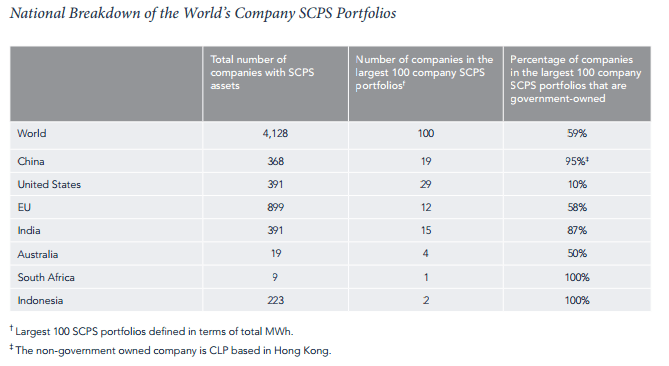
table1arti

As the world moves towards cleaner power generation, these plants are at maximum risk of becoming “stranded assets” due to their carbon intensity and contribution to local air pollution and water stress, the authors of the study conclude.

Ben Caldecott, lead author of the study and director of the Stranded Assets Programme, said, “There is a strong case for investors to evaluate the risk of companies exposed to the least efficient coal plants, as these assets are at the greatest risk of becoming stranded due to a wide range of environmental and social factors.’’

Aarti Khosla has been following the climate debate last seven years. She is currently handling strategic communications in India for the European Climate Foundation. She can be contacted at [email protected].

Cookies Settings

Dialogue Earth uses cookies to provide you with the best user experience possible. Cookie information is stored in your browser. It allows us to recognise you when you return to Dialogue Earth and helps us to understand which sections of the website you find useful.

Required Cookies

Required Cookies should be enabled at all times so that we can save your preferences for cookie settings.

Dialogue Earth - Dialogue Earth is an independent organisation dedicated to promoting a common understanding of the world's urgent environmental challenges. Read our privacy policy.

Cloudflare - Cloudflare is a service used for the purposes of increasing the security and performance of web sites and services. Read Cloudflare's privacy policy and terms of service.

Functional Cookies

Dialogue Earth uses several functional cookies to collect anonymous information such as the number of site visitors and the most popular pages. Keeping these cookies enabled helps us to improve our website.

Google Analytics - The Google Analytics cookies are used to gather anonymous information about how you use our websites. We use this information to improve our sites and report on the reach of our content. Read Google's privacy policy and terms of service.

Advertising Cookies

This website uses the following additional cookies:

Google Inc. - Google operates Google Ads, Display & Video 360, and Google Ad Manager. These services allow advertisers to plan, execute and analyze marketing programs with greater ease and efficiency, while enabling publishers to maximize their returns from online advertising. Note that you may see cookies placed by Google for advertising, including the opt out cookie, under the Google.com or DoubleClick.net domains.

Twitter - Twitter is a real-time information network that connects you to the latest stories, ideas, opinions and news about what you find interesting. Simply find the accounts you find compelling and follow the conversations.

Facebook Inc. - Facebook is an online social networking service. China Dialogue aims to help guide our readers to content that they are interested in, so they can continue to read more of what they enjoy. If you are a social media user, then we are able to do this through a pixel provided by Facebook, which allows Facebook to place cookies on your web browser. For example, when a Facebook user returns to Facebook from our site, Facebook can identify them as part of a group of China Dialogue readers, and deliver them marketing messages from us, i.e. more of our content on biodiversity. Data that can be obtained through this is limited to the URL of the pages that have been visited and the limited information a browser might pass on, such as its IP address. In addition to the cookie controls that we mentioned above, if you are a Facebook user you can opt out by following this link.

Linkedin - LinkedIn is a business- and employment-oriented social networking service that operates via websites and mobile apps.